


 U.S.-Iran Nuclear Talks Resume in Islamabad Amid Strait of Hormuz Standoff
  U.S. Blockades Strait of Hormuz After Iran Nuclear Talks Collapse
  Peter Magyar Ends Viktor Orbán's 16-Year Rule in Historic Hungary Election
  U.S.-Iran Peace Talks in Islamabad Pause With Key Differences Unresolved
  Manhattan DA Investigates Sexual Assault Allegations Against Rep. Eric Swalwell
  Spain's Sanchez Visits China to Deepen Trade Ties Amid U.S. Tensions
  Peru Presidential Election 2026: Keiko Fujimori Takes Early Lead in First-Round Vote
  Islamabad at a Standstill as U.S.-Iran Peace Talks Take Center Stage
  Viktor Orban Loses Power After 16 Years as Hungary's Tisza Party Claims Landslide Election Victory
  Trump Warns China Over Iran Arms as Diplomatic Talks Intensify
  Gaza Airstrike Kills Six at Bureij Camp Police Checkpoint
  MATCH Act: How New U.S. Chip Legislation Could Freeze China's Semiconductor Ambitions
  FAA and Pentagon Approve Laser Counter-Drone System Along U.S.-Mexico Border
  Middle East Conflict Threatens Global Economic Stability, World Bank Warns


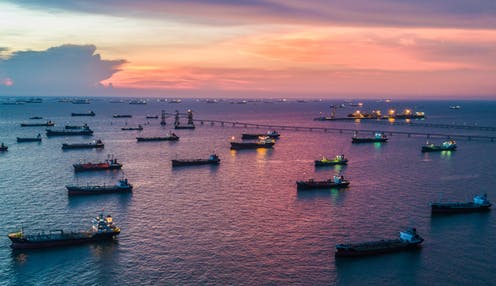
Oil tankers are diverting away from the Strait of Hormuz as the United States prepares to enforce a naval blockade beginning Monday morning, following the collapse of weekend peace negotiations between Washington and Tehran. The move has sent shockwaves through global shipping lanes and raised serious concerns about oil supply disruptions worldwide.
President Donald Trump announced Sunday that the U.S. Navy would begin blockading the strategically critical waterway after marathon diplomatic talks with Iran ended without agreement, threatening a fragile two-week ceasefire that had briefly calmed tensions in the region. U.S. Central Command confirmed that enforcement would begin at 10 a.m. ET, targeting all maritime traffic entering or departing Iranian ports along the Arabian Gulf and Gulf of Oman.
Washington clarified that vessels transiting the strait to and from non-Iranian ports would not be impeded, with formal guidance to be issued to commercial mariners ahead of the blockade's implementation. Despite this assurance, tanker operators are already adjusting routes as uncertainty grips the energy shipping sector.
Iran's Revolutionary Guards responded defiantly, warning that any military vessels approaching the Strait of Hormuz would be treated as a ceasefire violation and met with a decisive response, escalating fears of a broader confrontation.
Shipping data from LSEG and Kpler revealed mixed movements across the Gulf. Pakistan-flagged tankers Shalamar and Khairpur entered the Gulf on Sunday, bound for the UAE and Kuwait respectively. Meanwhile, the Malta-flagged supertanker Agios Fanourios I, which had been heading toward Iraq to load Basra crude destined for Vietnam, reversed course and is now anchored near the Gulf of Oman. Separately, three fully loaded supertankers successfully exited the Gulf on Saturday, reportedly the first vessels to do so since the ceasefire was established last week.
The developing standoff threatens to disrupt a waterway through which a significant portion of the world's oil supply flows daily.







