


 EU Defence Build-Up Too Slow for 2030 Russia Readiness Goal
  OpenAI Agent Breaches Australia Medicare Data Portal
  Russian Envoy Dmitriev Heads to US for Ukraine Talks
  Sudan Rejects US Legitimacy Remarks, Defends Sovereignty
  US, China Extend Trade Truce to Jan. 10 Ahead of Trump-Xi Summit
  Netanyahu Takes Aim at Mamdani as Israel Election Nears
  US Senate Rejects Iran War Powers Resolution in 50-49 Vote
  Trump, Xi Focus on Trade and AI at White House Summit
  US Officials Split Over Response to Israeli West Bank Settlements
  Europe Warns Russia Is Escalating Hybrid Attacks Across NATO
  Netanyahu Defends Israel at UN as Delegates Stage Walkout
  Mexico-US Trade Talks Delayed to October as Tariff Negotiations Continue
  US Backs Musk in Fight Against EU’s €120 Million X Fine
  Gaza Faces Evacuation Crisis as War-Damaged Buildings Risk Collapse
  Pezeshkian Says US Must Choose When Iran War Ends
  North Korea Warns South Korea Over US-Led Defense Role
  Russian Missile and Drone Attack on Kyiv Kills Two, Damages Maternity Hospital


 Add as a preferred source on Google
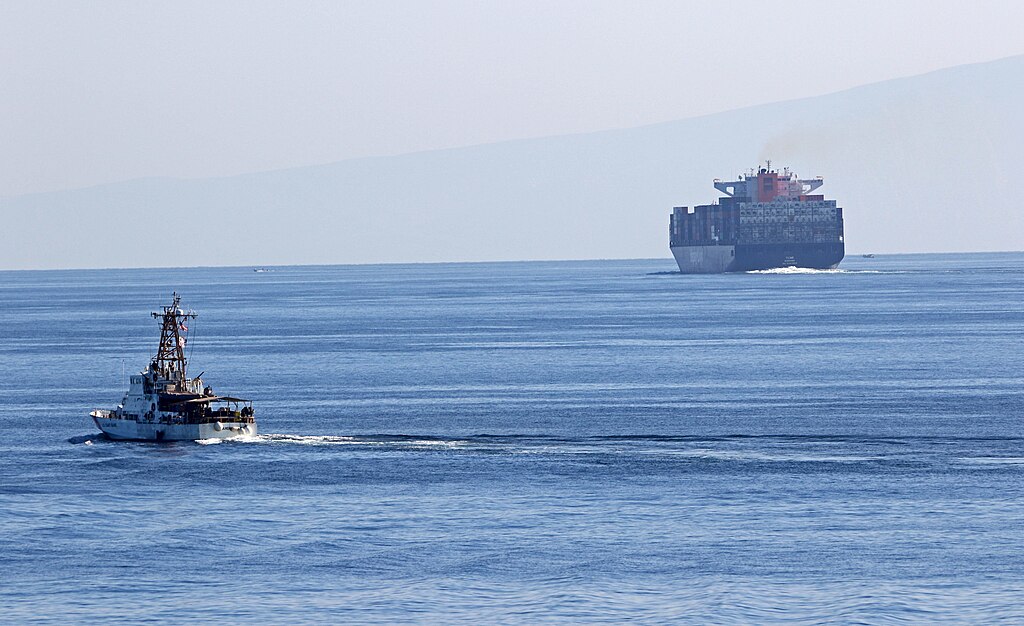
President Donald Trump announced Sunday that the United States Navy would begin blockading the Strait of Hormuz following the breakdown of high-stakes nuclear negotiations with Iran in Islamabad. The U.S. Central Command confirmed the blockade would take effect Monday at 10 a.m. ET, targeting all maritime traffic entering and departing Iranian ports across the Arabian Gulf and Gulf of Oman.
Trump declared that any vessel paying tolls to Iran would lose safe passage in international waters, and that American forces would begin clearing mines Iran allegedly deployed in the strategically critical strait. The Strait of Hormuz serves as a transit point for roughly 20% of the world's energy supply, making the standoff a major threat to global oil markets. Crude prices surged past $100 per barrel Monday morning in response to the escalating tensions.
Iran's Revolutionary Guards warned that military vessels approaching the strait would be treated as a ceasefire violation, signaling potential for dangerous escalation. Iranian Foreign Minister Abbas Araqchi accused Washington of "maximalism and shifting goalposts," saying his delegation had negotiated in good faith only to be met with unreasonable demands.
Vice President JD Vance, who led the American delegation, said the failure to reach an agreement was far worse for Iran than for the United States. Key sticking points included Washington's demands for Iran to halt all uranium enrichment, dismantle major nuclear facilities, transfer highly enriched uranium, and cut funding to militant groups including Hamas, Hezbollah, and the Houthis.
Despite the diplomatic collapse, Trump expressed confidence that Iran would return to the negotiating table. Iran's President Masoud Pezeshkian echoed a similar openness, saying a fair agreement remained achievable if the U.S. respects international law. The two-week ceasefire, announced just days earlier, now hangs in serious jeopardy as both sides hold firm positions amid rising global economic uncertainty.







