


 U.S. Reviewing Potential F-35 Fighter Jet Sale to Turkey Amid S-400 Dispute
  Lebanon Pushes Ahead With Israel Talks Despite Iran-U.S. Deal Impact
  U.S. Eases Iran Team Travel Restrictions Ahead of Seattle World Cup Match
  Iran Attack in Strait of Hormuz Pushes Oil Prices Higher
  Trump Requests $11 Billion More in Farm Aid as Rising Costs Pressure U.S. Farmers
  Pelosi Discloses Major Intel and Uber Call Option Purchases Worth Up to $6 Million
  Trump Orders DOJ Investigation Into Exxon, Chevron Over High Gas Prices
  NATO Chief Tries to Ease Trump Alliance Dispute
  White House Seeks $1.4 Billion to Combat Growing Ebola Outbreak
  White House Seeks $87.6 Billion Emergency Funding for Iran War, Farmers, and Ebola Response
  Peru Election Dispute Deepens as Roberto Sanchez Rejects Runoff Results
  Japan Signals Preference for Low Interest Rates as BOJ Policy Debate Intensifies
  Marco Rubio Reassures Gulf Allies Over U.S.-Iran Peace Deal
  US Supreme Court Strikes Down Hawaii Gun Carry Law on Private Property
  Iran Strait of Hormuz Tensions Rise After Ship Attack Delays IMO Escort Mission
  Crimea Power Outage After Ukrainian Drone Attack, Russian Authorities Say
  Young Brazilian Voters Shift Right Ahead of 2026 Election


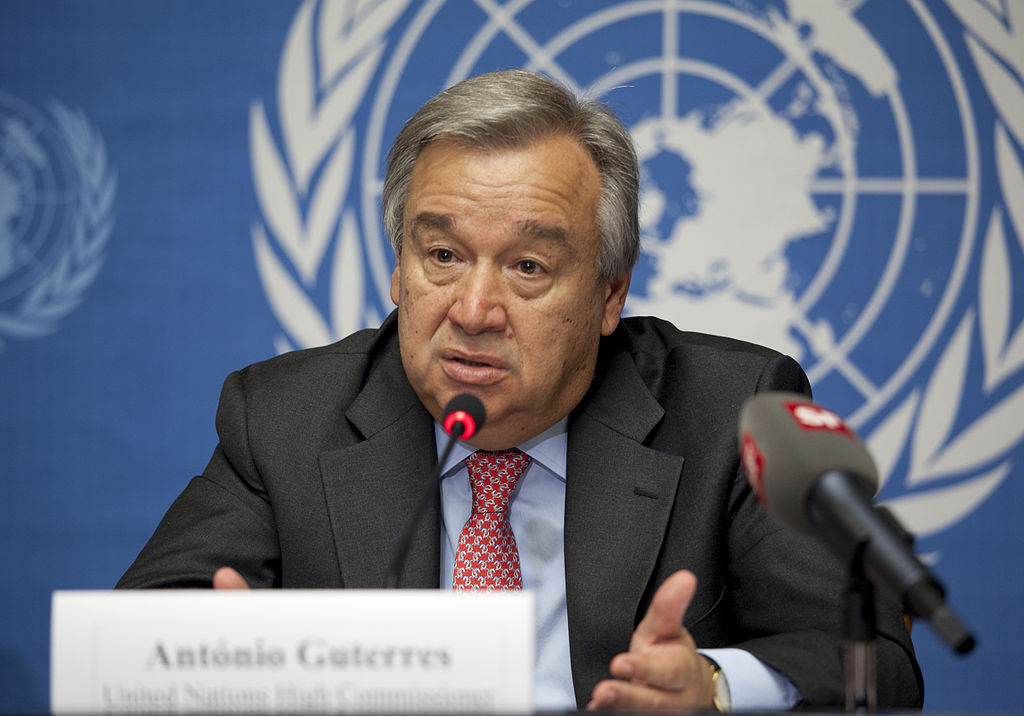
United Nations Secretary-General Antonio Guterres warned that global challenges cannot be solved by a single dominant power or by dividing the world into rival spheres of influence, comments widely seen as directed at the United States and China. Speaking to reporters at the start of his 10th and final year in office, Guterres emphasized the need for a multipolar global system to ensure lasting peace, sustainable development, and the protection of shared values.
Guterres stated that “global problems will not be solved by one power calling the shots,” a reference he later clarified as pointing to the United States. He also rejected the idea of two superpowers carving the world into competing zones of influence, noting that growing narratives frame the future as divided between a U.S.-led pole and a China-centered pole. According to Guterres, such a structure risks instability and undermines international cooperation, making multipolarity essential for global peace and development.
His remarks come at a time of heightened geopolitical tension and as the U.N. Security Council prepares to choose his successor later this year. The United States and China did not immediately respond to his comments. U.S. President Donald Trump, now in his second term, has revived a spheres-of-influence approach to foreign policy, pledging to restore U.S. dominance in the Western Hemisphere, a stance criticized by many in the international community.
Guterres also reaffirmed that the primary responsibility for maintaining international peace and security lies with the United Nations, particularly the Security Council. He argued that criticism of the U.N.’s effectiveness often comes from the same actors opposing long-overdue Security Council reform, which he described as essential for improving global governance.
During his second term, the U.N. has faced multiple crises, including Russia’s invasion of Ukraine, conflicts in Gaza and Sudan, the Taliban’s return in Afghanistan, and broader erosion of international law and cooperation. The organization is also grappling with a financial crisis after the United States, its largest contributor, cut voluntary funding and withheld mandatory payments.
Despite these challenges, Guterres insisted the U.N. remains committed to pursuing just, sustainable peace rooted in international law, stressing that the organization will continue pushing for solutions that address the root causes of conflict and endure beyond temporary agreements.







