


 China Vanke Shares Jump as Beijing Moves to Ease Debt Pressure
  H&M Q3 Profit Beats Estimates as Margins Improve
  Fed Unveils Stablecoin Rules Under GENIUS Act
  Oil Prices Jump 3% as Houthi Attack Revives Supply Fears
  U.S. 10-Year Treasury Yield Hits 2007 High as Fed Rate Hike Bets Rise
  North Korea Warns South Korea Over US-Led Defense Role
  BMW 2028 Margin Target Could Fall Below Consensus, UBS Says
  Oracle Shares Fall as New Mexico AI Data Center Faces Power Delays
  Gold Drops Over 1% as Dollar, Treasury Yields Surge on Fed Rate Hike Bets
  Asian Currencies Mixed as Dollar Holds Near Two-Month High
  Wall Street Falls as Treasury Yields Surge, Oil Rebounds on Iran Tensions
  McDonald’s Sees Flat Traffic, Sticky Inflation as New Normal
  Goldman Sachs Names Simon Lyons UK Investment Banking Co-Head
  Akamai Shares Surge on $11.6B Anthropic AI Cloud Deal
  Dollar Hits Two-Month High as Fed Rate Hike Bets Rise
  Pezeshkian Says US Must Choose When Iran War Ends
  China’s ‘Lipstick King’ Says AI Won’t Replace Livestream Hosts


 Add as a preferred source on Google
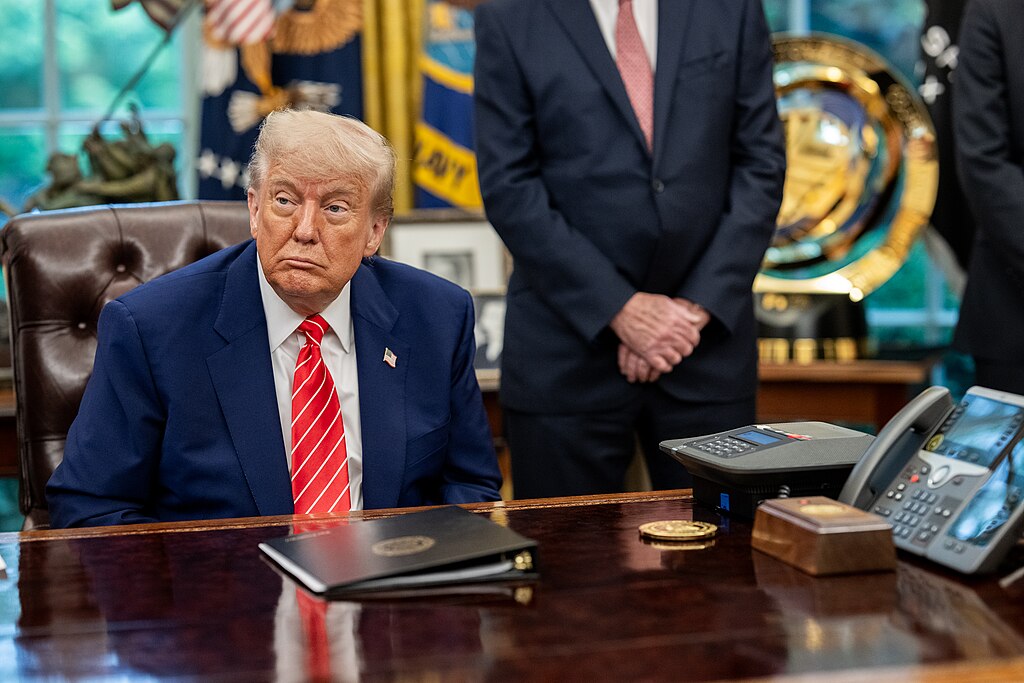
U.S. President Donald Trump has issued a stern warning to Iran, cautioning against further retaliatory attacks targeting the United States and its Middle East allies. In a recent Truth Social post, Trump stated that any additional aggression would be met with overwhelming force, declaring that the U.S. would respond “with a force that has never been seen before.” His remarks follow escalating tensions after Iran reportedly launched attacks on several Gulf nations.
Despite the reported killing of Iran’s Supreme Leader, Ayatollah Ali Khamenei, the country’s military capabilities appear to remain operational. Tehran has signaled that it is prepared to intensify strikes against neighboring countries aligned with Washington. Recent attacks have reportedly targeted key locations in the United Arab Emirates, including Dubai International Airport and the Burj Khalifa, as well as areas in Bahrain, Qatar, and Kuwait. In response, Gulf nations have warned that retaliatory measures against Iran remain on the table.
The growing conflict has already disrupted regional transportation and global trade routes. Qatar temporarily closed its main airport in Doha, while Dubai International Airport suspended operations due to security concerns. Major Middle Eastern carriers such as Emirates, Qatar Airways, and Etihad have halted flights indefinitely, creating widespread travel disruptions at one of the world’s most important aviation hubs.
The geopolitical crisis is also rattling global energy markets. Three major Japanese shipping companies—Nippon Yusen K.K., Mitsui OSK Lines, and Kawasaki Kisen Kaisha—have paused operations in the Gulf following U.S. naval warnings. Analysts at RBC Capital Markets suggest the Strait of Hormuz is now “practically closed,” a development with serious implications for global energy supply. The waterway handles roughly 20% of global LNG exports and nearly 90% of Japan’s crude oil imports.
With tensions escalating and diplomatic negotiations stalled, analysts expect crude oil prices and LNG prices to surge. Investors are closely monitoring developments in the Gulf region, as further instability could significantly impact global trade, energy markets, and international supply chains.







