


 Synthetic data could ease people’s concerns about privacy breaches. But who gets to create it?
  US Backs Musk in Fight Against EU’s €120 Million X Fine
  Pentagon Restarts Testosterone Testing for US Troops
  China Reviews Broadcom Switch Use in State Data Centres
  EU Agrees €6.6 Billion Military Aid Funding for Ukraine
  Abbas Reaffirms November 28 Palestinian Elections
  Canada Unveils Bill to Fast-Track Major Resource Projects
  France Defends Netanyahu Airspace Clearance Despite ICC Warrant
  U.S. Imposes New Visa Restrictions Over South Africa Policies
  Judge Orders Trump to Restore White House Access for CNN, MS NOW and Politico
  Saudi Arabia, Turkey and Pakistan Plan Urgent Defence Talks Over Houthi Attacks
  Australia Tightens Student Visa Rules, Targets Migration Cut by 2028
  FDA Weighs Safety Standards for Psychedelic Therapies
  US Immigration Arrests Surge as Deportations Lag Behind
  Pezeshkian Says US Must Choose When Iran War Ends
  Saudi Arabia Shuts East-West Oil Pipeline After Drone Attack


 Add as a preferred source on Google
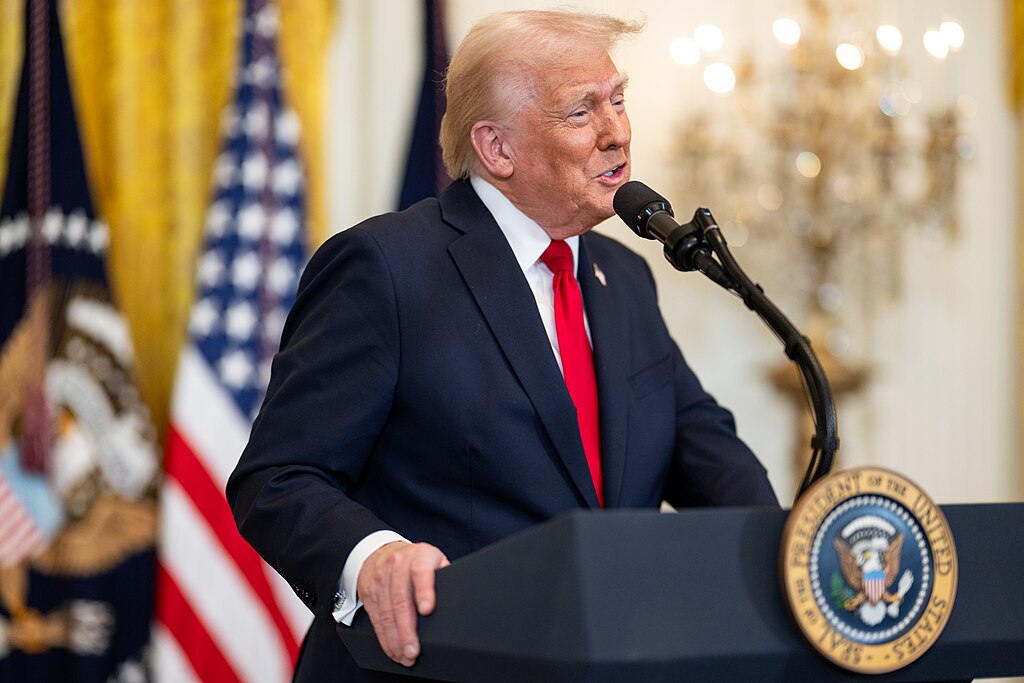
U.S. President Donald Trump has ordered his administration to review federal funding to Portland, Oregon, escalating tensions with the city over ongoing anti-government and anti-fascist protests. White House spokeswoman Karoline Leavitt said, “We will not fund states that allow anarchy,” though she did not specify which funds could be withheld.
Since returning to office in January, Trump has repeatedly threatened to cut off federal funding—mandated by Congress—to states, cities, and institutions he considers politically hostile, including Democratic-led governments and universities he accuses of being dominated by Marxist ideology.
Portland has seen waves of left-wing demonstrations in recent years, with the latest targeting Immigration and Customs Enforcement (ICE) after Trump’s renewed push to detain and deport migrants. Local officials condemned the administration’s move, warning that cutting aid would damage healthcare, education, and infrastructure. Mayor Keith Wilson, a Democrat, argued it would “siphon vital funding from our economy during a government shutdown that is already hurting cities nationwide.” He vowed to use “every legal and constitutional tool” to defend Portland’s residents.
Tensions flared further after conservative journalist Nicholas Sortor was arrested at a protest outside ICE offices, accused of disorderly conduct during a clash with demonstrators. Leavitt condemned the arrest, saying the Justice Department’s civil rights division was investigating possible “viewpoint discrimination.” Portland police defended the arrest, stating it was based on observed behavior and probable cause, not political affiliation.
Trump has intensified rhetoric against Portland’s protesters, labeling antifa activists as “domestic terrorists” and deploying soldiers to protect ICE facilities. He also moved to take control of the Oregon National Guard, a decision fiercely opposed by Oregon Governor Tina Kotek, who declared she “will not be bullied” into allowing federal overreach.
Oregon leaders accuse Trump of violating constitutional limits and undermining local governance. They argue that stripping federal aid would harm ordinary citizens rather than restore order. The clash highlights growing conflict between the White House and Democratic state leaders over protest movements, immigration, and the use of federal power.







