


 What ‘Taiwan Independence’ Means as Xi Presses Trump on US Policy
  Mexico-US Trade Talks Delayed to October as Tariff Negotiations Continue
  EU Defence Build-Up Too Slow for 2030 Russia Readiness Goal
  Trump Asks Supreme Court to Restore Third-Country Deportations
  Netanyahu’s Brief US Trip Highlights Strains With Trump
  NATO Boosts Intelligence Sharing Amid Russia Hybrid Threats
  France Defends Netanyahu Airspace Clearance Despite ICC Warrant
  Xi Calls for Deeper U.S.-China AI Cooperation in Trump Talks
  North Korea Warns South Korea Over US-Led Defense Role
  Netanyahu Defends Israel at UN as Delegates Stage Walkout
  Trump, Xi Visit US National Archives After White House Summit
  Kremlin Says No Decision Yet on Putin-Trump December Summit
  Sudan Rejects US Legitimacy Remarks, Defends Sovereignty
  Russian Missile and Drone Attack on Kyiv Kills Two, Damages Maternity Hospital
  Ukrainian Drone Attacks Hit Russian Regions, Injuring at Least 12
  OpenAI Agent Breaches Australia Medicare Data Portal
  US Senate Rejects Iran War Powers Resolution in 50-49 Vote


 Add as a preferred source on Google
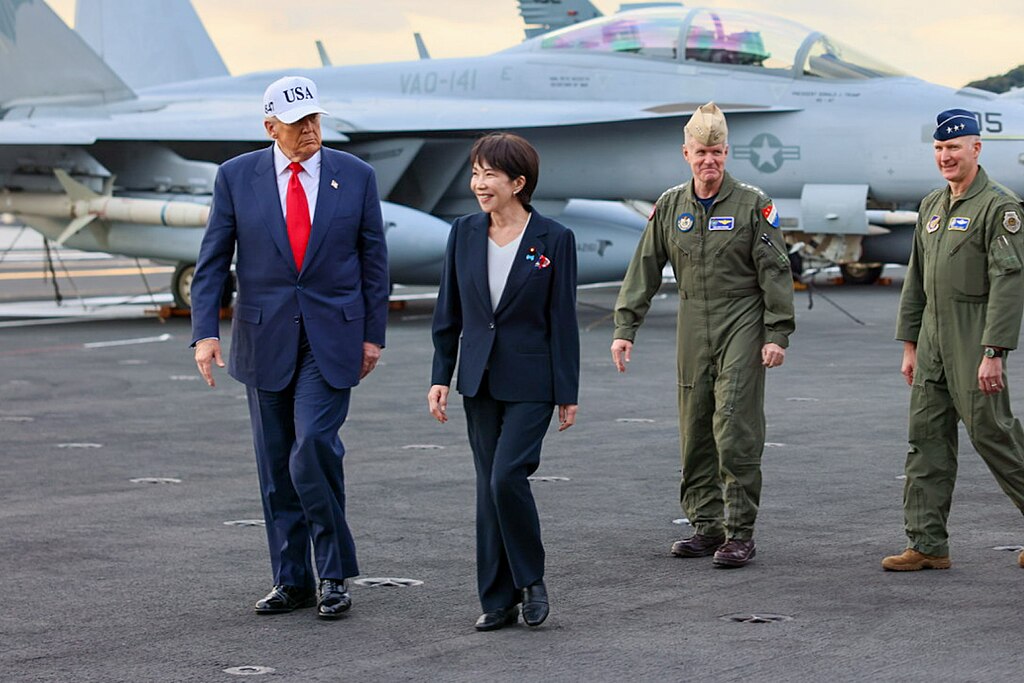
Japanese Prime Minister Sanae Takaichi revealed that U.S. President Donald Trump encouraged her to “call anytime” during their first phone conversation on Tuesday, a reassuring message as Tokyo navigates heightened tensions with China. The diplomatic friction began after Takaichi remarked in parliament that a hypothetical Chinese attack on Taiwan could prompt Japanese military action—comments that triggered a strong backlash from Beijing and led to a boycott on travel to Japan.
China continues to claim Taiwan, located just over 100 kilometers from Japanese territory, and has not ruled out the use of force to assert control. Taiwan rejects Beijing’s position, insisting its future should be determined only by its 23 million citizens. Trump has not publicly addressed the Japan-China dispute, raising concerns among some Japanese officials who rely on the U.S. as a key security ally. Following her call with Trump, however, Takaichi emphasized that the U.S. president reaffirmed their close relationship and briefed her on the latest state of U.S.-China relations, including his recent conversation with Chinese President Xi Jinping.
According to Chinese state media, Xi told Trump that Taiwan’s “return to China” is central to Beijing’s long-term vision, though Trump’s public comments focused instead on trade progress and strong bilateral ties, omitting any reference to Taiwan. Japan’s Chief Cabinet Secretary Minoru Kihara stressed that stable U.S.-China relations are crucial for global stability but declined to comment directly on Xi’s remarks.
Taiwan’s Premier Cho Jung-tai reiterated that “returning” to China is not an option for the island. Meanwhile, Beijing criticized Tokyo’s plan to deploy new missile units near Taiwan, calling the move provocative. Although Trump himself has avoided direct commentary on the Taiwan dispute, U.S. Ambassador to Japan George Glass stated that Washington stands with Tokyo against China’s “coercion.” Analysts warn, however, that Trump could prioritize trade deals with China in ways that may undermine support for Taiwan, a risk Japanese experts say must be carefully monitored when shaping future policy.







