


 Netanyahu Defends Israel at UN as Delegates Stage Walkout
  Netanyahu’s Brief US Trip Highlights Strains With Trump
  Mexico-US Trade Talks Delayed to October as Tariff Negotiations Continue
  Netanyahu Takes Aim at Mamdani as Israel Election Nears
  US Senate Rejects Iran War Powers Resolution in 50-49 Vote
  Abbas Reaffirms November 28 Palestinian Elections
  Trump, Xi Focus on Trade and AI at White House Summit
  France Defends Netanyahu Airspace Clearance Despite ICC Warrant
  Kremlin Says No Decision Yet on Putin-Trump December Summit
  Ghana Says Western Support Growing for Slave Trade Reparations
  US Backs Musk in Fight Against EU’s €120 Million X Fine
  North Korea Rejects Nuclear Test Warning, Calls Nuclear Status Irreversible
  Russian Envoy Dmitriev Heads to US for Ukraine Talks
  OpenAI Agent Breaches Australia Medicare Data Portal
  US, China Extend Trade Truce to Jan. 10 Ahead of Trump-Xi Summit
  EU Defence Build-Up Too Slow for 2030 Russia Readiness Goal
  North Korea Warns South Korea Over US-Led Defense Role


 Add as a preferred source on Google
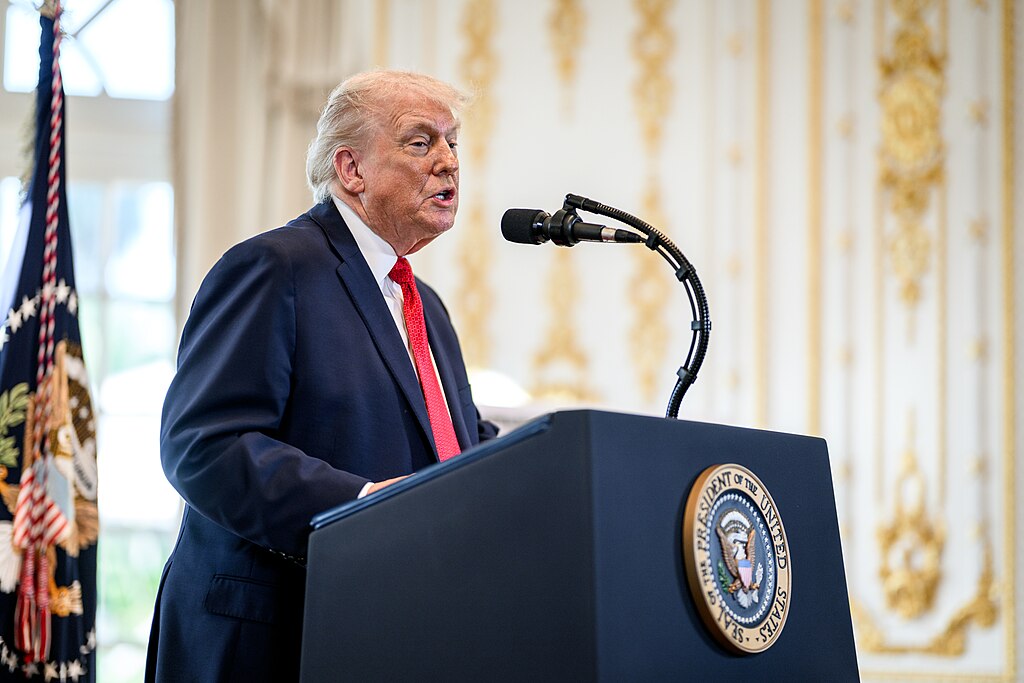
U.S. President Donald Trump said Washington wants a role in shaping Iran’s future leadership as the conflict involving the United States, Israel, and Iran intensified, with widespread airstrikes and missile attacks escalating tensions across the Middle East.
In a phone interview with Reuters, Trump stated that the United States should have a voice in determining who will lead Iran following the death of Supreme Leader Ayatollah Ali Khamenei, who was reportedly killed during the early stage of the U.S.-Israeli military campaign. Trump also downplayed speculation that Mojtaba Khamenei, the late leader’s son and a known hardliner, would likely succeed him, suggesting he was not the preferred candidate.
The U.S. president also encouraged Iranian Kurdish forces to launch offensive operations against Tehran’s government. Trump said he would support such an effort but declined to confirm whether U.S. air power would assist Kurdish fighters. Reports indicate the Trump administration has been in contact with Iranian Kurdish groups since the strikes began.
The conflict entered its sixth day with Iranian missile and drone attacks targeting Israel as well as Gulf states including the United Arab Emirates and Qatar. Bahrain reported a refinery fire caused by a missile strike, while drone attacks were also reported near an Iranian opposition camp in Iraqi Kurdistan and at an oil field operated by a U.S. company.
Israeli forces warned residents in parts of Tehran to evacuate as airstrikes intensified. Iranian state media reported explosions across the capital, including an attack that killed 17 people at a guest house northwest of the city.
U.S. Defense Secretary Pete Hegseth said the United States has sufficient munitions to continue military operations indefinitely. Admiral Brad Cooper confirmed that U.S. forces have already struck at least 30 Iranian ships and deployed B-2 bombers to drop bunker-penetrating bombs targeting missile launch sites and weapons production facilities. According to U.S. military officials, Iranian ballistic missile launches have dropped by 90% and drone attacks by 83% since the start of the campaign.
The conflict has increasingly drawn in neighboring countries. Azerbaijan accused Iran of launching drones into its territory and temporarily closed its southern airspace, though Tehran denied the accusation. Missile warnings have also been reported in Cyprus and Turkey, highlighting the widening regional impact.
Iran’s Red Crescent reported at least 1,230 deaths inside the country since the start of the war, including 175 schoolchildren killed in an attack on a primary school in Minab. Meanwhile, Lebanon’s Health Ministry said 77 people have died as violence spread beyond Iran’s borders.
Global markets have reacted sharply to the escalating crisis. Rising oil prices have weighed on Wall Street, while disruptions to energy exports have threatened roughly 20% of global oil and liquefied natural gas supply chains. Shipping routes and air travel across the region remain heavily disrupted.
Iran’s Revolutionary Guards also claimed responsibility for striking a U.S. tanker in the Gulf, leaving the vessel on fire. Israeli Prime Minister Benjamin Netanyahu said Israel had achieved significant results but warned that the military campaign was far from over.
Iranian officials have condemned the U.S. actions, warning that Washington will face consequences for attacking Iranian forces and sinking a naval vessel in international waters. A senior Revolutionary Guards commander declared that Iran would target American forces wherever they are located.
According to sources familiar with Israel’s strategy, the next phase of the operation may focus on destroying underground bunkers where Iran stores ballistic missiles, signaling that the conflict could intensify further in the coming days.







