


 Asian Stocks Fall as Bond Yields Surge Ahead of Trump-Xi Summit
  Oil Prices Jump 3% as Houthi Attack Revives Supply Fears
  US 10-Year Treasury Yield at 6% Emerges as New Market Risk Threshold
  Asian Currencies Mixed as Dollar Holds Near Two-Month High
  China’s ‘Lipstick King’ Says AI Won’t Replace Livestream Hosts
  Russian Envoy Dmitriev Heads to US for Ukraine Talks
  Japan Private-Sector Growth Slows as Domestic Demand Weakens
  Wall Street Falls as Treasury Yields Surge, Oil Rebounds on Iran Tensions
  Trump, Xi Focus on Trade and AI at White House Summit
  Asian Stocks Fall as Surging Bond Yields Rattle Markets
  Oil Prices Surge as U.S.-Iran Diplomacy Hopes Fade
  U.S. Dollar Hits Two-Month High as Oil, Treasury Yields Surge
  U.S. 10-Year Treasury Yield Hits 2007 High as Fed Rate Hike Bets Rise
  South Korea, US Discuss Warship Building Cooperation
  US Stock Futures Fall as Treasury Yields Surge Ahead of Trump-Xi Summit
  Dollar Holds Near Two-Month High as Yen Approaches 160


 Add as a preferred source on Google
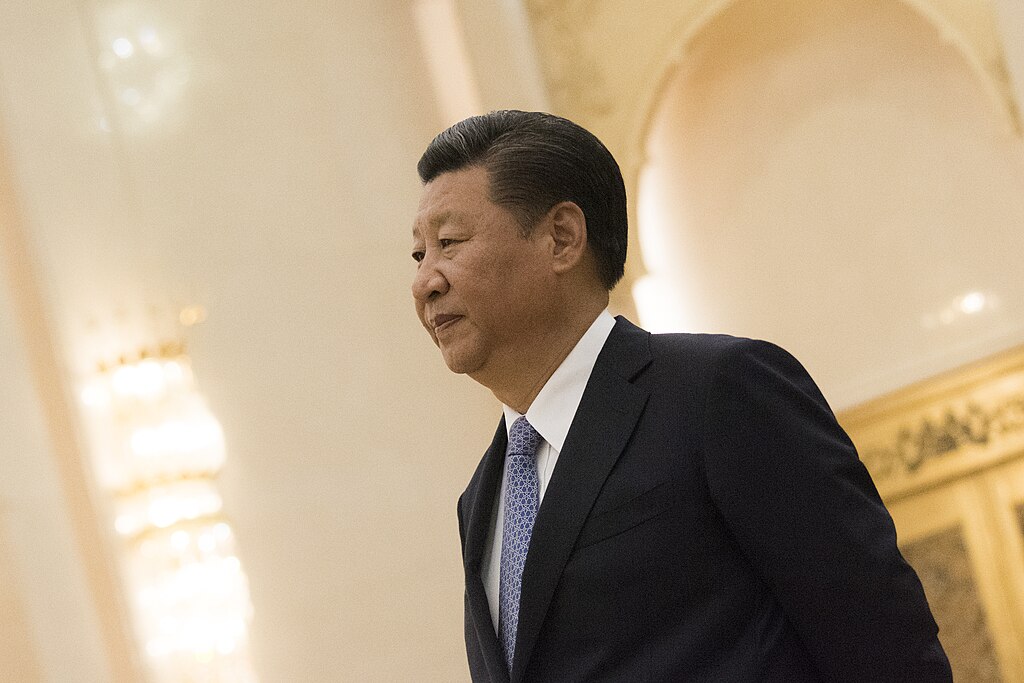
China’s political leadership gathered in Beijing as President Xi Jinping introduced a new strategic roadmap for the country’s economic and political direction during the annual National People’s Congress (NPC). The meeting, widely viewed as a key policy-setting event, outlined China’s next Five-Year Plan and highlighted priorities such as economic growth, technological leadership, defense modernization, and long-term national stability amid intensifying competition with the United States.
China set a GDP growth target of around 4.5% to 5% for the coming period, slightly below the roughly 5% growth recorded last year. The government signaled that it will continue implementing steady fiscal stimulus to support an economy still recovering from the long-term effects of the pandemic. Officials also announced a budget deficit target of about 4% of GDP, maintaining a similar level to last year as Beijing attempts to balance economic support with fiscal stability.
A major focus of the plan is strengthening China’s position in critical technologies. As global competition with Washington intensifies, Beijing is accelerating efforts to dominate fields such as artificial intelligence, quantum computing, and advanced manufacturing. China also aims to reinforce its leadership in rare earth production, which is essential for industries including electric vehicles, aerospace, semiconductors, and defense systems.
Defense spending will increase by approximately 7% in 2026 as China continues modernizing its military capabilities. Premier Li Qiang emphasized improving combat readiness and developing advanced military technologies as part of Beijing’s broader goal to complete major military modernization by 2035. Analysts are closely watching these developments, especially as geopolitical tensions in the Asia-Pacific region continue to rise.
Financial stability also remains a key priority. China plans to inject roughly $44 billion into major state-owned banks to reduce systemic financial risks while expanding funding channels for technology companies and innovation-driven industries.
Demographic challenges were another focus of the policy roadmap. Facing an aging population and declining birth rates, the government pledged to create a more “childbirth-friendly society.” Policies will target improvements in employment opportunities, education systems, and healthcare services in an effort to encourage families to have more children.
Food security remains critical to China’s long-term economic planning. Authorities announced plans to raise national grain production capacity to about 725 million metric tons between 2026 and 2030. This effort aims to reduce vulnerability to global supply disruptions while maintaining stable access to key imports such as soybeans, for which the United States remains one of China’s largest suppliers.
Environmental policy was also addressed, with China planning to accelerate reductions in carbon intensity over the next five years. Instead of focusing primarily on energy efficiency targets, the government will shift toward directly reducing carbon emissions relative to economic output, reinforcing Beijing’s broader climate commitments while maintaining economic growth.
The latest NPC announcements highlight China’s strategy to strengthen economic resilience, secure technological leadership, and expand national security capabilities in an increasingly competitive global landscape.







