


 Scott Bessent Eyed as Trump’s New AI Czar
  US, Japan and South Korea Back Taiwan Ahead of Trump-Xi Summit
  Vietnam, US Trade Deal Could Be Signed Soon, To Lam Says
  Lula and Flavio Bolsonaro Tied in Brazil Runoff Poll
  Russian Strikes Kill Eight Across Ukraine as Energy Sites Hit
  Gold Prices Rise as Oil Slide Eases Fed Rate Hike Fears
  Trump Meets Venezuela’s Delcy Rodriguez at UN Assembly
  European Stocks Slip as Iran Tensions Offset Strong Eurozone Data
  South Korea to Brief Lawmakers on $350 Billion US Investment Package
  China Tightens Fentanyl Rules Ahead of Trump-Xi Summit
  Gold Prices Slip as Strong Dollar and Hawkish Fed Pressure Bullion
  France Debt-to-GDP Ratio Seen Hitting Record 119.3% in 2026
  Trump Scales Back Endangered Species Act Protections
  Macron, Trump Discuss Ukraine-Russia Energy Strike Moratorium
  Canada Unveils Bill to Fast-Track Major Resource Projects


 Add as a preferred source on Google
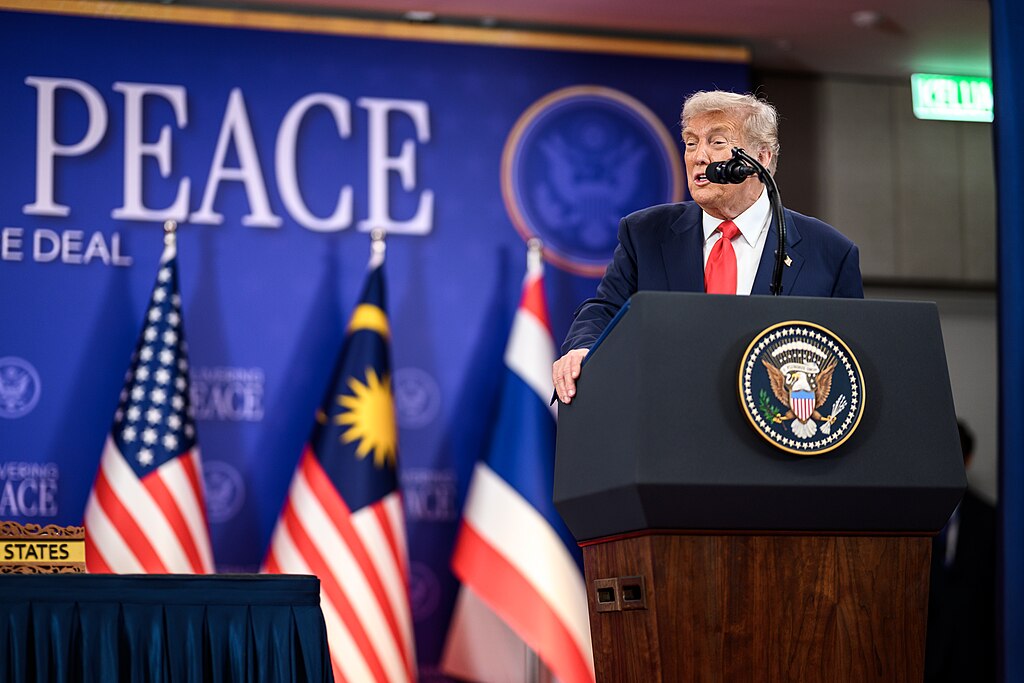
President Donald Trump said Friday that he has not yet decided whether to launch larger military strikes against Iran, emphasizing that Washington is still engaged in negotiations with Tehran even as the conflict enters its 13th consecutive day.
Speaking to reporters at the Oval Office, Trump said the U.S. has multiple options, including continuing its current military campaign or escalating operations if necessary. He stressed that diplomacy remains the preferred path, but warned that the United States is fully prepared to increase military pressure if talks fail.
"We're talking to them right now," Trump said. "They're getting more and more serious as the days go by. I think negotiating is the smarter way, but we can take military action to a much higher level if we want to. We're locked and loaded."
The comments followed reports that Trump is considering restarting broader combat operations against Iran, potentially involving more extensive strikes than those carried out since hostilities intensified. U.S. forces have targeted Iranian drone facilities, military infrastructure, and coastal surveillance sites in an effort to weaken Tehran's ability to threaten commercial shipping through the Strait of Hormuz.
Meanwhile, diplomatic efforts appear to have stalled. According to The New York Times, Iran rejected a U.S.-backed ceasefire proposal delivered by Iraqi Prime Minister Ali al-Zaidi, arguing that the proposal failed to address the future control of the Strait of Hormuz, a critical global oil shipping route.
The report said Iranian officials are preparing for the possibility of a broader regional conflict if the United States expands its military campaign. Tehran has reportedly warned it could intensify attacks against Israel and encourage Yemen's Houthi movement to disrupt shipping through the Bab al-Mandab Strait, another vital maritime corridor.
Trump also renewed threats of "major military punishment" against Iran and the Houthis after the Yemeni group claimed responsibility for attacks on two Saudi oil tankers in the Red Sea.
Geopolitical tensions have continued to support oil prices. Although Brent crude retreated Friday after briefly topping $100 per barrel, the global benchmark still posted a weekly gain of nearly 12% as traders weighed the risk of supply disruptions in both the Strait of Hormuz and the Bab al-Mandab Strait.
At home, the conflict is also creating political pressure, with some lawmakers pushing for congressional authorization before any further escalation of U.S. military operations against Iran.







