


 France Defends Netanyahu Airspace Clearance Despite ICC Warrant
  Saudi Arabia Seeks Military Support as Houthi Attacks Escalate
  Trump, Xi Focus on Trade and AI at White House Summit
  Judge Blocks Trump Rule Limiting Foreign Student Visas
  US Northeast Airports Resume Operations After Telecom Outage Disrupts Thousands of Flights
  Abbas Reaffirms November 28 Palestinian Elections
  EU Defence Build-Up Too Slow for 2030 Russia Readiness Goal
  What ‘Taiwan Independence’ Means as Xi Presses Trump on US Policy
  ICE Agent Arrested in Minneapolis Over Venezuelan Man Shooting
  FDA Weighs Safety Standards for Psychedelic Therapies
  China Tightens Fentanyl Rules Ahead of Trump-Xi Summit
  Appeals Court Rejects Trump Third-Country Deportation Policy
  Who should own the knowledge that underpins AI technology?
  Iran Rejects Nuclear Concessions in Hormuz Deal
  China Reviews Broadcom Switch Use in State Data Centres
  Trump Warns China Against Supporting Iran in Xi Talks


 Add as a preferred source on Google
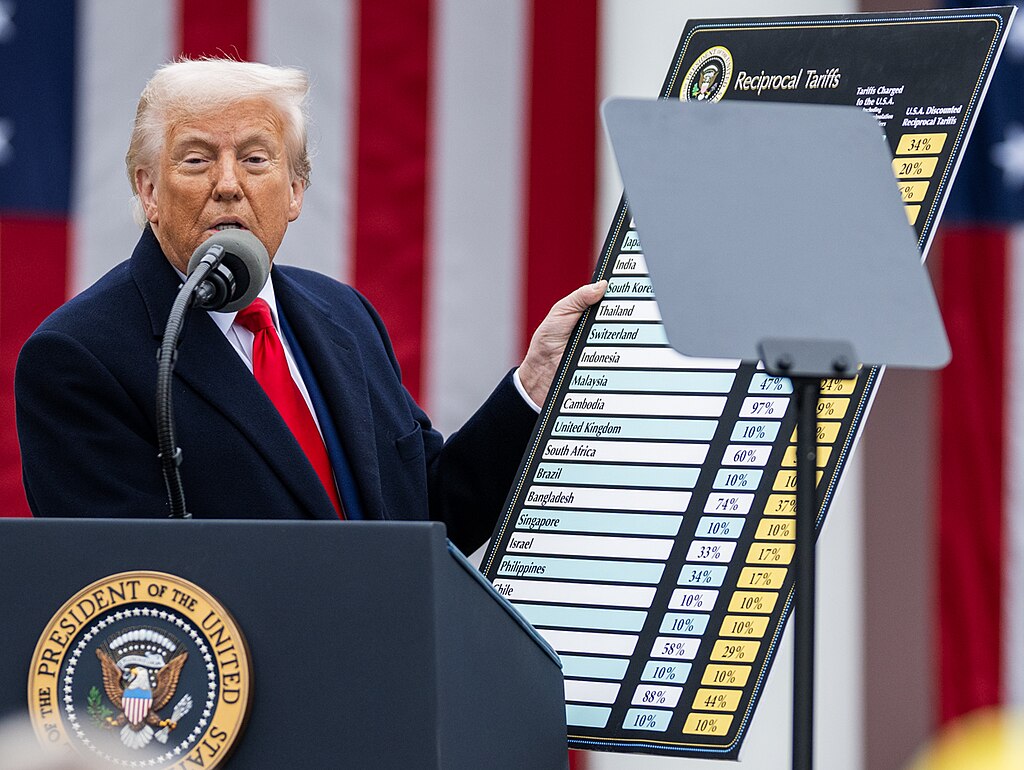
President Donald Trump announced that beginning November 1, all medium- and heavy-duty trucks imported into the United States will face a 25% tariff, marking a sharp escalation in his administration’s efforts to protect U.S. truck manufacturers from foreign competition.
Last month, Trump initially proposed new duties for heavy truck imports on October 1, citing national security concerns. He stated the measure was designed to shield domestic producers like Peterbilt and Kenworth (owned by Paccar) and Freightliner (owned by Daimler Truck) from “unfair outside competition.”
Under current trade agreements with Japan and the European Union, the U.S. applies a 15% tariff on light-duty vehicles, though it remains unclear whether this rate will extend to larger trucks. The administration has also permitted automakers to deduct U.S.-made components from tariff costs for light-duty vehicles produced in Canada and Mexico.
The new tariffs affect a wide range of vehicles, including delivery trucks, buses, tractor-trailers, and heavy-duty vocational vehicles. Industry groups, including the U.S. Chamber of Commerce, have criticized the move, noting that top import sources—Mexico, Canada, Japan, Germany, and Finland—are all U.S. allies.
Mexico, the largest exporter of medium- and heavy-duty trucks to the U.S., warned that tariffs could disrupt trade. Imports from Mexico have tripled since 2019 to about 340,000 units, with the country emphasizing that its trucks contain around 50% U.S. content.
Automakers like Stellantis, which builds Ram trucks and commercial vans in Mexico, had lobbied against the tariffs. Meanwhile, Volvo Group is investing $700 million in a new Mexican truck plant slated to open in 2026.
In 2024, the U.S. imported nearly $128 billion in heavy vehicle parts from Mexico—roughly 28% of all U.S. imports—highlighting the potential impact these tariffs could have on the North American supply chain and cross-border manufacturing.







