


 UK, Mauritius Seek Diego Garcia Base Deal
  Trump Scales Back Endangered Species Act Protections
  Scott Bessent Eyed as Trump’s New AI Czar
  US, Japan and South Korea Back Taiwan Ahead of Trump-Xi Summit
  US Plans Two New Military Bases in Greenland Under Arctic Deal
  Paramount-Warner Bros $110 Billion Deal Draws Antitrust Backlash
  Taiwan Vows to Advance US Arms Sales Ahead of Trump-Xi Meeting
  US, Denmark and Greenland Set to Sign Arctic Security Deal
  Vietnam, US Trade Deal Could Be Signed Soon, To Lam Says
  Zelenskiy Warns Russia Preparing Major Attack on Ukraine
  CNN, MS NOW and Politico Sue Trump Over White House Media Ban
  Trump Says ‘Freedom’ Is Coming to Cuba
  China Tightens Fentanyl Rules Ahead of Trump-Xi Summit
  Trump to Press Xi on Release of US Nuclear Expert Held in China
  Carney Condemns Belleville Synagogue Shooting That Wounded Police Officer
  Trump Says U.S.-Iran Peace Deal Near After UN Talks
  Trump Meets Venezuela’s Delcy Rodriguez at UN Assembly


 Add as a preferred source on Google
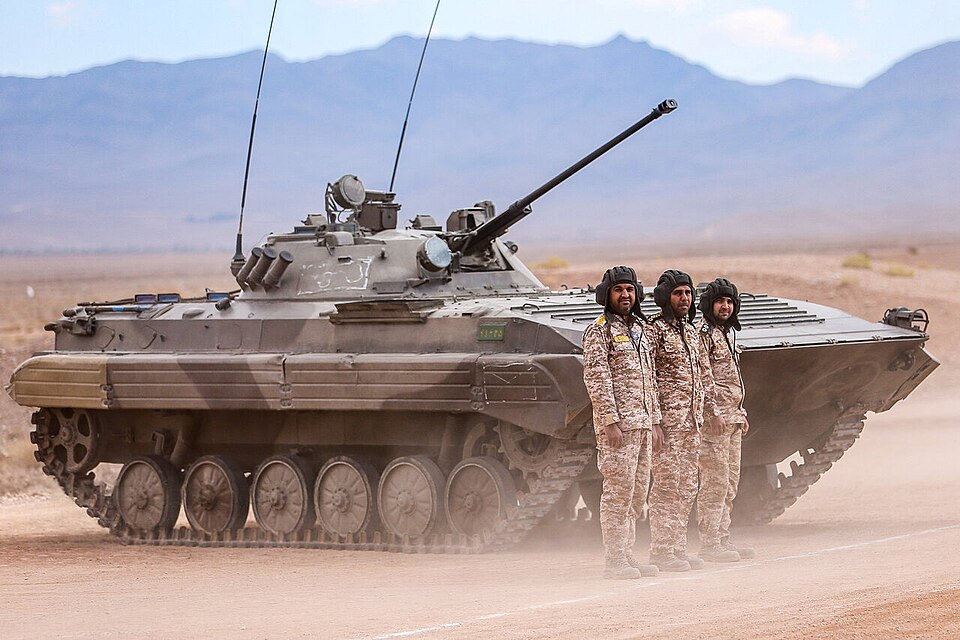
U.S. President Donald Trump ordered the military to suspend new strikes against Iran on Friday, ending nearly two weeks of daily attacks as Washington pursues a potential diplomatic breakthrough, according to Axios.
The pause comes as Oman intensifies mediation efforts between Washington and Tehran. An Omani delegation arrived in Iran on Friday to negotiate a framework that could ease tensions and help reopen the Strait of Hormuz, a vital global energy shipping route. Regional sources told Axios that progress has been made and a draft agreement could be finalized over the weekend, leaving Trump to decide whether the U.S. will accept the proposal.
Despite the diplomatic momentum, tensions remain high. On Saturday, a spokesperson for Iran’s Islamic Revolutionary Guard Corps (IRGC) warned that Britain and Gulf nations would become "legitimate targets" if they support future U.S. military operations. The spokesperson claimed U.S. bombers recently used British airfields, adding that any country assisting Washington could face retaliation.
Speaking at the White House, Trump said negotiations with Iran were becoming more productive while emphasizing that the U.S. remains prepared for military action if talks fail.
"We're locked and loaded and ready to go, but we're talking to them," Trump said, adding that reaching an agreement would be the "smarter strategy." He later told attendees at the White House Correspondents' Association dinner that while Iran may not yet be ready for a deal, he remains open to negotiations.
Axios reported that U.S. officials believe recent strikes have reached the limit of their effectiveness without expanding into a broader military campaign, although contingency plans remain in place if diplomacy collapses.
The sudden suspension reportedly surprised Israeli officials, who had been preparing for another wave of U.S. strikes and possible Iranian retaliation before learning late Friday that operations had been paused.
The conflict continues to influence global markets. Brent crude briefly climbed near $100 per barrel earlier this week before easing. Analysts at Barclays warned that any prolonged disruption to shipping through the Strait of Hormuz, which carries roughly one-fifth of global oil supplies, could drive prices toward $150 per barrel and intensify inflationary pressures worldwide.







