


 FAA Allows Boeing to Sell 35 More 777F Freighters Beyond 2028
  Trump Scales Back Endangered Species Act Protections
  US, Japan and South Korea Back Taiwan Ahead of Trump-Xi Summit
  Trump Administration Removes Confederate Memorial Criticism From Arlington Website
  Trump Sets High-Stakes UN Meetings With Zelenskiy, Gulf Leaders
  South Korea to Brief Lawmakers on $350 Billion US Investment Package
  Yen in Focus as BOJ, Fed Rate Hikes Reshape Currency Markets
  S&P 500 Historically Rallies After Midterm Elections, UBS Says
  Trump Administration Prepares Sanctions Against Entire ICC
  Canada Unveils Bill to Fast-Track Major Resource Projects
  U.S. Issues Cuba Health Alert as Illnesses Rise
  Zelenskiy Meets CIA Chief John Ratcliffe at Ireland’s Shannon Airport
  US Immigration Arrests Surge as Deportations Lag Behind
  US, Denmark and Greenland Set to Sign Arctic Security Deal
  Denmark Says Greenland Sovereignty Protected in US Military Deal
  Trump Grants Clemency to Jay-Z Associate Emory Jones
  Europe Jet Fuel Deficit Drives South Korean Imports to Four-Year High


 Add as a preferred source on Google
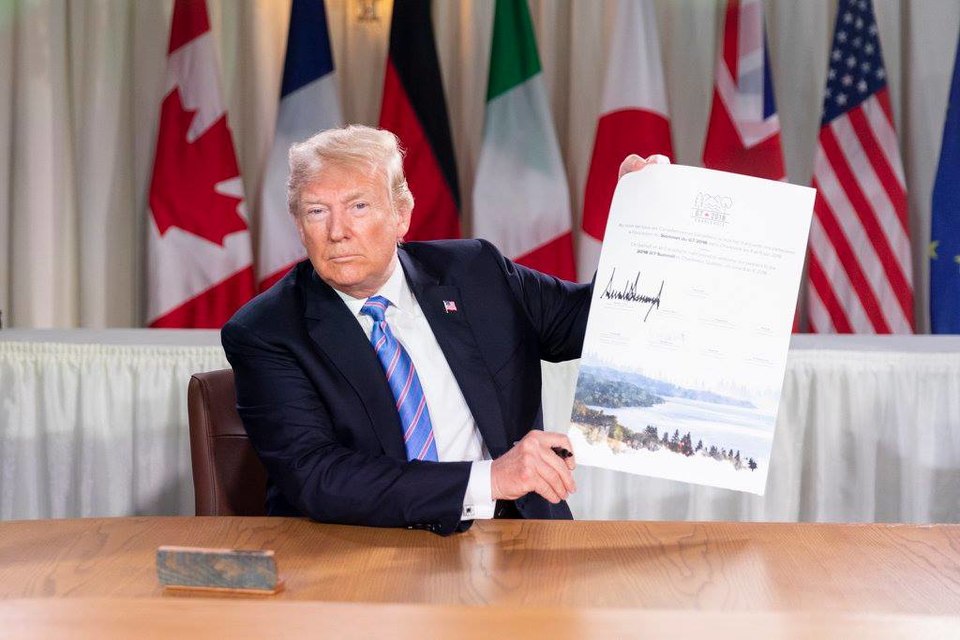
President Donald Trump’s proposed tariffs targeting countries accused of failing to combat forced labour are drawing criticism from trade experts, business organizations, and human rights advocates, who argue the measures may do little to reduce modern slavery and could potentially worsen the problem.
The Trump administration has proposed new import duties of 10% to 12.5% on goods from 60 countries, claiming these nations have not taken sufficient action against products linked to forced labour. The proposal emerged from a Section 301 investigation by the Office of the U.S. Trade Representative (USTR), aimed at restoring emergency tariffs that were invalidated by the U.S. Supreme Court earlier this year.
Critics argue the tariffs are more closely tied to trade policy than to genuine efforts to eliminate forced labour. Ram Ben Tzion, CEO of shipment-screening platform Publican, said the measure appears to be a new justification for imposing trade tariffs rather than a meaningful solution to labour exploitation.
According to the International Labour Organization (ILO), approximately 27.6 million people worldwide are trapped in forced labour, with nearly half of the cases linked to export-driven industries such as manufacturing, agriculture, mining, construction, and fishing.
The European Union has become a major focus of the U.S. criticism. Washington argues that the EU’s Forced Labour Regulation, scheduled to take effect in December 2027, sets a higher threshold for proving violations than U.S. regulations. However, the European Commission rejected the accusations, calling the proposed tariffs unjustified and reaffirming its commitment to existing trade agreements with the United States.
Experts also dispute claims that EU rules are weaker. Legal specialists note that the EU framework will ban products made with forced labour regardless of origin, while countries such as Germany and France have already implemented national supply chain due diligence laws.
Human rights organizations warn that tariffs based on trade volume rather than the severity of labour abuses may fail to address the root causes of modern slavery. Human Rights Watch and other advocacy groups argue that the approach could create political resistance instead of encouraging reforms.
While governments continue searching for ways to combat forced labour in global supply chains, many experts believe targeted enforcement, stronger corporate accountability, and comprehensive due diligence laws are likely to be more effective than broad tariff measures.







