


 Gulf Sovereign Funds Unite in Paramount–Skydance Bid for Warner Bros Discovery
  Trump Slams Super Bowl Halftime Show Featuring Bad Bunny
  FCC Chair Brendan Carr to Testify Before Senate Commerce Committee Amid Disney-ABC Controversy
  Disney’s Streaming Growth Hinges on International Expansion and Local Content
  FCC Chair Brendan Carr to Face Senate Oversight After Controversy Over Jimmy Kimmel Show
  Disney’s ABC Pulls Jimmy Kimmel Live! After Controversial Remarks on Charlie Kirk Killing
  Warner Bros. Discovery Shares Rise as Newsom Pushes Settlement in $110 Billion Merger Fight
  Mexico Probes Miss Universe President Raul Rocha Over Alleged Criminal Links
  Netflix Shuts Down Boss Fight Entertainment, Developer of “Squid Game: Unleashed” Amid Gaming Strategy Shift
  DOJ Antitrust Chief Rejects Political Fast-Track for Paramount-Skydance Deal
  Tennessee Plans to Rename Nashville Airport After Dolly Parton
  Paramount’s $108.4B Hostile Bid for Warner Bros Discovery Signals Major Shift in Hollywood


 Add as a preferred source on Google
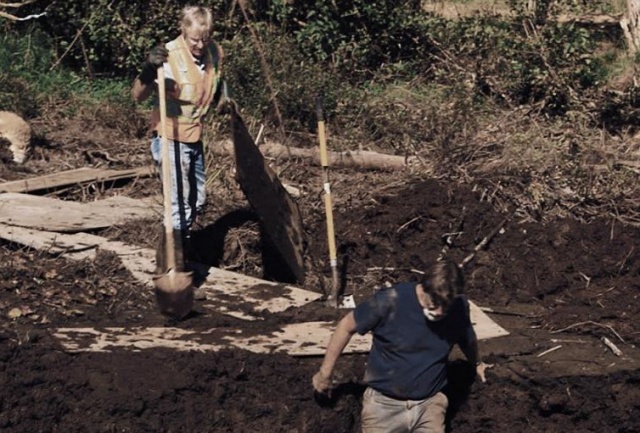
“The Curse of Oak Island” season 7 episode 13 will continue the search for the Money Pit and now that the Lagina brothers and their team of experts have also dug up some artifacts that looks like connected to the history of Nova Scotia. They keep finding clues that suggest the French have been on Oak Island even before the Money Pit was discovered.
The upcoming episode will pick up from the aftermath of hurricane Dorian. The storm flooded the swamp again, which the team tried hard to drain out.
The swamp - Is it man-made?
“The Curse of Oak Island” season 7, episode 13 has been titled “Bromancing the Stones.” As posted on History, its official synopsis reads: “Excitement abounds when Gary uncovers an ancient tunneling tool in the swamp; the team obtains hard, scientific evidence suggesting they may have finally located the original Money Pit.”
As stated, they found another tool in the swamp, and they said this would lead them to the Money Pit. Also, they found rock formations in the swamp, and they said that this was a pathway.
Experts said that there is no other way that those rocks could have piled up in the way they did, so this only suggests that the swamp was man-made. Now the team needs to find out who built it and why in “The Curse of Oak Island” season 7 episode 13.
Duc d'Anville
Rick Lagina traveled to Louisburg, Nova Scotia, Canada, to see the Fortress that was founded in 1713 by the French. It is the largest reconstructed historic site in North America, and they are visiting to find out more about Duc d’Anville.
They are interested in Duc d’Anville because he and his family seem to have a connection with the Money Pit and how it was built, so they are checking his history and the Fortress where his remains were laid in a chapel there. Further, they also discovered how they build tunnels and passageways that can remain dry even if they are near the water. After seeing the plans and waterway that can still be found in the Fortress, Rick thinks if the structures they found in Oak Island used the same system.
Ship spike
Additionally, “The Curse of Oak Island” season 7 episode 13 will be exciting after Gary Drayton found a tunneling tool and a ship spike. These ancient artifacts are believed to be from the 1800s or 1700-ish, and everyone is convinced that they are close to the original location of the Money Pit.
In the preview of “The Curse of Oak Island” season 7, episode 13, they found evidence about the possible existence of a pirate ship wharf. Marty Lagina, Dave Blakenship, and Gary Drayton unearthed the spike, and Laird Niven, an archeologist, was called to examine it.
He said that the spike could be from a shipwreck, but it more likely, it looks like it was from a wharf. With this new information, they want to know why the dock was built - was it to offload to the treasures to be buried on the Money Pit?
“The Curse of Oak Island” season 7 episode 13 will air on Feb. 11 at 8 p.m. on History.







