


 Trump Meets Venezuela’s Delcy Rodriguez at UN Assembly
  Canada Unveils Bill to Fast-Track Major Resource Projects
  South Korea, US Discuss Warship Building Cooperation
  Europe Warns Russia Is Escalating Hybrid Attacks Across NATO
  Marco Rubio to Meet Russia’s Lavrov in New York
  Trump Says U.S.-Iran Peace Deal Near After UN Talks
  Iran Vows ‘Crushing’ Response as US Talks Continue
  Gaza Faces Evacuation Crisis as War-Damaged Buildings Risk Collapse
  Venezuela Promises Elections as Delcy Rodriguez Pledges Democratic Transition
  Taiwan Vows to Advance US Arms Sales Ahead of Trump-Xi Meeting
  Trump to Press Xi on Release of US Nuclear Expert Held in China
  China Tightens Fentanyl Rules Ahead of Trump-Xi Summit
  Macron Challenges Trump’s Gaza Peace Claims at UN
  Trump Administration Plans Faster FDA Reviews for Smoke-Free Nicotine Products
  Kremlin Says No Grounds Yet for Ukraine Peace Talks
  US Invites Putin to Miami G20, Opening Door to Trump Summit
  Scott Bessent Eyed as Trump’s New AI Czar


 Add as a preferred source on Google
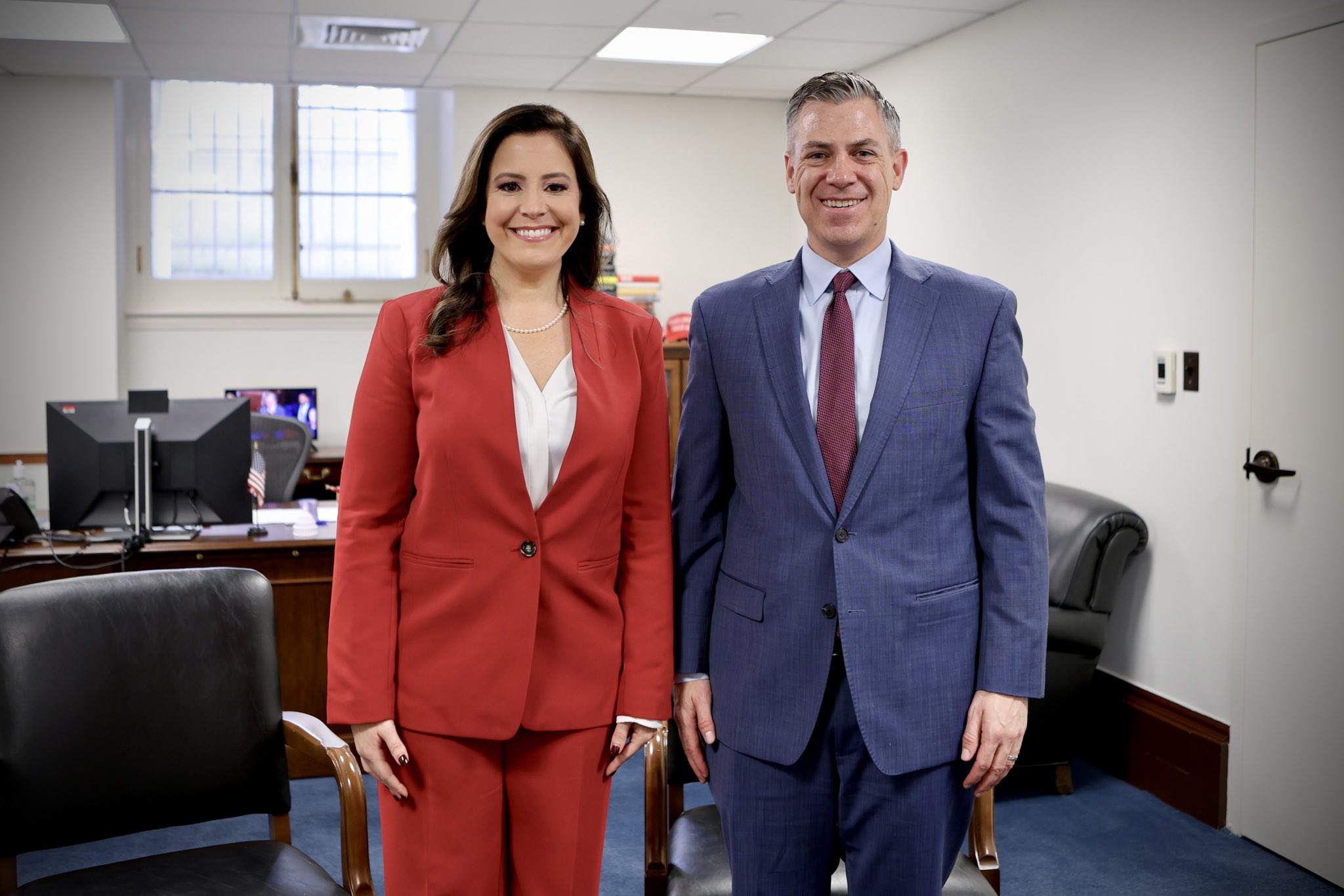
In a recent meeting on Capitol Hill, Representative Elise Stefanik (R-N.Y.) and Senator-elect Jim Banks (R-Ind.) reaffirmed their commitment to reinstating former President Donald Trump's "America First" defense policies. The two lawmakers, both prominent figures in the Republican Party, emphasized a return to a "peace through strength" approach in U.S. military and foreign affairs.
Background and Shared Service
Stefanik and Banks have a history of collaboration on the House Armed Services Committee, where they have advocated for robust defense spending and policies aimed at countering global threats. Their joint efforts have focused on enhancing military readiness and supporting service members and their families.
Commitment to 'America First' Policies
During their discussion, Stefanik expressed pride in Banks' election to the Senate and highlighted their shared vision for national defense. She stated that they plan to "return to President Trump's America First peace through strength policies on Day One," signaling a unified stance on defense strategy.
Public Reaction
The announcement has garnered mixed reactions on social media:
-
@PatriotPride: "Glad to see leaders committed to strong defense policies. Our military needs this focus."
-
@PeaceAdvocate: "Reverting to aggressive policies isn't the answer. Diplomacy should be the priority."
-
@DefenseWatcher: "Their experience on the Armed Services Committee could bring valuable insights to current challenges."
Implications for U.S. Defense Strategy
The collaboration between Stefanik and Banks suggests a potential shift in defense policy direction, emphasizing increased military spending and a more assertive global posture. This approach aligns with the "America First" doctrine, which prioritizes national interests and a strong defense capability.
Conclusion
As Stefanik and Banks prepare to influence defense policy in their respective roles, their commitment to reinstating "America First" strategies reflects a broader movement within the Republican Party to return to the defense principles of the previous administration. Their combined experience and shared vision may significantly impact the future direction of U.S. military and foreign policy.







