


 US Northeast Airports Resume Operations After Telecom Outage Disrupts Thousands of Flights
  Big AI wants to slow down AI research. Is it a safety pause or a strategic retreat?
  Rosenblatt Starts Nokia at Buy on AI Networking Growth
  FDA Adds Fatal Risk Warning to J&J and Legend Biotech’s Carvykti Cancer Therapy
  NASA Cuts Boeing Starliner Missions as SpaceX Pulls Ahead
  Trump and Merck KGaA Partner to Slash IVF Drug Costs and Expand Fertility Coverage
  DOJ Will Investigate AI-Related Crimes, Attorney General Blanche Says
  OpenAI Urges US-Led Global Standards for Frontier AI
  Databricks to Invest $350 Million in Singapore AI Expansion
  SpaceX Delays Starship V3 Launch Ahead of Potential Record IPO
  Who should own the knowledge that underpins AI technology?
  SpaceX Nasdaq 100 Weight to More Than Double in Rebalance
  Trump Plans Federal AI Force and AI Czar
  AI is supercharging money scams – here’s what you can do to protect yourself


 Add as a preferred source on Google
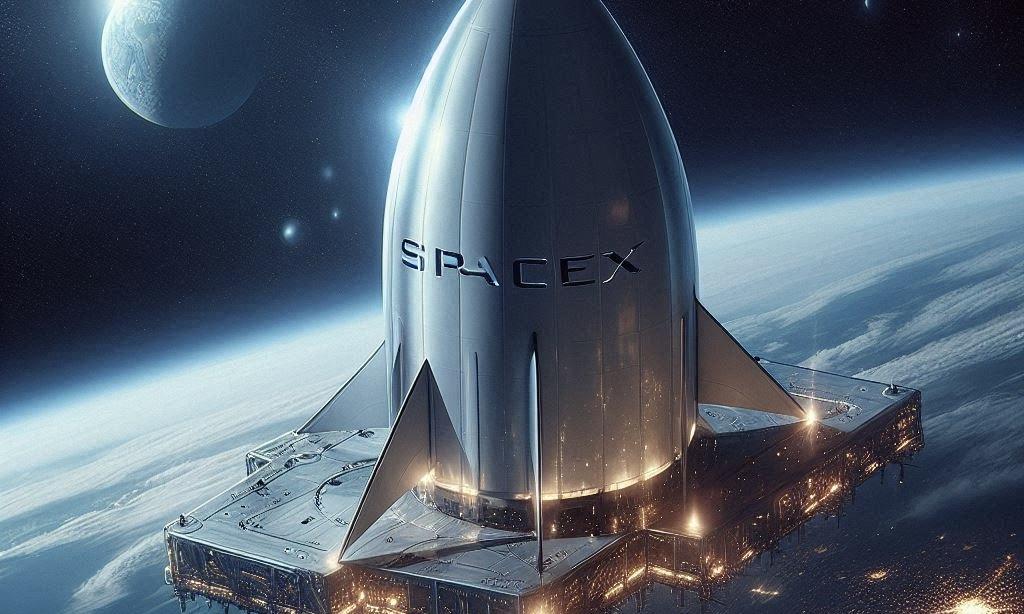
SpaceX has reassured the public that the sonic booms from its Starship rocket will not pose a risk to nearby residents. This response follows the FAA's draft assessment of SpaceX's plans to expand Starship launches in Texas.
SpaceX Addresses Public Concerns, Ensures Safety of Starship Sonic Booms Following FAA Review
In a recent Starship update, SpaceX has assured those who may be apprehensive that the sonic blasts from its Starship rocket will not be detrimental to those in the vicinity. The air surrounding SpaceX's rockets is displaced in specific ways during a landing, so they produce sonic explosions. SpaceX has confirmed that the sonic boom generated by the Starship rocket will be louder and more prominent than the Falcon 9 rocket due to its larger size.
SpaceX's most recent announcement is in response to the Federal Aviation Administration (FAA)'s draft assessment of the company's intentions to expand its Starship launches in Texas. It is intended for residents concerned about the potential disruption of their daily lives by loud sounds.
The FAA released its draft environmental assessment for SpaceX's proposal to launch up to 25 Starship orbital launches from its Texas sites within a year earlier today. The FAA requested public input on SpaceX's plans due to the potential alteration in the environmental impact of the launches. The ecological assessment document for SpaceX's Starship Super Heavy booster indicated that it will generate sonic boom "exposures of up to 21 psf for booster landings."
FAA Details Low Risk of Window Damage from Starship Sonic Booms; SpaceX Confirms Safety Measures
The FAA emphasized in the document that the likelihood of large or small windows shattering is low even though smaller sonic booms are less than two pounds per square foot (psf) in magnitude. Nevertheless, the FAA asserts that booms of the same or greater magnitude as those generated by the Super Heavy booster "represent a threshold at which the prevailing literature suggests that window breakage is feasible for standard condition windows." The regulator further specifies that the window breakage is contingent upon "size, age, orientation, surrounding structure, and other factors."
According to Wccftech, SpaceX acknowledges in its release that sonic explosions were present during NASA's Space Shuttle return and are a consistent feature of its Falcon 9 booster landings. It also states that the Super Heavy booster will produce "more powerful booms than those produced by Falcon landings."
Nevertheless, SpaceX is confident that the project will not "pose any risk of injury to those in the surrounding areas" because the "strongest effects will be localized to the area immediately around the Starbase launch pad."
The FAA's document refers to this launch site as the vertical launch area (VLA). SpaceX's most recent goals are to launch 24 daytime Starship missions from the VLA and one nighttime mission. It had previously planned five annual launches, four of which were scheduled for the day and one for the night.
The cascading water system is essential to SpaceX's Super Heavy booster landings. The FAA has stated that the inundation system will be reactivated and operate for approximately 30 seconds during a landing. Conversely, the landing site for a Starship upper-stage landing will not require water cooling.







