


 Fed Unveils Stablecoin Rules Under GENIUS Act
  Wall Street Ends Flat as Oil, Treasury Yields and Fed Jitters Rattle Markets
  Mexico-US Trade Talks Delayed to October as Tariff Negotiations Continue
  ECB May Stop Rate Hikes After December, Capital Economics Says
  Fed’s Hammack Says Bond Yield Surge Is Not Driven by Inflation Fears
  South Korea Tax Windfall Could Top 50 Trillion Won on Chip Boom
  Dollar Holds Near Two-Month High as Yen Approaches 160
  European Stocks Fall as Bond Yields and Geopolitical Risks Weigh
  Japanese Bank Stocks Surge as Bond Yields Fuel Rate Hike Bets
  Trump, Xi Focus on Trade and AI at White House Summit
  UK PM Burnham to Unveil Economic Vision at Labour Conference
  Canadian Dollar Faces Pressure as Fed-BoC Policy Gap Widens
  China Consumer Stocks Near Decade Lows as AI Shares Surge
  Soybean Futures Slip as Traders Await Trump-Xi Trade Signals
  Europe’s AI Data Centre Boom Strengthens Case for Nuclear Power
  Dollar Falls as Oil Eases, Yen Jumps on Intervention Signals


 Add as a preferred source on Google
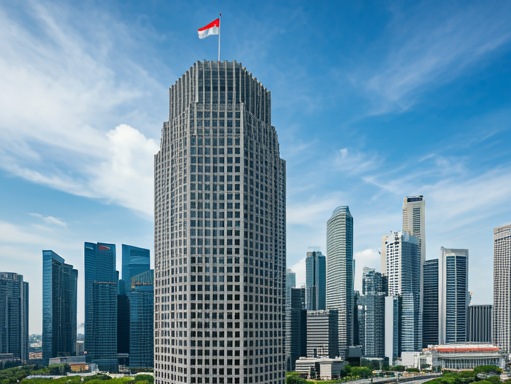
Singapore's Central Bank Maintains Monetary Policy Amid Economic Recovery
On Monday, Singapore's central bank, the Monetary Authority of Singapore (MAS), decided to keep its monetary policy settings unchanged, aligning with market expectations. This decision comes as new data indicates a rebound in the economy during the third quarter. However, analysts anticipate a possible loosening of policy early next year to mitigate external risks.
The MAS confirmed that it would sustain the current rate of appreciation within its exchange rate-based policy band, known as the Nominal Effective Exchange Rate (S$NEER). Both the width and central level of the band will also remain unchanged, reflecting a cautious but steady approach to monetary management.
Growth Momentum and Balanced Inflation Risks
In its recent statement, the MAS highlighted that the risks to Singapore's inflation outlook are now more balanced compared to three months ago. The central bank noted a positive growth momentum, indicating a healthier economic landscape.
According to advanced trade ministry data, Singapore's gross domestic product (GDP) increased by 4.1% year-on-year in the third quarter, buoyed by a robust manufacturing sector. This growth marked an acceleration from the previous quarter's 2.9% growth rate, prompting policymakers to express optimism for the economic outlook in 2025.
Selena Ling, an economist at OCBC, commented on the improved growth outlook, stating, "The growth outlook is more sanguine." However, she also cautioned about potential risks from geopolitics and trade conflicts, suggesting that the MAS might consider loosening monetary policy during its next review in January.
Concerns Over Tight Monetary Policy
Capital Economics’ market economist, Shivaan Tandon, echoed this sentiment, noting that the risks of maintaining a tight monetary policy for an extended period are becoming increasingly prominent. He predicts that the central bank will need to adjust its stance soon.
The MAS anticipates that Singapore's economy will grow within the upper range of the trade ministry's revised GDP growth forecast for 2024, which is between 2.0% and 3.0%. However, the bank also warned of "significant" uncertainties due to external risks that could impact economic stability.
"A sharp escalation in geopolitical and trade conflicts could exert sizeable drags on global and domestic investment and trade," the MAS stated, emphasizing the challenges ahead.
Singapore's Unique Monetary Policy Approach
Singapore is often viewed as a bellwether for global economic health, given that its international trade significantly surpasses its domestic economy. The MAS employs a distinctive method for managing monetary policy, focusing on adjusting the exchange rate of the Singapore dollar against a basket of currencies rather than relying on domestic interest rates, as is common in many other countries.
The MAS utilizes three primary levers for policy adjustments: the slope, mid-point, and width of the policy band. From October 2021 to October 2022, the central bank implemented five tightening measures—including two off-cycle adjustments—to combat rising inflation during the pandemic and amid global geopolitical instability. Since then, it has maintained a steady policy stance as concerns over economic growth have outweighed inflationary pressures.
Looking Ahead
With a manufacturing-led uptick in economic growth expected to wane amid slowing global demand, Tandon believes that the MAS will need to respond proactively. "With policy very tight by historical standards, the economy set to weaken, and the MAS appearing less concerned about inflation, we expect the central bank to loosen policy in January," he noted.
The MAS has forecasted core inflation to further decline to approximately 2% by the end of 2024, following a decrease from a peak of 5.5% in early 2023. Core inflation reached a 2.5% low in July before edging up to 2.7% in August, signaling a positive trend.







