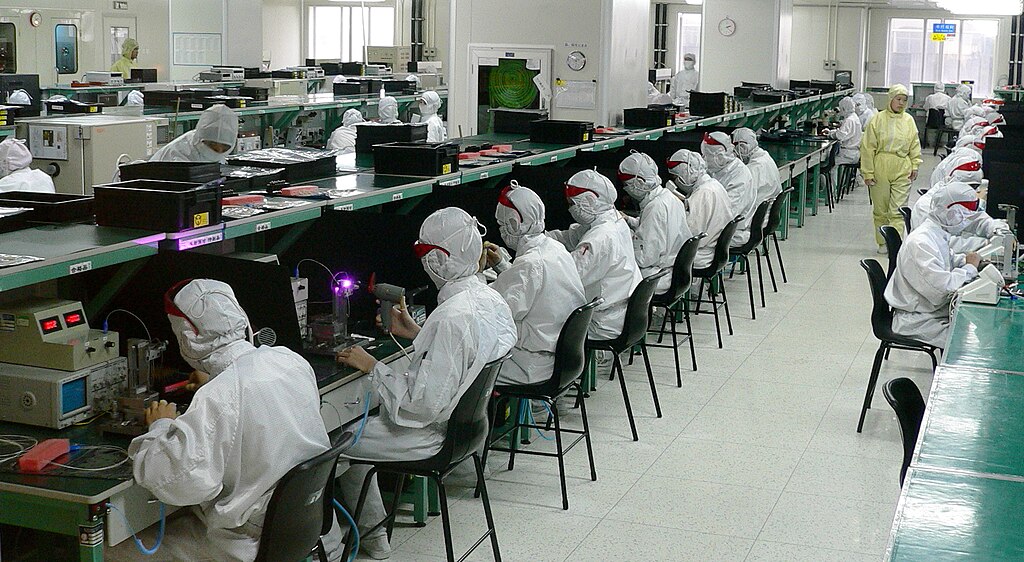
China’s manufacturing sector is expected to return to modest growth in June, supported by resilient exports tied to the booming global artificial intelligence (AI) industry. However, economists caution that the recovery remains fragile as weak domestic demand, a prolonged property downturn, and sluggish consumer spending continue to weigh on the world’s second-largest economy.
According to a Reuters survey of 23 economists, China’s official Purchasing Managers’ Index (PMI) is forecast to edge up to 50.1 in June from 50.0 in May. A reading above the 50-point mark signals expansion, while any figure below indicates contraction. The official PMI data is scheduled for release on Tuesday.
Although the expected increase suggests factory activity has stabilized, the projected reading reflects only marginal growth, highlighting the challenges facing China’s manufacturing sector despite strong overseas demand for high-tech products.
One of the key drivers behind the improvement has been the surge in global investment in artificial intelligence. Rising demand for semiconductors, AI hardware, and automated data processing equipment has helped China offset the broader slowdown in traditional exports and cushion the impact of geopolitical tensions in the Middle East.
Economists noted that many exporters also accelerated shipments in June amid uncertainty surrounding U.S. trade policy. Xu Tianchen, Senior Economist at the Economist Intelligence Unit (EIU), said evidence points to trade frontloading as companies rushed to ship goods before new U.S. Section 301 tariffs take effect later in July.
Among the forecasts in the Reuters poll, the Economist Intelligence Unit projected the strongest PMI reading at 50.4, while Moody’s Analytics offered the most cautious estimate at 49.7, indicating continued contraction.
Recent economic data paints a mixed picture for China’s economy. Industrial profits released over the weekend showed robust gains in upstream industries and computer-related manufacturing, reflecting strong demand for technology products. However, downstream manufacturers continued to struggle as the country’s prolonged property crisis dampens consumer spending and business confidence.
China’s central bank has also reportedly instructed several commercial banks to expand lending during June, according to sources familiar with the matter. The move underscores policymakers’ concerns that credit demand remains weak despite previous stimulus efforts, as households and businesses remain cautious about spending and investment.
While exports helped China exceed economic growth expectations during the first quarter of the year, analysts say the recovery is becoming increasingly concentrated in advanced technology sectors. Official trade data showed exports of automated data processing equipment surged more than 60% year over year by value, reflecting strong international demand linked to AI infrastructure. In contrast, exports of more traditional products such as furniture increased by just 1.9%, highlighting uneven export performance across industries.
The domestic economy continues to face significant headwinds. Retail sales declined in May for the first time in more than three years, signaling weaker consumer confidence. At the same time, new home prices recorded an even steeper decline, extending the downturn in China’s struggling real estate market and weighing on broader economic activity.
Investors will also closely monitor the private-sector RatingDog manufacturing PMI, due on Wednesday. The survey is expected to ease slightly to 51.6 from 51.8 in May, suggesting private manufacturers may continue expanding, albeit at a slower pace.
Overall, China’s June factory data is expected to show that AI-driven export demand continues to support manufacturing growth. However, economists believe sustained economic recovery will ultimately depend on stronger domestic consumption, improved credit demand, and greater stability in the country’s property market.