


 Moldova Criticizes Russia Amid Transdniestria Energy Crisis
  UBS Projects Mixed Market Outlook for 2025 Amid Trump Policy Uncertainty
  U.S. Stocks vs. Bonds: Are Diverging Valuations Signaling a Shift?
  US Gas Market Poised for Supercycle: Bernstein Analysts
  Moody's Upgrades Argentina's Credit Rating Amid Economic Reforms
  Stock Futures Dip as Investors Await Key Payrolls Data
  China’s Growth Faces Structural Challenges Amid Doubts Over Data
  Goldman Predicts 50% Odds of 10% U.S. Tariff on Copper by Q1 Close
  Gold Prices Fall Amid Rate Jitters; Copper Steady as China Stimulus Eyed
  Fed May Resume Rate Hikes: BofA Analysts Outline Key Scenarios
  China's Refining Industry Faces Major Shakeup Amid Challenges
  Wall Street Analysts Weigh in on Latest NFP Data
  UBS Predicts Potential Fed Rate Cut Amid Strong US Economic Data
  Lithium Market Poised for Recovery Amid Supply Cuts and Rising Demand
  S&P 500 Relies on Tech for Growth in Q4 2024, Says Barclays
  Oil Prices Dip Slightly Amid Focus on Russian Sanctions and U.S. Inflation Data
  Gold Prices Slide as Rate Cut Prospects Diminish; Copper Gains on China Stimulus Hopes


Singapore's traditional mix of paternalist politics and free-market economics will likely stay under pressure from structural social changes, despite the governing People's Action Party's (PAP) landslide victory in the general election held last Friday, says Fitch Ratings. That said, the Singapore sovereign's fundamental strengths provide for a strong foundation on which to evolve the country's socio-economic model.
It is notable that the PAP's victory comes at a time when the country is facing long-term challenges ranging from rising income disparity, aging demographics, and the need to raise productivity to boost long-term growth. This has resulted in social pressures, with public discontent growing in recent years over large-scale immigration, rising costs of living and infrastructure bottlenecks.. The government has sought to change the country's traditional policy model in response, outlining an explicitly redistributionist fiscal policy in the most recent budget for the financial year ending 31 March 2016. New social welfare and healthcare programmes for the poor and elderly have been introduced. The top marginal income tax rate was raised (to 22% from 20%) to partly fund the new programmes.
The governing party's election victory, therefore, will likely be seen as a mandate to continue the implementation of these new policies. However, the social pressures to transition the country's more laissez-faire economic model are unlikely to abate. Fitch maintains that these challenges are structural in nature and will not be resolved solely by fiscal policy in the short term.
That said, the city-state is well-placed to adapt to structural challenges. Singapore is one of only 12 'AAA'-rated sovereigns in the world and one of two in the Asia-Pacific region. The country's high rating is backed by structural strengths, including high incomes, strong public institutions, and a sound fiscal framework, and underscored by low sovereign debt, exceptional external finances and a robust banking system.
Singapore's general government fiscal balance averaged a surplus of 15.8% of GDP from 2010-2014 versus the 'AAA' median of a 1.3% deficit. General government debt, at an average of 43.9% of GDP from 2010-2014 was also below the 'AAA' median. The country's external account stability is reflected in a large current account surplus and net FDI flows of more than 20% of GDP in 2014.
The PAP won 69.9% of the popular vote at the elections held on 11 September, up from a historic low of 60.1% in the previous 2011 vote. This translates into 83 of 89 parliamentary seats, with the opposition Workers' Party holding the remainder.

- News

- Economy

- Central Banks
- Investing
- Research
- Roundups
- Digital Currency
- Insights
- Technical Analysis
- Technology
- Business
- Law
- Health
- Nature
- Fintech
- Science
- Topic
- Opinions
- ©Econometrics LLC . All Rights Reserved.
Singapore election result won't diminish policy pressures
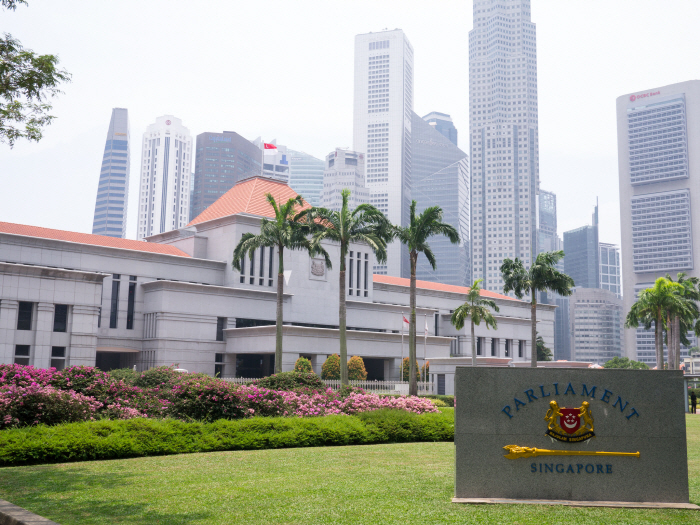
Singapore Parliament (Rym DeCoster_Flikr)
Tuesday, September 15, 2015 1:15 AM UTC
Editor's Picks



- Market Data
Most Popular




