


 FxWirePro: Daily Commodity Tracker - 21st March, 2022


The ruling People's Action Party (PAP) won 83 out of the 89 seats being contested in the general election on 11 September (7 May 2011 GE: 81 of 87) on a voter turnout of 93.56%. For the first time opposition parties contested all 89 seats but only managed to win six seats by the Workers' Party (WP) - similar to its performance in the 2011 election (1991: 4 seats) but well short of the WP's own expectation of winning up to 20 seats.
Significantly, the opposition WP failed to hold its pre-election total of seven elected seats, after losing the seat it had won in a by-election on 26 January 2013. The result points to a reversal of support for the opposition, who were campaigning for more curbs on immigration and foreign workers, more spending on welfare, and a minimum wage. The Prime Minister hopes to form his cabinet by 26 September.
For economic policy, the result implies an increasing focus on enhancing medium term competitiveness - a push that was started after the 2011 election.
"We think there is likely to be more attention focused on issues relating to the constraints on growth - namely, the affordability of healthcare, a more optimal foreign-local labor force mix, the efficiency of public transportation and the quality of life for the 'sandwiched' middle income group. More importantly, for a party that has always set the agenda during elections, the last two polls indicated that the government had improved the manner in which it reaches out to the electorate and had adopted a more inclusive style of policymaking," noted Barclays.
The result also implies that the focus of monetary policy will remain on the key medium-term driver of core inflation - a tight labour market - and little has changed in this regard since the April MPS.

- News

- Economy

- Central Banks
- Investing
- Research
- Roundups
- Digital Currency
- Insights
- Technical Analysis
- Technology
- Business
- Law
- Health
- Nature
- Fintech
- Science
- Topic
- Opinions
- ©Econometrics LLC . All Rights Reserved.
A boost for continuity as ruling party adapts to new political landscape in Singapore
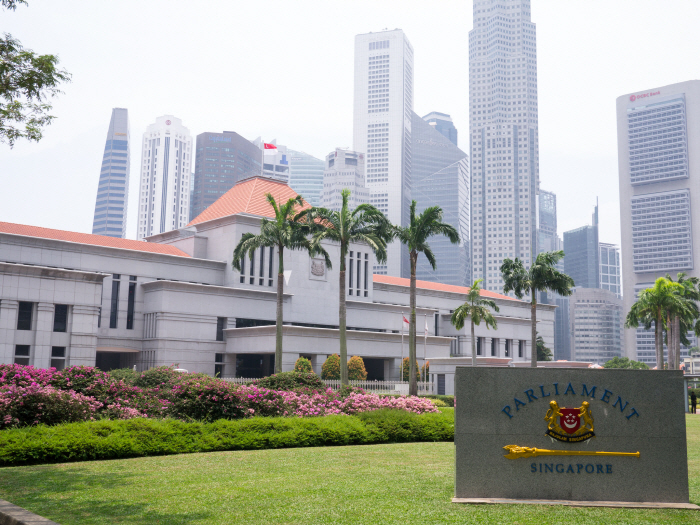
Singapore Parliament (Rym DeCoster_Flikr)
Monday, September 14, 2015 1:07 AM UTC
Editor's Picks



- Market Data
Most Popular




