


 European Stocks Fall as Bond Yields and Geopolitical Risks Weigh
  Oil Prices Ease as Iran Tensions Clash With Diplomacy Hopes
  Mexico-US Trade Talks Delayed to October as Tariff Negotiations Continue
  Gold Prices Fall as Treasury Yields Rise on Fed Rate Hike Bets
  Asian Stocks Fall as Bond Yields Surge Ahead of Trump-Xi Summit
  China’s ‘Lipstick King’ Says AI Won’t Replace Livestream Hosts
  Japanese Bank Stocks Surge as Bond Yields Fuel Rate Hike Bets
  Asian Currencies Mixed as Dollar Holds Near Two-Month High
  US 10-Year Treasury Yield at 6% Emerges as New Market Risk Threshold
  RBI Uses $10 Billion Currency Swaps to Drain Excess Rupee Liquidity
  Dollar Holds Near Two-Month High as Yen Approaches 160
  Oil Prices Jump 3% as Houthi Attack Revives Supply Fears
  Canadian Dollar Faces Pressure as Fed-BoC Policy Gap Widens
  Japanese Yen Rebounds as Trump Flags Currency Weakness
  Fed’s Hammack Says Bond Yield Surge Is Not Driven by Inflation Fears


 Add as a preferred source on Google
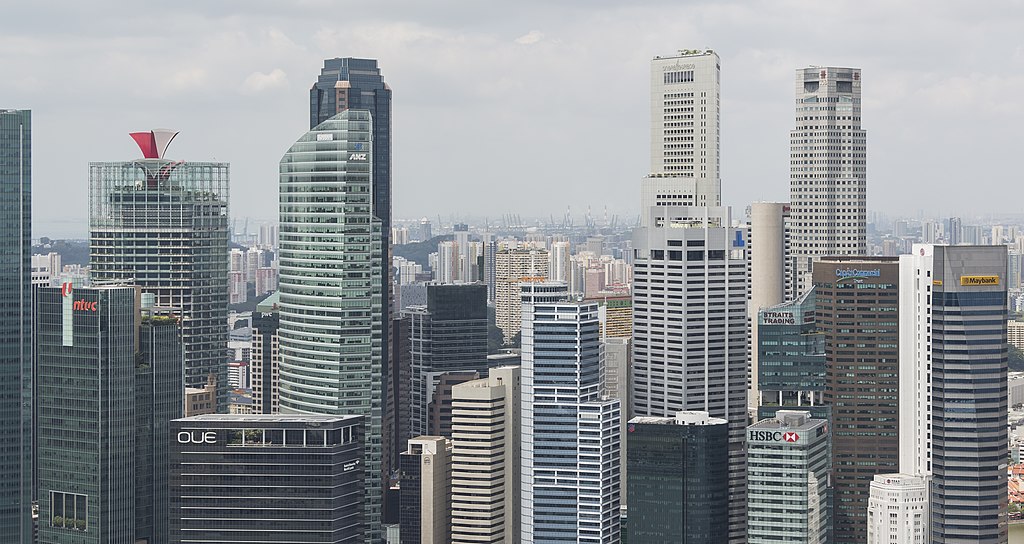
Economists have upgraded their forecasts for Singapore’s economic growth in 2025, while anticipating a moderation in momentum the following year, according to the latest survey of forecasters released by the Monetary Authority of Singapore (MAS). The December-quarter survey reflects growing optimism about near-term growth, balanced by caution over emerging global risks and expectations that Singapore’s monetary policy will remain unchanged in the months ahead.
The median forecast for Singapore’s GDP growth in 2025 was raised sharply to 4.1%, up from 2.4% in the previous survey conducted in September. However, growth is projected to ease to 2.3% in 2026 as global conditions normalize. This outlook broadly aligns with the Ministry of Trade and Industry’s revised forecast in November, which lifted its 2025 growth estimate to “around 4.0%” from an earlier range of 1.5% to 2.5%.
Economists surveyed also expect the economy to have grown 3.6% year-on-year in the fourth quarter, supported by stronger-than-expected performance earlier in the year. Data released in November showed Singapore’s economy expanded 4.2% in the third quarter, beating both market expectations and initial estimates.
Despite the improved growth outlook, risks remain firmly in focus. Most respondents cited geopolitical tensions as the top downside risk to Singapore’s open and trade-dependent economy. Notably, four in ten economists highlighted the potential bursting of an artificial intelligence bubble as a concern, a risk that was not mentioned in the September survey. On the upside, a sustained AI-led technology cycle and resilient global growth were seen as key factors that could further support Singapore’s expansion.
On monetary policy, consensus remains strong that the MAS will keep its policy settings unchanged at the upcoming review in January, following a similar decision in October. Most economists also expect no change at the April review, while 11% anticipate a possible tightening by July 2026.
Inflation expectations remain stable for this year, with median forecasts for core and headline inflation at 0.7% and 0.9% respectively. Looking ahead to next year, economists expect inflation to pick up modestly, with core inflation seen at 1.3% and headline inflation at 1.5%, broadly in line with MAS guidance.







