


 Anthropic’s Claude Discovers CRISPR-Like Enzyme System
  Japan Private-Sector Growth Slows as Domestic Demand Weakens
  US Stock Futures Rise as Meta Muse Fuels AI Rally
  US, China Extend Trade Truce to Jan. 10 Ahead of Trump-Xi Summit
  Paramount-Warner Bros $110 Billion Deal Draws Antitrust Backlash
  Australia Unemployment Hits Five-Year High Despite Strong Jobs Growth
  Gold Prices Rise as Oil Slide Eases Fed Rate Hike Fears
  CNN, MS NOW and Politico Sue Trump Over White House Media Ban
  US Dollar Hits Two-Month High as Fed Rate Hike Bets Rise
  US 10-Year Treasury Yield at 6% Emerges as New Market Risk Threshold
  Oil Prices Surge as U.S.-Iran Diplomacy Hopes Fade
  Gold Prices Fall as Treasury Yields Rise on Fed Rate Hike Bets
  Gold Prices Rise as Oil Slump Eases Fed Rate Hike Fears
  Oil Prices Ease as Iran Tensions Clash With Diplomacy Hopes
  RBI Uses $10 Billion Currency Swaps to Drain Excess Rupee Liquidity
  fnny Beta Launches With a Simple Idea: Find an Event, Show Up, Get Rewarded


 Add as a preferred source on Google
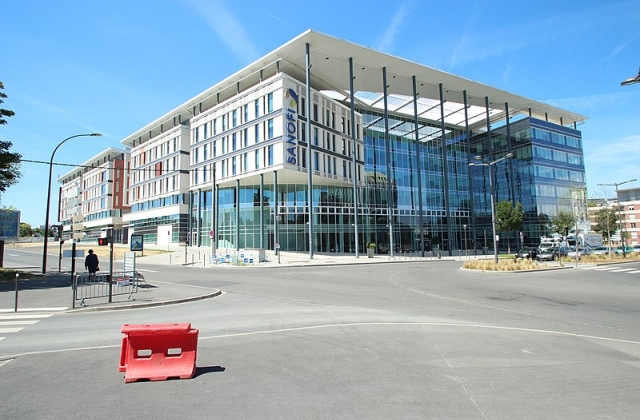
Sanofi confirmed on Monday, April 12, that it is investing in Singapore for its vaccine production in the region. The French drugmaker is spending S$637 million or around €400 million that will be given out in over five years.
Sanofi’s new facility will be set up at SG’s Tuas Biomedical Park, and it will mainly be for the production of vaccines to be supplied in Asia. It was said that with the investment, the company is not just aiming to produce a massive amount of vaccines but to be able to quickly respond to pandemic risks that can happen in the future.
Sanofi’s vaccine plant in Asia
Moreover, this project will be able to provide jobs to the locals, especially after the construction of the plant is completed. The drugmaker shared that it will start the construction of the facility in the third quarter of this year and targets the first quarter of 2026 as the period when the center would be fully operational.
“As a major healthcare player, it’s our responsibility to act and to meet the unprecedented growing demands for vaccines,” Sanofi Pasteur’s executive vice president and global head, Thomas Triomphe, said in a press release. “By investing in a new production site in Singapore, Sanofi is aiming to strengthen production capacity to meet ever-growing global demands on vaccines, and answer more rapidly to future pandemics.”
He added that they chose Singapore for the facility because the region will complement the company’s current manufacturing capacities in North America and Europe. Sanofi stated the site is perfect and will help Sanofi become a regional center of excellence for vaccine production in Asia.
The vision for Sanofi’s SG plant
Singapore’s Economic Development Board chairman, Beh Swan Gin, also said, "Sanofi's decision to locate its first-in-Asia digitally-enabled vaccine production center in Singapore, to supply markets in the region and beyond, is an endorsement of Singapore's position as a leading center for advanced manufacturing."
The facility will feature fully digitalized modules that are said to have the capacity to produce three to four vaccines at the same time. In normal industrial sites, it is only possible to make one at a time.
Finally, Singapore’s Trade and Industry Minister Chan Chun Sing confirmed Sanofi’s plant through a Facebook post. He said that the project is another great investment that will be very beneficial for the country too.
“When this facility comes online in 2026, together with the other companies like GSK Biologicals and Thermo Fisher Scientific, we will have the full capability for end-to-end production of almost all kinds of vaccines in Singapore, for ourselves and for the world,” he wrote.







