


 DOJ Will Investigate AI-Related Crimes, Attorney General Blanche Says
  Petrobras Joins Brazil’s New Diesel Subsidy Program
  Apple Pay Set for India Launch With Axis Bank
  Meta Partners With Shopify to Bring Shop Pay Checkout to Muse AI
  OpenAI Urges US-Led Global Standards for Frontier AI
  FCC Approves Foreign Investment in $110B Paramount-Warner Bros. Deal
  NASA, Boeing Discuss Expanding Starliner Missions
  Japan, U.S. Discuss $19 Billion GlobalFoundries Chip Plant
  Westinghouse Targets $50 Billion Valuation in U.S. IPO
  Who should own the knowledge that underpins AI technology?
  Guterres Urges Stronger Global AI Safeguards Ahead of UN Assembly
  Databricks to Invest $350 Million in Singapore AI Expansion
  White House Bars CNN, MS NOW and Politico Reporters
  Volvo Cars Plans 13 New Models by 2030 to Boost Sales
  SK Hynix, Intel Discuss U.S. Memory Chip Production Deal
  Qualcomm Gains on $60B Amazon AI Chip Deal
  SpaceX Nasdaq 100 Weight to More Than Double in Rebalance


 Add as a preferred source on Google
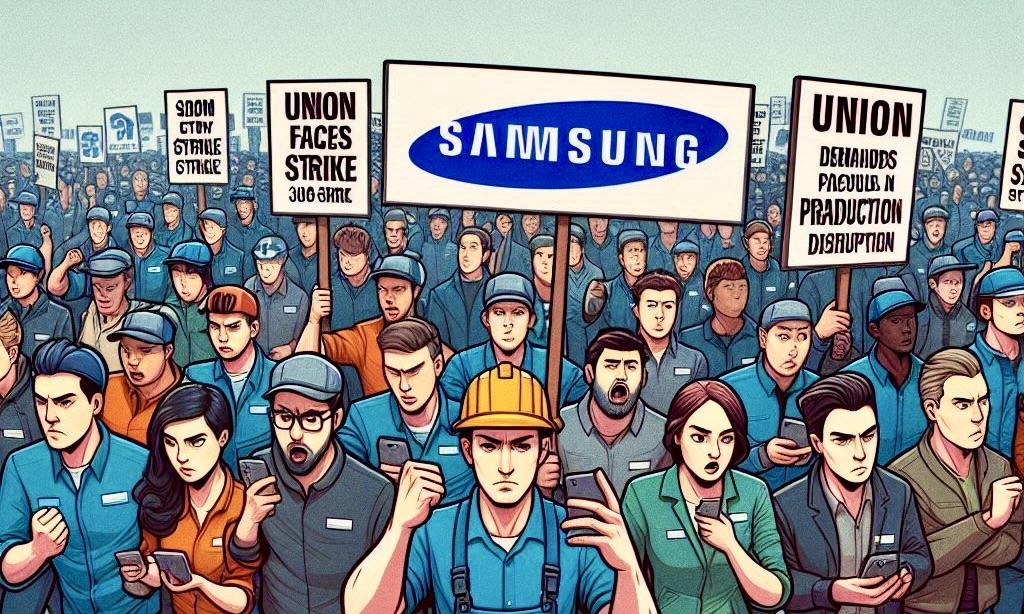
Samsung Electronics' 30,000-strong union launched a three-day strike demanding better pay and bonuses, yet production remains unaffected, analysts say.
Union Size and Representation
Samsung Electronics workers began a three-day strike for better pay on Monday, threatening future action if South Korea's largest corporation doesn't meet their demands.
With about 30,000 members, the National Samsung Electronics Union (NSEU) represents nearly 25% of the South Korean workforce at the company. The NSEU is also seeking modifications to the employee bonus system and an additional day of paid leave for unionized workers.
Analysts say the strike is unlikely to affect output at the world's largest memory chipmaker due to low participation and automated operations. Still, it indicates a drop in workforce morale at a crucial time in the chip sector as big corporations adopt AI.
Last month, the union coordinated annual leave to stage a mass walkout, which Samsung stated had little impact on business. The company reported no production disruptions on Monday.
Operations and Potential Impact
The union claimed 6,540 workers will strike this week, largely at production locations and in product development. It did not disclose participation in last month's strike. Operations may be hampered by the walkout, which includes workers who supervise automated production lines and equipment.
About 3,000 strikers rallied in the rain near Samsung's headquarters in Hwaseong, south of Seoul, union officials said.
Son Woo-mok, union president, told Reuters that the five-year-old union did not have enough time to educate members about the difficulties.
"Education about labour unions ... has not been enough. But I don't think this participation is low because our union is still young compared to other unions," he claimed.
Threat of Future Strikes
Lee Hyun-kuk, the union's vice president, threatened more strikes if Samsung doesn't improve its offers. Lee told Reuters that Samsung's wage and leave ideas are flexible but don't match union demands for more.
Investing reports that union representatives also demand bonus equality. Executive bonuses are based on personal performance goals, while rank-and-file bonuses are derived by subtracting the cost of capital from operating profit.
"I was telling people that I was proud to work at Samsung, but the truth is I am not," said Park Jun-ha, 20, a semiconductor packaging engineer who joined Samsung in January. He also complained about its "opaque" bonus plan.
The union's membership has surged since Samsung committed to stopping the suppression of organized labor in 2020. Analysts said its emerging voice is demanding attention as Samsung strives to compete in AI processors.







