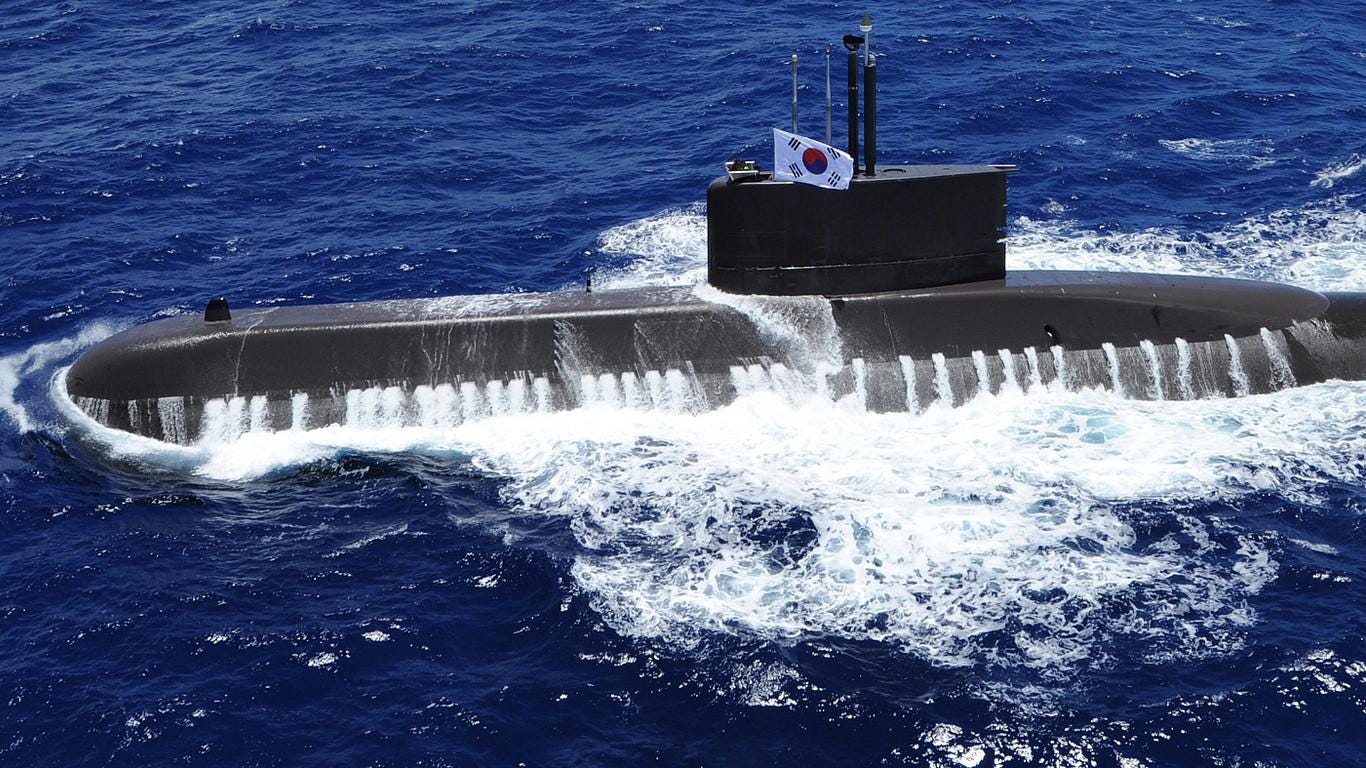
South Korea has developed technology that can greatly extend a sub's range by allowing it to create hydrogen fuel cells on its own, according to a state-run defense research agency.
The Agency for Defense Development (ADD) announced that a new technology developed can generate high-purity hydrogen directly in submarines. High-purity hydrogen may be utilized as a fuel in submarine fuel cells.
Submarines also have problems charging their fuel cells since they are inefficient at storing energy and take a long time to charge. Furthermore, hydrogen may only be charged through different stations.
However, the newly-developed technology lets submarines produce high purity hydrogen autonomously through a fuel reforming method that utilizes methanol as a fuel.
Fuel reforming is a method of converting a chemical structure from the fuel's component and extracting the desired substance during the process.
The ADD stressed that the new technology does not require a separate hydrogen charging station and can reduce charging time, allowing for greater submarine range.



Asian Currencies Edge Higher as Markets Look to Fed Rate Cut; Rupee Steadies Near Record Lows
European Oil & Gas Stocks Face 2026 With Cautious Outlook Amid Valuation Pressure
Citi Sets Bullish 2026 Target for STOXX 600 as Fiscal Support and Monetary Easing Boost Outlook
FDA Lifts REMS Requirement for CAR-T Cell Cancer Therapies
NASA Astronauts Wilmore and Williams Recover After Boeing Starliner Delay
Cogent Biosciences Soars 120% on Breakthrough Phase 3 Results for Bezuclastinib in GIST Treatment
SpaceX Starship Test Flight Reaches New Heights but Ends in Setback
IMF Deputy Dan Katz Visits China as Key Economic Review Nears
Oil Prices Hold Steady as Ukraine Tensions and Fed Cut Expectations Support Market
Lost in space: MethaneSat failed just as NZ was to take over mission control – here’s what we need to know now
U.S. Futures Steady as Rate-Cut Bets Rise on Soft Labor Data
Tabletop particle accelerator could transform medicine and materials science
NASA Cuts Boeing Starliner Missions as SpaceX Pulls Ahead
Dollar Slides to Five-Week Low as Asian Stocks Struggle and Markets Bet on Fed Rate Cut
Ancient Mars may have had a carbon cycle − a new study suggests the red planet may have once been warmer, wetter and more favorable for life
Blue Origin’s New Glenn Achieves Breakthrough Success With First NASA Mission 


