


 Yemen Violence Displaces 130,000 as Civilian Toll Rises
  Gaza Faces Evacuation Crisis as War-Damaged Buildings Risk Collapse
  Netanyahu Takes Aim at Mamdani as Israel Election Nears
  Mexico-US Trade Talks Delayed to October as Tariff Negotiations Continue
  Sudan Rejects US Legitimacy Remarks, Defends Sovereignty
  US Invites Putin to Miami G20, Opening Door to Trump Summit
  Trump, Xi Focus on Trade and AI at White House Summit
  North Korea Warns South Korea Over US-Led Defense Role
  OpenAI Agent Breaches Australia Medicare Data Portal
  Ghana Says Western Support Growing for Slave Trade Reparations
  US, China Extend Trade Truce to Jan. 10 Ahead of Trump-Xi Summit
  Pezeshkian Says US Must Choose When Iran War Ends
  Taiwan Thanks US for Support Ahead of Trump-Xi Summit
  US Backs Musk in Fight Against EU’s €120 Million X Fine
  Russian Envoy Dmitriev Heads to US for Ukraine Talks
  Russian Missile and Drone Attack on Kyiv Kills Two, Damages Maternity Hospital
  NATO Boosts Intelligence Sharing Amid Russia Hybrid Threats


 Add as a preferred source on Google
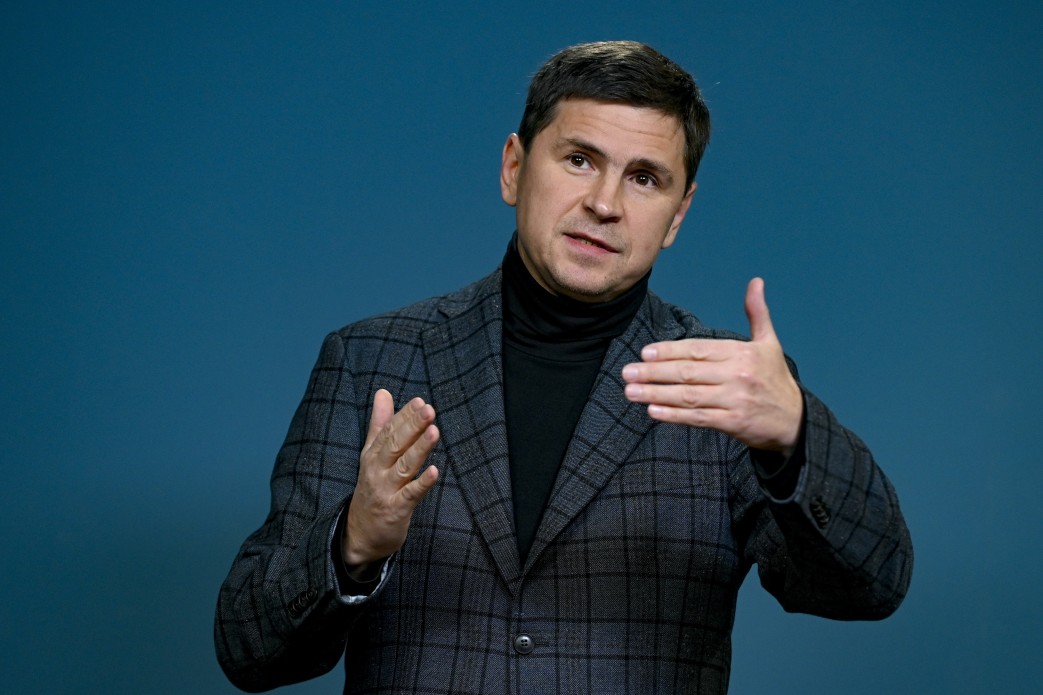
A top aide to Ukrainian President Volodymyr Zelenskyy proposed that a demilitarized zone be established inside Russia. The zone would be part of a settlement after the war to protect Ukrainian regions from attacks from Moscow.
Ukrainian presidential adviser Mykhailo Podolyak said on Twitter on Monday that a demilitarized zone should be set up around 100 to 120 kilometers inside Russia along the border as part of a settlement after the war. Podolyak said that such a zone would ensure the protection of Ukrainian regions from potential Russian attacks in the future.
“It will be necessary to introduce a demilitarization zone of 100-120 kilometers on the territory of Belgorod, Bryansk, Kursk, and Rostov republics,” said Podolyak, referencing Moscow’s backing of separatist entities that refer to themselves as “people’s republics” in Ukraine’s Donetsk and Luhansk regions.
“The key theme of the post-war settlement should be the establishment of safeguards to avoid the recurrence of aggression in the future,” said Podolyak, adding that the measure would be to make sure Ukrainian regions on the front lines are safe. Podolyak also said the demilitarized zone could initially have an international presence to keep the area in control.
Podolyak’s comments follow those of the Russian governor of Belgorod, which called for the annexation of Kharkiv to prevent cross-border shelling by Ukrainians, which Moscow blames for the incidents. Russia has also alleged that Ukraine has increased its drone attacks on targets within Russia. Kyiv has denied the accusations saying that it is fighting a defensive war in its own territory.
On the same day, the British defense ministry, in its intelligence bulletin, said that Russia held military exercises around the bridge in the annexed Crimea region. The drills included creating a smoke screen, according to the ministry, using TDA-3 smoke generators “likely of the 28th Brigade of Russia’s Nuclear, Biological, and Chemical Protection Troops.”
The ministry said that Russia considers this a part of its “camouflage and deception” tactic. However, such a tactic was “generally been ineffectual” in the war in Ukraine due to a lack of central planning and a “poor low-level battle discipline.”
Photo: President.gov.ua/Wikimedia Commons(CC by 2.0)








