


 Meta Partners With Shopify to Bring Shop Pay Checkout to Muse AI
  Qualcomm Gains on $60B Amazon AI Chip Deal
  Scott Bessent Eyed as Trump’s New AI Czar
  Nvidia CEO Jensen Huang Expected at Trump-Xi State Dinner
  Apple Pay Set for India Launch With Axis Bank
  Cathie Wood Backs AI Slowdown as Safety Concerns Grow
  China Reviews Broadcom Switch Use in State Data Centres
  Rosenblatt Starts Nokia at Buy on AI Networking Growth
  NASA, Boeing Discuss Expanding Starliner Missions
  Japan, U.S. Discuss $19 Billion GlobalFoundries Chip Plant
  US Northeast Airports Resume Operations After Telecom Outage Disrupts Thousands of Flights
  SoftBank Launches $11 Billion Bond Sale to Fund OpenAI Investment
  Guterres Urges Stronger Global AI Safeguards Ahead of UN Assembly
  SpaceX Nasdaq 100 Weight to More Than Double in Rebalance
  Trump Plans Federal AI Force and AI Czar
  Who should own the knowledge that underpins AI technology?
  Physicists zoom into the birth of cosmic rainstorms with new CERN study


 Add as a preferred source on Google
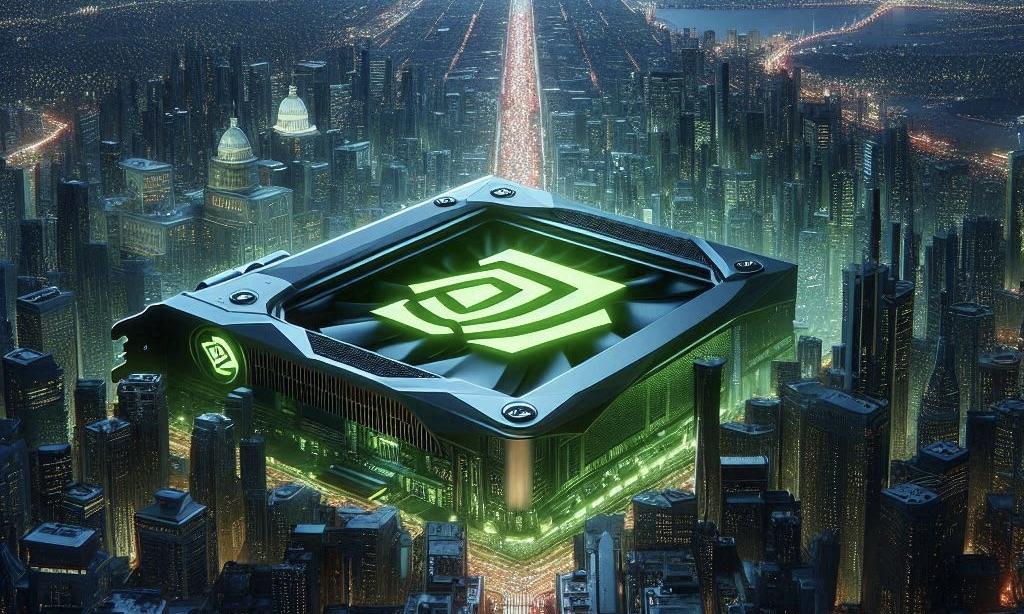
Nvidia, a leading player in the semiconductor industry, could face substantial financial setbacks as the U.S. government considers imposing new trade restrictions on its China-oriented HGX-H20 AI GPU. According to a recent report by Jefferies, this move could cost Nvidia up to $12 billion in revenue, signaling a significant blow to the company’s financial health and market strategy.
The U.S. government's potential ban on the HGX-H20 is part of a broader effort to curb China’s access to advanced artificial intelligence technology. This strategic decision aligns with ongoing geopolitical tensions and aims to limit China’s technological advancements in AI, as per Tom's Hardware.
The HGX-H20, designed to meet U.S. export regulations while delivering robust AI performance, includes up to 296 INT8 TOPS/FP8 TFLOPS, 96 GB of HBM3 memory, and 4.0 TB/s memory bandwidth. Despite being less powerful on paper than other high-end processors, the HGX-H20 outperforms its competitors, including Huawei’s Ascend 920-series AI processors, in practical applications, largely due to superior memory performance.
Analysts from Jefferies highlight the potential for the U.S. to implement various forms of bans on the HGX-H20. These could range from a product-specific prohibition to the chip’s computing power or memory capacity restrictions. Such measures are expected to significantly disrupt Nvidia’s sales in China, a critical market for its advanced GPUs.
Chinese AI companies, heavily reliant on Nvidia’s CUDA platform, would face substantial challenges transitioning to alternative systems like Huawei’s Ascend processors. The compatibility of the HGX-H20 with Nvidia’s existing CUDA ecosystem makes it a preferred choice despite being slower than the top-tier H100 GPU. This reliance underscores the potential upheaval a U.S. ban could cause within the Chinese tech sector.
Current U.S. export controls have not entirely prevented Chinese companies from acquiring advanced Nvidia GPUs for AI and high-performance computing (HPC) through intermediaries or by renting cloud services from firms like Google and Microsoft. This workaround indicates the difficulty in fully enforcing such bans and suggests that Chinese entities may continue to access necessary GPU performance through alternative means.
Extending export restrictions to other Asian countries, such as Malaysia, Indonesia, and Thailand, as well as potentially overseas Chinese companies, is also under consideration. However, implementing these controls effectively presents significant challenges. Enforcing bans on access to cloud services by Chinese entities would be particularly problematic due to the vast processing power required for AI training.
As the U.S. reviews its semiconductor export policies in October, Nvidia braces for potential ramifications that could reshape its market dynamics and financial outlook. The outcome of these deliberations will affect Nvidia and have broader implications for the global semiconductor and AI industries. The tech world watches closely as this high-stakes geopolitical and economic situation unfolds, with significant impacts anticipated for all stakeholders involved.







