


 Trump, Xi Focus on Trade and AI at White House Summit
  US Senate Rejects Iran War Powers Resolution in 50-49 Vote
  US Officials Split Over Response to Israeli West Bank Settlements
  Taiwan Thanks US for Support Ahead of Trump-Xi Summit
  Europe Warns Russia Is Escalating Hybrid Attacks Across NATO
  EU Defence Build-Up Too Slow for 2030 Russia Readiness Goal
  Sudan Rejects US Legitimacy Remarks, Defends Sovereignty
  France Defends Netanyahu Airspace Clearance Despite ICC Warrant
  South Korea, US Discuss Warship Building Cooperation
  Netanyahu Defends Israel at UN as Delegates Stage Walkout
  US, China Extend Trade Truce to Jan. 10 Ahead of Trump-Xi Summit
  Russian Missile and Drone Attack on Kyiv Kills Two, Damages Maternity Hospital
  Netanyahu’s Brief US Trip Highlights Strains With Trump
  North Korea Warns South Korea Over US-Led Defense Role
  NATO Boosts Intelligence Sharing Amid Russia Hybrid Threats
  Gaza Faces Evacuation Crisis as War-Damaged Buildings Risk Collapse
  North Korea Rejects Nuclear Test Warning, Calls Nuclear Status Irreversible


 Add as a preferred source on Google
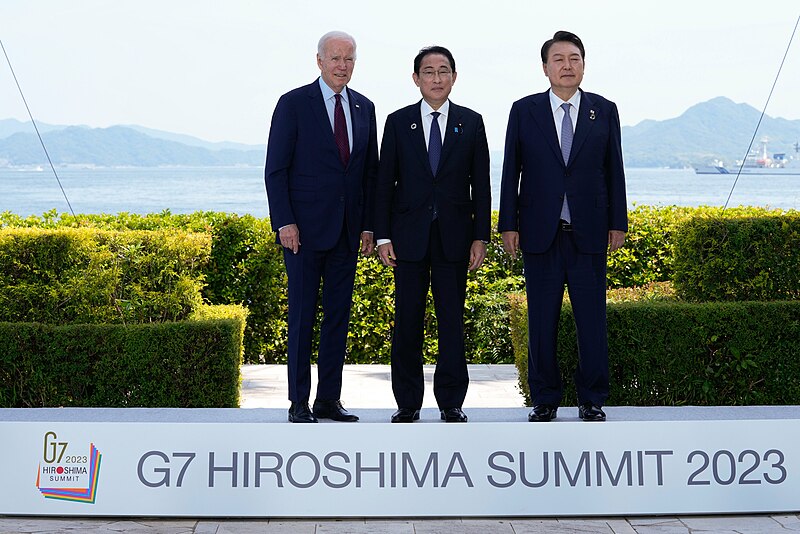
North Korean state media criticized the agreement made between the United States, South Korea, and Japan that would allow the three countries to share information in real-time on the isolated nation’s missile launches. This follows the agreement made by the three allies during the G7 summit to strengthen security cooperation.
North Korean state media outlet KCNA criticized the missile warning agreement between the US, Japan, and South Korea on Thursday. KCNA said the three countries were taking “sinister measures” to strengthen their military cooperation. North Korean international affairs analyst Kang Jin-song said in the commentary that the information-sharing accord is part of the US efforts to provoke and boost its military edge in the region by “cooking up” the Asian version of the NATO alliance.
“This is heightening the vigilance of regional countries including the DPRK to the maximum,” said Kang, referring to the initials of North Korea’s formal name, the Democratic People’s Republic of Korea.
Kang’s comments follow the meeting between the leaders of the three countries at the G7 Summit in Hiroshima, Japan, where they agreed to strengthen security cooperation in the face of potential threats in the region, including Pyongyang and its nuclear and missile programs. The discussions between the three leaders included new coordination and economic security as well as their respective strategies in the Indo-Pacific region, according to the White House.
KCNA also criticized other US-led agreements such as the AUKUS pact with Australia and the United Kingdom, the Five Eyes intelligence-sharing alliance, and the Quad group of countries. KCNA said the alliances were exclusionary and confrontational.
Meanwhile, a report by the US-based think tank 38 North said that satellite images have shown that the construction of North Korea’s satellite launching station “has hit a new level of urgency,” making it likely part of the preparations for a launch. The report said that satellite images on Monday showed that progress in a launch pad located east of North Korea’s Sohae Launching Station was ramped up at a “remarkable pace.”
The report noted that should the launch pad be for servicing liquid-fuel rockets, then more infrastructure would be needed. In the Sohae launch site, crews were also found to have completed modifications to the gantry tower as work continues on storage for fuel and oxidizer.
Photo: Office of the US Ambassador to Japan/Wikimedia Commons(CC by 2.0)








.jpg)