


 EU Defence Build-Up Too Slow for 2030 Russia Readiness Goal
  Najib Razak Seeks Stay of 15-Year 1MDB Prison Sentence
  NATO Boosts Intelligence Sharing Amid Russia Hybrid Threats
  Trump, Xi Focus on Trade and AI at White House Summit
  North Korea Warns South Korea Over US-Led Defense Role
  France Defends Netanyahu Airspace Clearance Despite ICC Warrant
  Netanyahu Takes Aim at Mamdani as Israel Election Nears
  Netanyahu’s Brief US Trip Highlights Strains With Trump
  Ukrainian Drone Attacks Hit Russian Regions, Injuring at Least 12
  Abbas Reaffirms November 28 Palestinian Elections
  Russian Missile and Drone Attack on Kyiv Kills Two, Damages Maternity Hospital
  OpenAI Agent Breaches Australia Medicare Data Portal
  Taiwan Thanks US for Support Ahead of Trump-Xi Summit
  Yemen Violence Displaces 130,000 as Civilian Toll Rises
  Netanyahu Defends Israel at UN as Delegates Stage Walkout
  Kremlin Says No Decision Yet on Putin-Trump December Summit
  Sudan Rejects US Legitimacy Remarks, Defends Sovereignty


 Add as a preferred source on Google
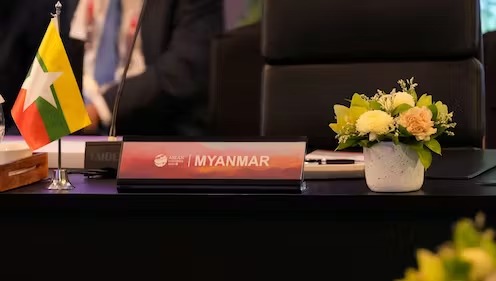
Voters in conflict-ravaged Myanmar queued on Sunday to cast ballots in the second phase of a military-organized election, an exercise widely criticized by the international community as an attempt to legitimize junta rule rather than restore democracy. The polls come amid ongoing civil war and humanitarian crisis following the military coup in 2021 that overthrew the elected civilian government and led to the detention of Nobel Peace Prize laureate Aung San Suu Kyi.
Since the coup, Myanmar has faced escalating violence between the military and resistance groups, leaving large parts of the country unstable. The election has been marred by controversy from the outset, with Suu Kyi’s National League for Democracy (NLD), which won a landslide victory in the 2020 general election, dissolved along with dozens of other opposition parties for failing to register. Rebel groups and key opposition figures have refused to participate, calling the process illegitimate.
The first phase of voting, held on December 28, recorded a turnout of just over 52%, significantly lower than previous elections in 2015 and 2020. Despite the low participation, the military-backed Union Solidarity and Development Party (USDP) secured 90 out of 102 contested lower house seats, placing it firmly on track for a sweeping victory. Analysts argue that the outcome was largely predetermined due to restrictive election laws and the absence of genuine political competition.
The United Nations, Western governments, and human rights organizations have labeled the election a sham, stating it cannot be free or fair without meaningful opposition. According to conflict monitoring groups, more than 16,600 civilians have been killed since the coup, and the UN estimates that 3.6 million people have been displaced, highlighting the scale of Myanmar’s humanitarian emergency.
The junta claims the election will pave the way for political stability and economic recovery, with a final voting round scheduled for January 25 across 265 of Myanmar’s 330 townships. However, experts warn that any military-controlled government formed through this process is unlikely to gain international recognition or bring lasting peace, as fighting continues in areas beyond full junta control.







