


 European Stocks Rally on Chinese Growth and Mining Merger Speculation
  Energy Sector Outlook 2025: AI's Role and Market Dynamics
  U.S. Stocks vs. Bonds: Are Diverging Valuations Signaling a Shift?
  China's Refining Industry Faces Major Shakeup Amid Challenges
  Fed May Resume Rate Hikes: BofA Analysts Outline Key Scenarios
  Gold Prices Slide as Rate Cut Prospects Diminish; Copper Gains on China Stimulus Hopes
  US Gas Market Poised for Supercycle: Bernstein Analysts
  Geopolitical Shocks That Could Reshape Financial Markets in 2025
  UBS Predicts Potential Fed Rate Cut Amid Strong US Economic Data
  Moldova Criticizes Russia Amid Transdniestria Energy Crisis
  Indonesia Surprises Markets with Interest Rate Cut Amid Currency Pressure
  Global Markets React to Strong U.S. Jobs Data and Rising Yields
  Lithium Market Poised for Recovery Amid Supply Cuts and Rising Demand
  U.S. Treasury Yields Expected to Decline Amid Cooling Economic Pressures
  Urban studies: Doing research when every city is different
  Mexico's Undervalued Equity Market Offers Long-Term Investment Potential
  UBS Projects Mixed Market Outlook for 2025 Amid Trump Policy Uncertainty


Moody's Investors Service says that sales for its rated Chinese property developers will stay healthy in 2H 2015, while the pressure on home prices will continue to ease.
"We expect that our rated developers will continue to deliver sales growth, taking advantage of the current strong sales momentum, while national sales will also stay healthy," says Franco Leung, a Moody's Vice President and Senior Analyst.
"And while overall nationwide inventory levels have remained high, both tier-one and sample tier-two cities continued destocking in July 2015," adds Leung. "Accordingly, we expect to see a continued easing in home price pressures through 2015, as developers manage down inventory levels."
Leung was speaking on the release of Moody's latest "China Property Focus".
The newsletter notes that in the first seven months of 2015, national sales grew by 16.8% year-on-year, while contracted sales for the 20 Moody's-rated and tracked property developers grew by 12.3%. But Moody's expects these rated developers to outperform the broader market in sales growth in 2H 2015 as they have scheduled a higher proportion of new project launches during the period.
Moody's further says that the pick-up in sales is the result of supportive monetary and regulatory polices implemented since 2H 2014, which include the increased availability of mortgages, as well as lower down-payments and funding costs to buyers financing their second homes with bank mortgages.
Moody's notes that residential home prices continued to recover in July in China's 70 major cities; and, in particular, the pace of price declines on a month-on-month basis moderated, with 29 of the 70 cities reporting falls in July 2015, down from 34 in June 2015.
In addition, Moody's says that the depreciation of the renminbi that has followed the shift in the mechanism for determining the daily fixing rate of the Chinese currency against the dollar is credit negative for Chinese property developers, given their significant exposure to foreign-currency debt, the majority of which is denominated in USD.
Nevertheless, all else being equal, Moody's believes that the majority of its rated developers could withstand up to a 10% depreciation of the RMB relative to foreign currencies without it impacting their credit ratings.
Furthermore, it is possible that other factors could counterbalance the impact of an RMB depreciation, including the potential for further declines in domestic interest rates and the ongoing opening up of the domestic bond market as a funding avenue.

- News

- Economy

- Central Banks
- Investing
- Research
- Roundups
- Digital Currency
- Insights
- Technical Analysis
- Technology
- Business
- Law
- Health
- Nature
- Fintech
- Science
- Topic
- Opinions
- ©Econometrics LLC . All Rights Reserved.
Moody's: Chinese property sales growth to stay healthy; price pressures ease
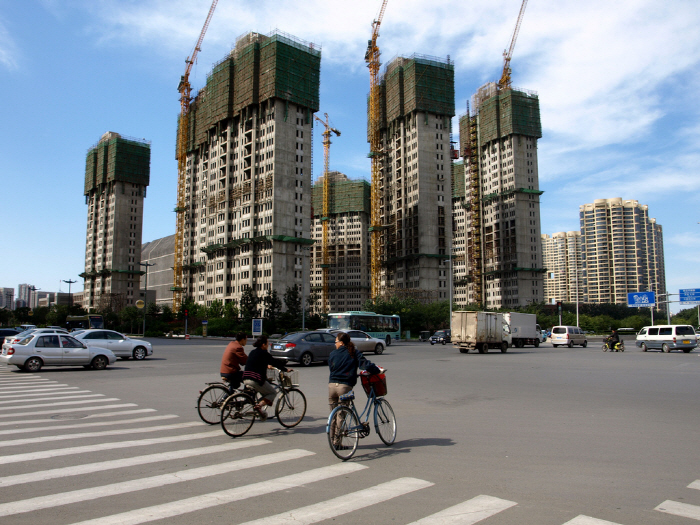
Tianjin rising (Hugi Olafsson_Flikr)
Friday, August 28, 2015 2:51 AM UTC
Editor's Picks



- Market Data
Most Popular




