


 OpenAI Urges US-Led Global Standards for Frontier AI
  Rosenblatt Starts Nokia at Buy on AI Networking Growth
  Supertanker Orders Surge as US-Iran War Reshapes Oil Trade
  Meta Partners With Shopify to Bring Shop Pay Checkout to Muse AI
  Nvidia CEO Jensen Huang Expected at Trump-Xi State Dinner
  AI is supercharging money scams – here’s what you can do to protect yourself
  Paramount-Warner Bros $110 Billion Deal Draws Antitrust Backlash
  Guterres Urges Stronger Global AI Safeguards Ahead of UN Assembly
  US Federal Register Drops Alibaba Qwen AI Search Tool
  Meta CEO Zuckerberg Backs Independent AI Safety Reviews Over Development Slowdown
  White House Bars CNN, MS NOW and Politico Reporters
  SoftBank Launches $11 Billion Bond Sale to Fund OpenAI Investment
  Apple Pay Set for India Launch With Axis Bank
  France Urges Faster AI Push Despite Safety Risks
  Volkswagen Shares Slide After 2026 Profit Outlook Cut
  Petrobras Joins Brazil Diesel Subsidy Program
  China Reviews Broadcom Switch Use in State Data Centres


 Add as a preferred source on Google
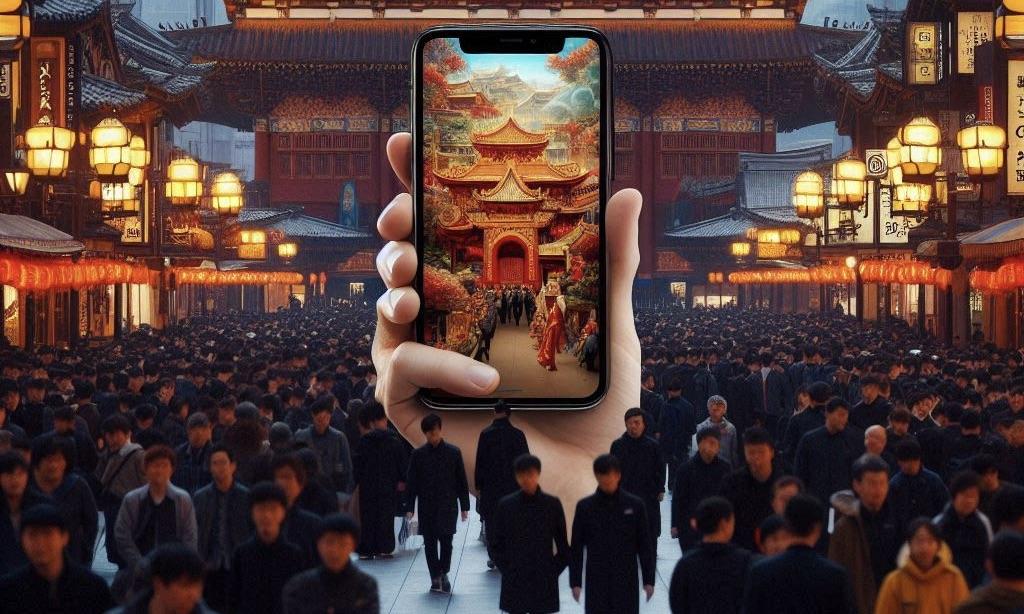
Due to enhanced security features, Microsoft will mandate that its employees in China exclusively use iPhones for work. This decision, part of Microsoft's broader cybersecurity reform, addresses the lack of necessary security applications on other operating systems in the region.
Microsoft Enforces iPhone-Only Policy for China Employees Amid Cybersecurity Overhaul and App Restrictions
The decision is made in conjunction with Microsoft's extensive cybersecurity reform. Microsoft was criticized for its inadequate security protocols, which resulted in establishing the Secure Future Initiative, an internal initiative. Bloomberg was the first to report that Microsoft's new policy, implemented in September, will restrict employees in China from using iPhones exclusively for work. The new restriction limits the number of Android phones that Microsoft's Chinese employees can use.
When employees log into their work phones, Microsoft will mandate using two-factor authentication and identity verification.
In China, Microsoft was compelled to require its employees to exclusively use iPhones for work due to the absence of specific security applications on any other operating system, including Microsoft Authenticator and the Identity Pass app. Those two applications are also accessible on Google Play in the United States and other countries. However, Google Play is not accessible in China, which means that Microsoft's employees could only obtain the necessary security applications on an Apple iPhone.
“Due to the lack of availability of Google Mobile Services in this region, we look to offer employees a means of accessing these required apps, such as an iOS device,” a Microsoft spokesperson told Fortune in an email.
Microsoft to Provide iPhones to China Staff, Highlighting Growing US-China Digital Divide
Bloomberg reports that Microsoft will provide iPhones to employees in China who do not possess one.
Companies such as Huawei and Xiaomi manufacture Android phones operating on their platforms in China. Microsoft's prohibition of Chinese smartphones indicates a digital ecosystem diverging between the United States and China. According to Fortune, the two governments and the major corporations collaborating with them are becoming more hesitant to permit the other to access sensitive materials.
China has its own search engines and social media platforms, while U.S. titans like Facebook are prohibited. Its internet censors are renowned for their strictness and extensiveness. In the interim, the White House has restricted exporting the most advanced semiconductor technology to Chinese companies in the United States. Congress also enacted a bill that would compel the sale of the Chinese-owned TikTok to an American buyer due to concerns that the social media platform could be used to sway public opinion.
Microsoft prioritized cyber security following state-sponsored Chinese hackers' discovery of a compromise in its cloud systems last year. The cyber attack occurred before Secretary of State Anthony Blinken visited Beijing in June 2023, which exacerbated diplomatic tensions between the United States and China. The breach raised significant concerns regarding Microsoft's security protocols. In April, a federal agency issued a critical report that concluded that “Microsoft’s security culture was inadequate.”
US-China Cyber Tensions Rise Amid Allegations, Surveillance Concerns, and Security Measures
In March, a U.S. federal court charged a group of Chinese hackers for distinct cyber intrusions in 2018. The allegations were deemed unfounded by the Chinese embassy in Washington, D.C. At the time, Liu Pengyu, a spokesperson for the embassy, stated that “Without valid evidence, the U.S. jumped to an unwarranted conclusion and made groundless accusations against China.”
As the relationship between the U.S. and China becomes increasingly tense, both nations have attempted to guard their respective cyber capabilities. Since 2023, Chinese government-backed companies have mandated that employees cease using foreign smartphones from manufacturers such as Apple and Samsung. In the interim, China has implemented its clandestine surveillance strategies to monitor portions of the United States.
In the early part of the previous year, China launched numerous surveillance balloons into the United States. Even electric vehicles and connected automobiles have been targeted, as they are perceived as a covert method of surveillance of Americans. After a national security investigation revealed that Chinese smart cars collect data on passengers and utilize external sensors to gather information on U.S. infrastructure, the Biden administration is considering a prohibition on all Chinese smart cars. According to a recent Fortune investigation, China's self-driving vehicles have already traveled 1.8 million miles on American roads.
After a report published on July 9 by a consortium of intelligence agencies, including those from the U.S., U.K., Japan, and Germany, detailing repeated cyber attacks from China's top espionage agency, those tensions have only intensified.
Photo: Microsoft Bing







