


 SK Biopharmaceuticals Secures Global Rights to Biohaven Epilepsy Drug Opakalim
  AstraZeneca Shares Sink After Wainua Trial Misses Key Heart Disease Goal
  Moderna Wins FDA Approval for mFLUSIVA mRNA Flu Vaccine for Adults 50+
  Novo Nordisk Strikes €1.17 Billion Nanexa Drug Delivery Deal
  Trump Administration Bars U.S. Travelers From Congo Flights Amid Ebola Outbreak
  The government is ‘doubling down’ on its social media ban. But bigger penalties for platforms aren’t enough
  Trump Signs Order to Cut Routine Childhood Vaccines
  Venezuela Earthquake Health Risks Rise as Disease Monitoring Intensifies
  GLP-1 Weight-Loss Drug Use Surges Among U.S. Children
  France Battles Mediterranean Wildfires as Heatwave Fuels Fire Risk
  Moderna Short Sellers Hit With $4.8 Billion Loss as Stock Soars
  US-Backed Pediatric HIV Treatment Drops After Foreign Aid Changes, Study Finds
  FDA Weighs Safety Standards for Psychedelic Therapies
  3 clinical-grade skincare creams you really shouldn’t buy online
  U.S. Issues Cuba Health Alert as Illnesses Rise


 Add as a preferred source on Google
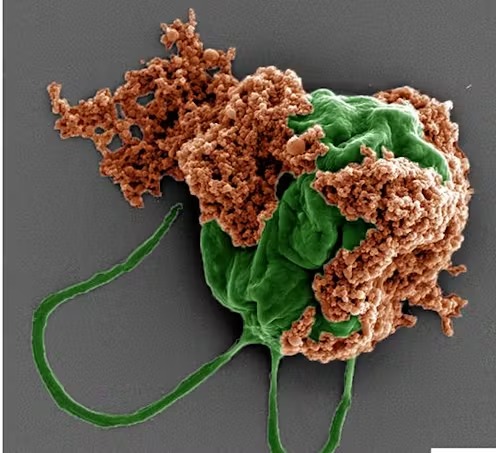

Tumors that travel to the lungs, or lung metastases, pose a formidable challenge in the realm of cancer treatment. Conventional chemotherapy often falls short because it’s inefficient. It doesn’t directly target the lungs and accumulate in a high enough concentration to kill tumors.
My colleagues and I from the Wang lab and Zhang Research Group at the University of California, San Diego have spent the past five years developing biohybrid microrobots, tiny objects made of both natural and synthetic materials, that can be used in medicine.
In our newly published research, we made a green microalgae-based biohybrid microrobot that can deliver chemotherapy directly to the lung and treat lung metastases.

Microalgae can swim through your body. CSIRO/Wikimedia Commons, CC BY-SA
Algae drug delivery
Synthetic microrobots are typically made of rigid metallic or polymeric structures that are difficult to manufacture. They’re unable to access certain organs and tissues, and they can be toxic to humans.
Microalgae overcome these concerns. For one, microalgae can move autonomously by using a hair-like appendage called flagella to propel themselves through organs such as the lungs. They are less toxic compared with other microorganisms. They are also cheaper and easier to produce.
Our biohybrid microrobot – called algae-NP(DOX)-robot – combines microscopic, live green microalgae commonly used in pharmaceuticals, Chlamydomonas reinhardtii, with nanoparticles coated with red blood cell membranes. The cell membranes act as a natural “camouflage” to enhance the microrobot’s biocompatibility and prevent it from being attacked by the patient’s immune system. Within the nanoparticles is a common type of chemotherapy drug called doxorubicin.
We tested our algae-based microrobots in mice with lung metastases. By administering these algae-based microrobots through the trachea, we could transport the drug directly into the lungs and minimize side effects to other organs. Once in the lungs, our algae-based microrobot could swim and distribute the drug across lung tissue. It could also evade destruction by immune cells in the lungs, allowing the drug to be gradually released from the nanoparticles.
The researchers previously used their algae-based microrobots to treat pneumonia.
Compared with free drug and static drug-loaded nanoparticles that cannot move on their own, our biohybrid microrobots accumulated in greater concentrations and were retained longer in the lungs.
By more effectively delivering chemotherapy to diseased lung tissues, our biohybrid microrobots significantly improved therapeutic outcomes by shrinking lung tumors and extending the survival of the treated mice. Mice treated with our algae-based microrobots experienced a 40% increase in median survival time, extending survival from 27 to 37 days.
Immune cells eventually break down the microrobots into nontoxic components and completely remove them from the body.
Bioengineering treatments
Our findings show that biohybrid microrobots present a powerful approach to delivering drugs to the lungs to treat pulmonary diseases.
We previously used our green microalgae microrobot platform to treat acute lung pneumonia. We’re now focusing on treating other challenging lung-related diseases, such as cystic fibrosis and idiopathic pulmonary fibrosis.
We’re also working on building a way to more effectively and noninvasively deliver our biohybrid microrobots. Integrating additional motion control strategies, such as magnetic guidance or ultrasound trapping, could enhance drug accumulation at specific target sites in the body.
It will be some time before our biohybrid microrobots appear in the clinic. But overall, combining living microalgae with cell membrane-coated nanoparticles to deliver drugs can help lay the foundation for bioengineered cancer treatments.








