


 Novartis Shares Plunge After Muscle Drug Fails Phase III Trial
  Moderna Short Sellers Hit With $4.8 Billion Loss as Stock Soars
  EU Agrees €6.6 Billion Military Aid Funding for Ukraine
  UK PM Burnham to Unveil Economic Vision at Labour Conference
  Novo Nordisk Raises 2025 Outlook Despite Wegovy Pill Miss and CagriSema Setback
  GLP-1 Weight-Loss Drug Use Surges Among U.S. Children
  Appeals Court Rejects Trump Third-Country Deportation Policy
  Trump Bans CNN, MS NOW and Politico From White House
  US Northeast Airports Resume Operations After Telecom Outage Disrupts Thousands of Flights
  France Keeps Top Health Alert as Officials Brace for Another Heatwave
  FAA Allows Boeing to Sell 35 More 777F Freighters Beyond 2028
  Trump, Xi Visit US National Archives After White House Summit
  Colombia Extradites FARC Dissident Leader ‘Spider’ to US
  U.S. Issues Cuba Health Alert as Illnesses Rise
  Trump Warns China Against Supporting Iran in Xi Talks
  Trump Scales Back Endangered Species Act Protections


 Add as a preferred source on Google
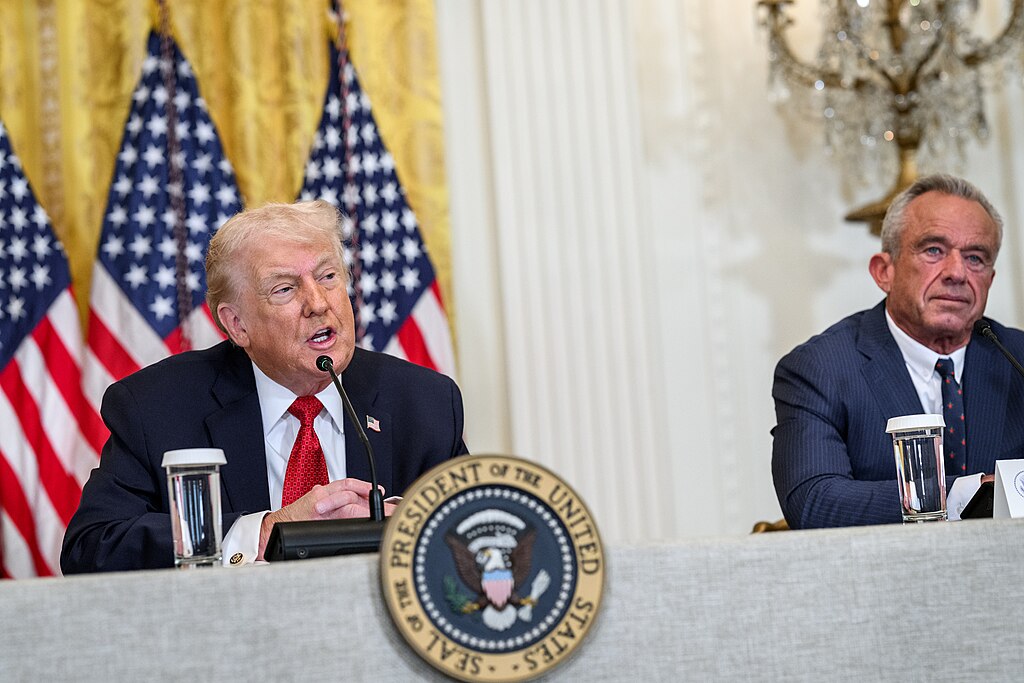
President Donald Trump has signed an executive order seeking to reduce the number of routine childhood vaccinations recommended in the United States and directing the Justice Department to challenge certain state vaccine laws.
The order advances Health Secretary Robert F. Kennedy Jr.’s long-standing effort to overhaul the U.S. childhood immunization schedule. It recommends universal vaccination against 11 diseases, compared with 18 diseases on the schedule recommended by the U.S. Centers for Disease Control and Prevention (CDC) in late 2024.
Vaccines for COVID-19, influenza, rotavirus, hepatitis A and B, bacterial meningitis and respiratory syncytial virus (RSV) would move to categories for high-risk groups or shared clinical decision-making. These vaccines could still be recommended for children based on medical conditions, exposure risks or discussions between parents and doctors.
The executive order also calls for separating the measles, mumps and rubella (MMR) vaccine into three individual shots and spreading childhood vaccinations across multiple healthcare visits. However, standalone measles, mumps and rubella vaccines are not currently available from U.S. manufacturers, meaning this change cannot immediately be implemented.
For families, the order does not immediately eliminate access to vaccines or change the federal Vaccines for Children program, which provides free immunizations to eligible children. Some major insurers have also indicated they will continue covering CDC-recommended childhood vaccines while reviewing the new policy.
Doctors and major medical organizations, however, have strongly criticized the changes. The American Academy of Pediatrics said the policy could confuse parents and encourage delays in vaccination. Medical groups also emphasized that extensive scientific research has found no evidence linking vaccines to autism.
The order could also affect state vaccine requirements. Because states determine school-entry immunization rules, the Justice Department is being directed to challenge state laws that the administration argues violate parental rights, religious freedom, disability protections or equal protection.
Public health experts warn that reducing routine vaccination could increase children’s exposure to preventable diseases such as measles, polio and whooping cough. They also stress that childhood vaccine schedules are designed around when children are most vulnerable and when vaccines provide the greatest protection.







