


 China, US Extend Trade Truce Through January 10 After Trump-Xi Summit
  Bitcoin Slides Below $84K as Trump Signals Possible New Iran Strikes
  UK PM Burnham Signals Social Care Tax Changes, Questions Heathrow Expansion
  Iran Warns US Against Renewed Attacks as Hormuz Tensions Rise
  North Korea Tests Drone-Missile Swarm Attack Tactics
  Pope Leo Urges Europe to Pursue Peace Through Compromise
  National Rally Secures French Senate Caucus for First Time
  UN Experts Urge US to Halt Third-Country Migrant Deportations
  UK Police Arrest Five in RAF Fairford Terror Probe
  China Cuts Tariffs on U.S. Farm Goods but Excludes Soybeans
  Iran Says Diplomacy Only Path to End U.S.-Israel Conflict
  Russian Drone Strikes Kill Nine Across Ukraine, Hit Kyiv Science Academy
  Russian Bomb Strike on Kharkiv Injures 22, Including Children
  Iran Holds Firm on Hormuz Reopening Terms Despite Trump Rejection
  South Korea Demands Ukraine Apology Over North Korean POW Disclosure


 Add as a preferred source on Google
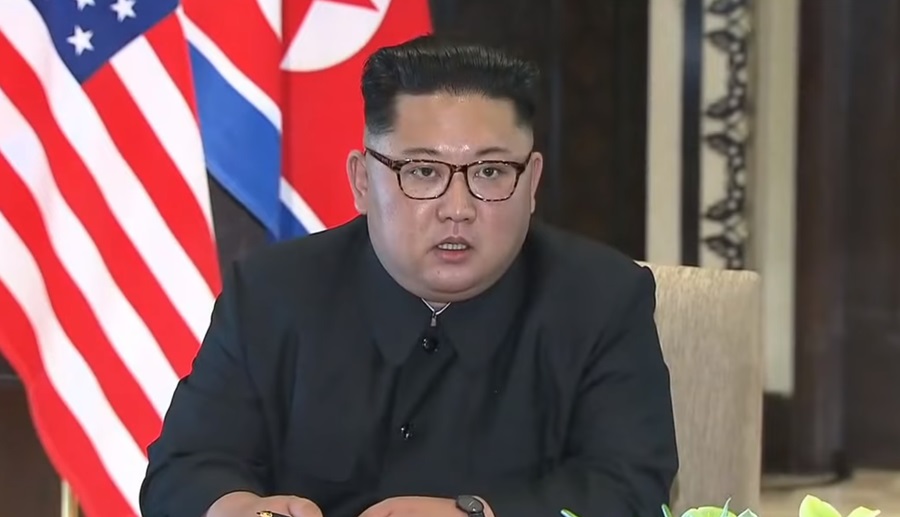
Kim Jong-un recently met with Donald Trump again to continue the negotiations of disarming the nuclear programs that have been overseen by the North Korean leader. The two met in the Metropole hotel at Hanoi, Vietnam where they exchange pleasantries and plans on what’s the best path moving forward.
This is the second time that Donald Trump and Kim Jong-un met in a span of eight months. The POTUS stuck with his previous maneuvers by complimenting the dictator and telling him that North Korea stands to gain more in several avenues by agreeing to denuclearize their weapons, The Guardian reported.
“I think your country has tremendous economic potential – unbelievable, unlimited. I think you will have a tremendous future with your country – a great leader. And I look forward to watching it happen and helping it to happen,” Donald Trump said. In response, Kim Jong-un also praised Trump for agreeing to meet for a second time and for being patient enough to iron out any misunderstanding caused by their first dialogue exchange.
While this isn’t confirmed information, there’s a lot of speculation that Kim Jong-un’s fluency in English might be a hindrance to the denuclearization talks between both countries. It’s unclear how proficient the dictator’s English skills are but it’s clear that he has some capacity to speak the language. The question becomes: will it be enough to hold formal negotiations on topics as complicated as denuclearization?
That remains an uncertainty at the moment. It’s been reported that although Kim Jong-un took English classes in Switzerland, he only had a passing grade for the subject, Newsweek reported. Of course, there’s always a translator that’s mediating the conversation to ensure that no dialogue is lost in translation.
And according to longtime presidential interpreter Harry Obst, this translator will play a significant role in the denuclearization discussion. Obst said that this is especially true for Donald Trump who has a penchant to not read his briefing book. Hopefully, the POTUS will make significant headway in convincing Kim Jong-un to abandon his desire to explore nuclear programs as the project remains the top concerns among world leaders, especially in neighboring countries of North Korea.







