


 CNN, Politico and MS NOW Seek Court Order Blocking Trump White House Ban
  White House Blames Democrats as CLARITY Act Stalls
  Netanyahu Vows Probe Into Foiled Flydubai Crash Attempt
  Netanyahu Says Israel May Join Flydubai Crash Attempt Probe
  US Alcohol Ban Exposes Canada’s Internal Trade Barriers
  Trump Eyes $54 Billion South Korean Investment in Alaska LNG
  Trump Says He Raised Political Prisoners With Xi
  UN Extends Haiti Security Force Mandate Ahead of Elections
  Tim Scott Blames Democrats as CLARITY Act Stalls in Senate
  Trump, Tech Leaders Sign ‘Morally Binding’ AI Safety Accord
  New Zealand Election Raises Policy Uncertainty for Investors
  California Leads Lawsuit Over Trump’s $810 Million Funding Cuts
  Israeli Settlers Attack West Bank Village, Block Palestinian Family’s Return
  UN Condemns Myanmar Airstrike That Kills 50 in Rakhine
  Russia Warns NATO of Nuclear Response Over Kaliningrad
  Trump Demands Powell Resign Over Fed Renovation Cost Overruns
  US Sanctions Iran Weapons Procurement Network


 Add as a preferred source on Google
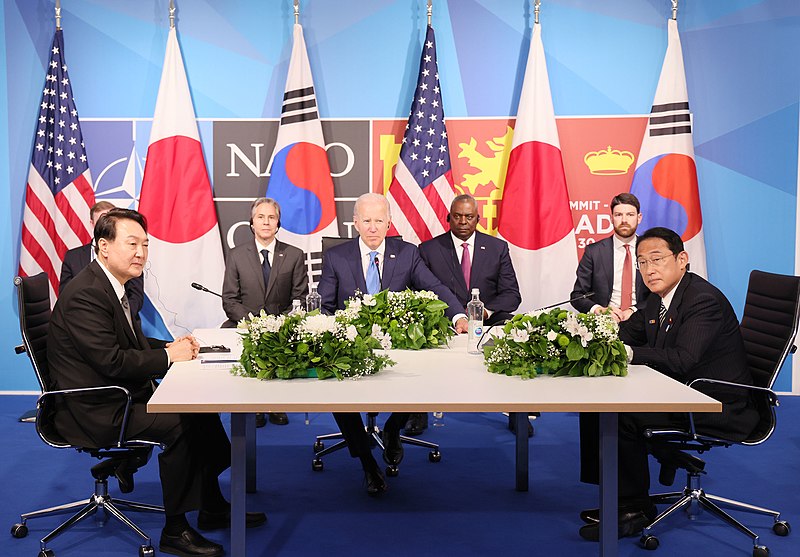
The envoys of Japan, South Korea, and the United States agreed to strengthen security ties this week. The latest assurance of cooperation comes amidst the threat posed by North Korea and its nuclear program.
The nuclear envoys of Japan, South Korea, and the US held a trilateral meeting Wednesday in Tokyo. The three agreed to strengthen security ties with each other as they are faced with the threat coming from North Korea as Pyongyang appears to gear up for its first nuclear test.
The Wednesday meeting follows previous meetings in recent months including between security advisers in Hawaii.
“North Korea is continuing and even accelerating its nuclear and missile capabilities and there is a looming chance of further provocation including a nuclear test,” said Japanese envoy Takehiro Funakoshi before the meeting.
“At the same time, we remain open to entertaining dialogue with North Korea,” said Funakoshi, adding that North Korea was always welcome at the negotiations.
US envoy Sung Kim and Kim Gunn of South Korea also echoed Funakoshi’s comments. Sung Kim said Washington was prepared for any contingency and that the goal of denuclearizing the Korean peninsula remained.
North Korea has been conducting multiple missile tests so far this year and is believed to be preparing for its first nuclear weapon test since 2017. Back in August, Pyongyang fired two cruise missiles from its west coast as South Korea and the United States resumed their largest field drills in years which North Korea criticized as a rehearsal for war.
There is also the added concern that Pyongyang was selling arms to Russia to assist in its war with Ukraine.
Meanwhile, South Korea Thursday offered to have discussions with North Korea over a reunion of families who were separated by the 1950-1953 Korean War, marking its first direct engagement under President Yoon Suk-yeol.
The proposal came ahead of the Chuseok holidays, however, the possibility of having such discussions remains unclear as Pyongyang continues to bolster its military arsenal while refusing to engage with Yoon’s administration.
Unification minister Kwon Young-se who leads inter-Korean affairs urged a positive response and that Seoul will consider Pyongyang’s preferences in deciding the date of the discussions as well as the venue, agenda, and format of the talks.







