


 Zelenskiy Meets CIA Chief John Ratcliffe at Ireland’s Shannon Airport
  Marco Rubio to Meet Russia’s Lavrov in New York
  Paramount-Warner Bros $110 Billion Deal Draws Antitrust Backlash
  Trump Says U.S.-Iran Peace Deal Near After UN Talks
  US, Japan and South Korea Back Taiwan Ahead of Trump-Xi Summit
  UK, Mauritius Seek Diego Garcia Base Deal
  Russian Strikes Kill Eight Across Ukraine as Energy Sites Hit
  Scott Bessent Eyed as Trump’s New AI Czar
  Lula and Flavio Bolsonaro Tied in Brazil Runoff Poll
  Kremlin Says No Grounds Yet for Ukraine Peace Talks
  Burnham Eyes UK Leadership Role in AI Ahead of Trump Meeting
  Macron Challenges Trump’s Gaza Peace Claims at UN
  CNN, MS NOW and Politico Sue Trump Over White House Media Ban
  Trump Meets Venezuela’s Delcy Rodriguez at UN Assembly
  China Tightens Fentanyl Rules Ahead of Trump-Xi Summit
  Iran Vows ‘Crushing’ Response as US Talks Continue
  Trump to Press Xi on Release of US Nuclear Expert Held in China


 Add as a preferred source on Google
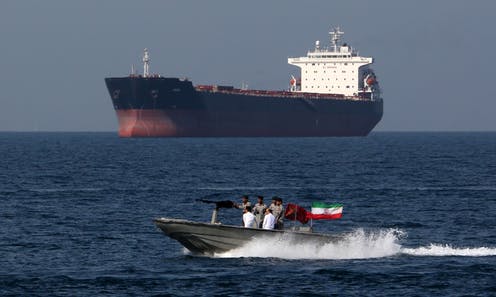
Iran warned on Thursday that the Strait of Hormuz remains an inviolable “red line,” vowing to retaliate against infrastructure across the Gulf region if U.S. President Donald Trump follows through on threats to attack Iranian power plants, bridges, and other key facilities.
The warning comes as the United States carried out a fifth consecutive night of military strikes and reinstated a naval blockade on Iranian ports. Washington says the campaign is intended to reopen the Strait of Hormuz, which Iran closed last Saturday after a fragile ceasefire collapsed. Before the conflict, the strategic waterway handled nearly one-fifth of global oil and gas shipments, making it one of the world’s most critical energy routes.
Iranian army spokesman Brigadier General Mohammad Akraminia said Tehran maintains full control over the Strait of Hormuz and can defend it from any point within its territory. He rejected suggestions that recent U.S. strikes on coastal military sites had weakened Iran’s ability to control the waterway.
The escalation follows remarks by Iranian official Mohammad Baqer Qalibaf, who described the conflict as an “essential and existential war” with the United States. According to Reuters, U.S. officials said the strikes are also targeting Iranian military assets that could interfere with future operations in the region.
President Trump warned earlier this week that the United States could expand attacks on Iran’s infrastructure unless Tehran returns to negotiations. In response, Akraminia said any such action would trigger strikes on “all remaining infrastructure” across the Gulf, with retaliation that would be broader and more destructive than previous attacks.
Iran also claimed responsibility for attacks on U.S. military facilities in Kuwait and Jordan, warning neighboring countries against allowing American forces to launch operations from their territory. Bahrain activated its air defense systems after reporting Iranian aerial threats, while Kuwait said it was responding to hostile drones. Iran further claimed it struck the Al Azraq Air Base in Jordan and damaged military infrastructure at Kuwait’s Ali Al Salem Air Base.
The latest confrontation has heightened fears of a wider regional war. Analysts warn Iran could also rely on its Houthi allies in Yemen to disrupt shipping through the Bab el-Mandeb Strait, potentially threatening another vital global energy corridor. The ongoing conflict has already killed thousands and displaced millions across Iran and Lebanon.







