


 Sudan Rejects US Legitimacy Remarks, Defends Sovereignty
  Scott Bessent Eyed as Trump’s New AI Czar
  US Invites Putin to Miami G20, Opening Door to Trump Summit
  Trump Says ‘Freedom’ Is Coming to Cuba
  Trump Says U.S.-Iran Peace Deal Near After UN Talks
  Russian Envoy Dmitriev Heads to US for Ukraine Talks
  Venezuela Promises Elections as Delcy Rodriguez Pledges Democratic Transition
  Taiwan Vows to Advance US Arms Sales Ahead of Trump-Xi Meeting
  Gaza Faces Evacuation Crisis as War-Damaged Buildings Risk Collapse
  Kremlin Says No Grounds Yet for Ukraine Peace Talks
  Trump to Press Xi on Release of US Nuclear Expert Held in China
  Ghana Says Western Support Growing for Slave Trade Reparations
  Burnham Eyes UK Leadership Role in AI Ahead of Trump Meeting
  Russian Strikes Kill Eight Across Ukraine as Energy Sites Hit
  South Korea, US Discuss Warship Building Cooperation
  US Officials Split Over Response to Israeli West Bank Settlements
  Marco Rubio to Meet Russia’s Lavrov in New York


 Add as a preferred source on Google
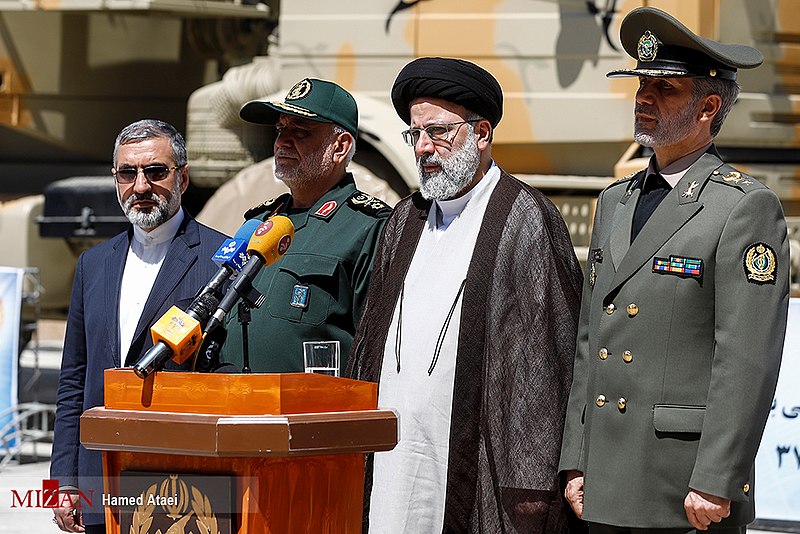
Iranian President Ebrahim Raisi pledged over the weekend to continue pursuing the crackdown on the ongoing protests across the country. Raisi’s pledge comes amidst criticism from a prominent cleric on the recent protest-related execution.
Speaking at a ceremony honoring the country’s security forces that were killed in the demonstrations Friday last week, Raisi said that the crackdown on the protesters would continue to be pursued. Raisi’s pledge came a day after a man named Mohsen Shekari was hanged after getting convicted for injuring a security guard with a knife and blocking a street in central Tehran. The execution of Shekari was the first execution made by the Iranian judiciary related to the widespread protests.
Sunni cleric Molavi Abdolhamid, however, criticized the execution of Shekari in a statement on his website. Abdolhamid also urged the predominantly Shi’ite Islamic Republic to listen to the protesters.
“When someone has not killed but only blocked a road and stabbed and injured a Basij member with a knife, he cannot be put to death under Sharia,” said Abdolhamid, referring to the Tehran-backed militia group that took part in the crackdown on the protests.
“Listen to these protests and negotiate with the people of Iran. Beating, killing, and executing this nation is not right. This protest will not be quelled by killing people,” said the cleric.
Protests have erupted across the country since September following the death of Kurdish-Iranian Mahsa Amini. Amini died in the custody of the morality police days after she was arrested for supposedly flouting the dress code on women imposed by the Islamic Republic. Tehran has sought to blame its enemies, such as the United States, for the unrest, which has led to sanctions and widespread condemnation.
Australian foreign minister Penny Wong announced Saturday that the Australian government would be sanctioning Iran as well as Russia for “egregious” human rights violations. In a statement, Wong said the morality police and the Basij militia, as well as six other Iranians linked to the crackdown, would be targeted with Magnitsky-style sanctions.
In a piece for the Sydney Morning Herald, Wong said the six individuals included are Sadegh Hosseini, who was described as a senior commander of Iran’s Revolutionary Guard Corps. Wong said Hosseini was being targeted by sanctions for his alleged involvement in the “indiscriminate use of violence against protesters.”







