


 Gold Prices Hold Steady Ahead of Trump-Xi Summit, Middle East Risks
  RBA Says ASX Still Falls Short on Governance and Risk Controls
  European Stocks Slip as Iran Tensions Offset Strong Eurozone Data
  Asian Stocks Mixed Ahead of Trump-Xi Meeting
  France Debt-to-GDP Ratio Seen Hitting Record 119.3% in 2026
  Dollar Hits Two-Month High as Fed Rate Hike Bets Rise
  South Korea to Brief Lawmakers on $350 Billion US Investment Package
  Vietnam, US Trade Deal Could Be Signed Soon, To Lam Says
  US Stock Futures Rise as Meta Muse Fuels AI Rally
  Asia Stocks Rise on AI Demand as Oil Eases
  Asian Currencies Muted as Dollar Firms Ahead of Trump-Xi Summit
  UK Home Asking Prices Rise for First Time Since May
  Europe Jet Fuel Deficit Drives South Korean Imports to Four-Year High
  Wall Street Surges as Meta Leads AI Rally, Oil Prices Fall
  U.S. Dollar Hits Eight-Week High After Fed Rate Hike


 Add as a preferred source on Google
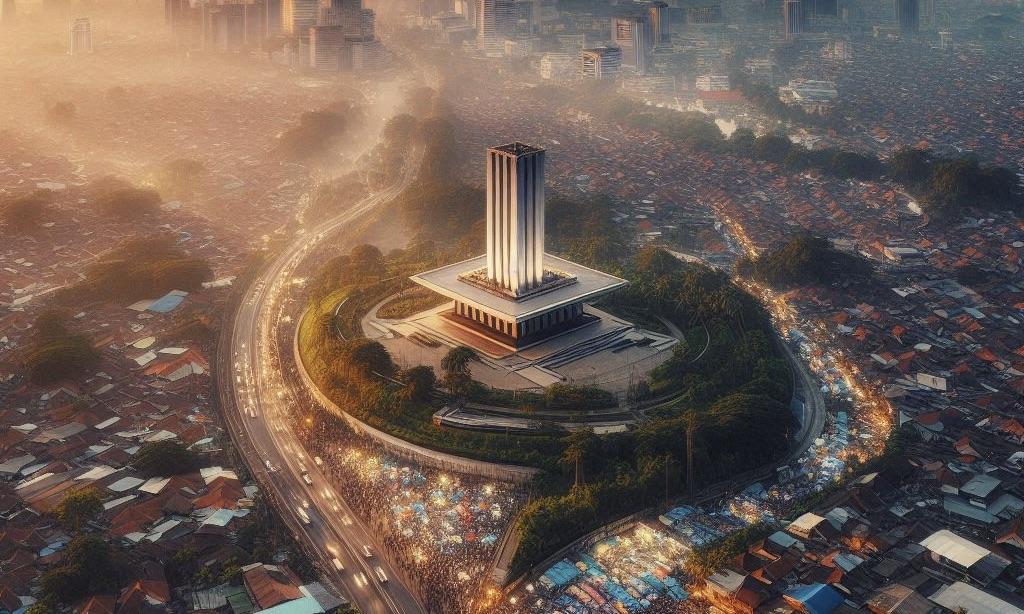
Indonesia's outgoing leader Joko Widodo announced a projected budget deficit reduction to 2.53% of GDP in 2025, even as government spending is set to rise nearly 9% to support new social initiatives under incoming President Prabowo Subianto’s administration.
Indonesia's 2025 Budget Aims for Deficit Reduction Amid Increased Spending on Free Meal Program and Education
Outgoing leader Joko "Jokowi" Widodo announced on August 16 that Indonesia's incoming president, Prabowo Subianto, is anticipating a reduction in the government's budget deficit next year despite a substantial increase in expenditure to support his flagship free meal program.
Jokowi stated during his budget presentation to parliament that the deficit objective for 2025 would be 2.53% of the gross domestic product, or 616.2 trillion rupiah ($39.2 billion), as opposed to 2.7% for this year.
According to Nikkei Asia, the government has allocated 3,613.1 trillion rupiah for government expenditure in the upcoming year, representing a nearly 9% increase from the forecast for this year.
The budget was jointly developed by Prabowo's economic team, which will assume office in October, and Jokowi's administration. It is predicated on the assumption that the largest economy in Southeast Asia will expand by 5.2% in 2025, which is consistent with the forecast range for GDP growth this year of 4.7% to 5.5%.
"The 2025 State Budget architecture is an important pillar to support the sustainability through the strengthening of various flagship programs from the current administration to the next one," Jokowi said in his speech.
Investors and economists are closely monitoring the coming year's budget due to concerns that the government may exceed the legal 3% budget deficit limit by implementing the free meal plan, which is anticipated to cost up to 450 trillion rupiah annually. Jokowi's government and Prabowo have agreed to allocate 71 trillion rupiah to the initiative next year as it is implemented, focusing on remote and impoverished regions.
The education budget, expected to increase by approximately 9% to 722.6 trillion rupiah, will be used to fund the program. However, Finance Minister Sri Mulyani Indrawati stated on August 16 that the budget was flexible.
"This state budget is a transitional budget, there are specific figures and there are adjustable figures, especially for the new administration's programs."
Indrawati stated that the government anticipated the program would multiplier the national economy, as businesses would provide the meals. "This way, the economy at the regional level will move," said the representative.
Planned Budget Adjustments Reflect Indonesia's Focus on Economic Stability Amid Modest Growth in Fiscal Stimulus and Revenue Projections
The social safety net budget is anticipated to increase by 2.3% to 504.7 trillion rupiah, while the infrastructure budget is expected to decrease by approximately 5% to 400.3 trillion rupiah. In the interim, inflation is anticipated to be approximately 2.5%.
The government aims to increase tax revenue in the income sector by 8% to 2,490.9 trillion rupiah next year. State revenue is anticipated to rise from 2,802.3 trillion rupiah in 2024 to 2,996.9 trillion.
"Assuming a budget deficit of 2.53% of GDP, or IDR 616.2 trillion, for 2025, this draft state budget is expected to maintain investor optimism regarding Indonesia's macroeconomic fundamentals," said Hosianna Situmorang, an economist at Bank Danamon. She added the increase in planned state spending from the previous year "is expected to provide a positive boost to economic growth."
Last month, Bank Indonesia, the central bank, predicted that economic growth would be bolstered by a planned increase in fiscal stimulus from 2.3% to 2.7% of GDP, as well as increased exports due to more robust demand from Indonesia's primary trading partners, for the third and fourth quarters of this year.







