


 NASA Cuts Boeing Starliner Missions as SpaceX Pulls Ahead
  Astronomers have discovered another puzzling interstellar object − this third one is big, bright and fast
  Neuren Pharmaceuticals Surges on U.S. Patent Win for Rare Disorder Drug
  SpaceX Starship Test Flight Reaches New Heights but Ends in Setback
  Cogent Biosciences Soars 120% on Breakthrough Phase 3 Results for Bezuclastinib in GIST Treatment
  FDA Adds Fatal Risk Warning to J&J and Legend Biotech’s Carvykti Cancer Therapy
  Neuralink Plans High-Volume Brain Implant Production and Fully Automated Surgery by 2026
  Blue Origin’s New Glenn Achieves Breakthrough Success With First NASA Mission
  Tabletop particle accelerator could transform medicine and materials science


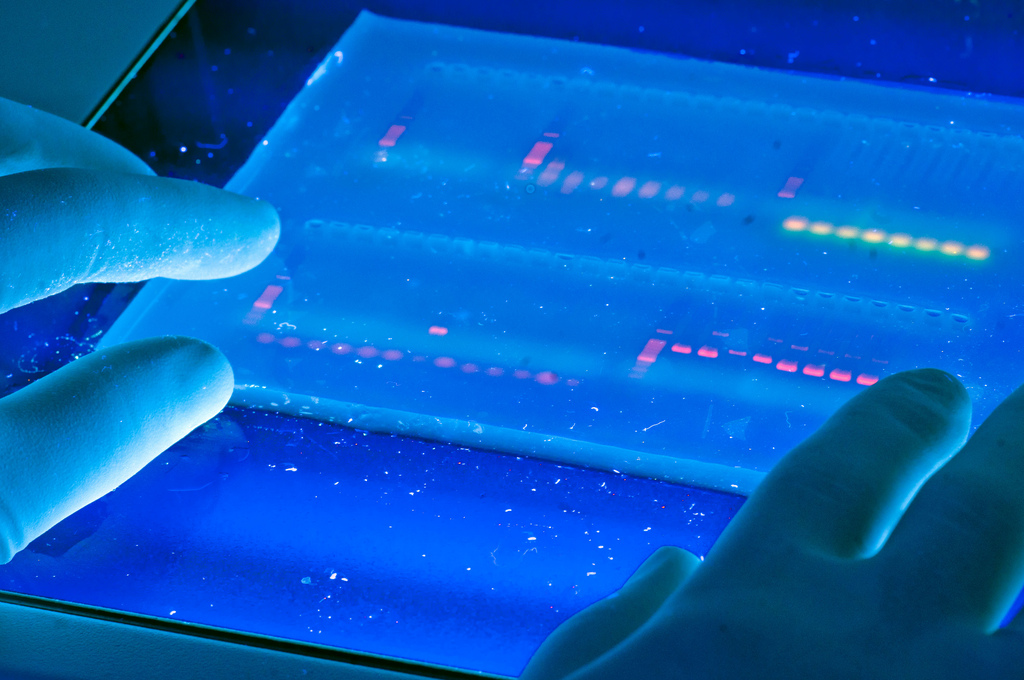
Remember that popular misconception that humans only use about 10 percent of their brain’s power at any given time? It looks like something similar is about to start circulating the web with a new study indicating humans only use about 25 percent of their DNA. This essentially leaves about 75 percent of the genome sheet either full of junk or ready to be rewritten.
This new discovery comes via Dan Graur, an evolutionary biologist from the University of Houston, Futurism reports. According to the study that Graur published, only about 10 to 25 percent of human DNA is functional. That is to say, only a quarter of the genomes are working in a way that affects the human experience.
As any sci-fi nerd would tell anyone willing to listen, there are huge implications to this discovery, mainly the possibility of adding useful programs that could give humans new abilities. X-Men Mutants, anyone?
In any case, these findings contradict the narrative that scientists at the Encyclopedia of DNA Elements (ENCODE) have spread, which basically boils down to the human DNA being 80 percent functional. As to how Graur even came up with the 25 percent upper limit number, his method involved calculating replacement fertility rate along with the rate of deleterious mutation.
In the University of Houston report on the matter, the more nuanced aspects of the study were explained.
“For 80 percent of the human genome to be functional, each couple in the world would have to beget on average 15 children and all but two would have to die or fail to reproduce…If we use the upper bound for the deleterious mutation rate (2 × 10⁻⁸ mutations per nucleotide per generation), then … the number of children that each couple would have to have to maintain a constant population size would exceed the number of stars in the visible universe by ten orders of magnitude,” the report reads.













