


 Wall Street Surges as Meta Leads AI Rally, Oil Prices Fall
  RBA Says ASX Still Falls Short on Governance and Risk Controls
  Gold Prices Hold Steady Ahead of Trump-Xi Summit, Middle East Risks
  Asian Currencies Muted as Dollar Firms Ahead of Trump-Xi Summit
  Asia Stocks Rise on AI Demand as Oil Eases
  Oil Prices Tumble on U.S.-Iran Diplomacy Hopes, Supply Relief
  South Korea to Brief Lawmakers on $350 Billion US Investment Package
  Gold Prices Slip as Strong Dollar and Hawkish Fed Pressure Bullion
  France Debt-to-GDP Ratio Seen Hitting Record 119.3% in 2026
  US, Japan and South Korea Back Taiwan Ahead of Trump-Xi Summit
  Yen Weakens as Dollar Gains on Widening US-Japan Rate Gap
  Asian Stocks Mixed Ahead of Trump-Xi Meeting
  Oil Prices Rise as U.S.-Iran Talks Fuel Diplomacy Hopes
  US-China Talks Target AI, Tariffs Ahead of Trump-Xi Summit
  UK Home Asking Prices Rise for First Time Since May


 Add as a preferred source on Google
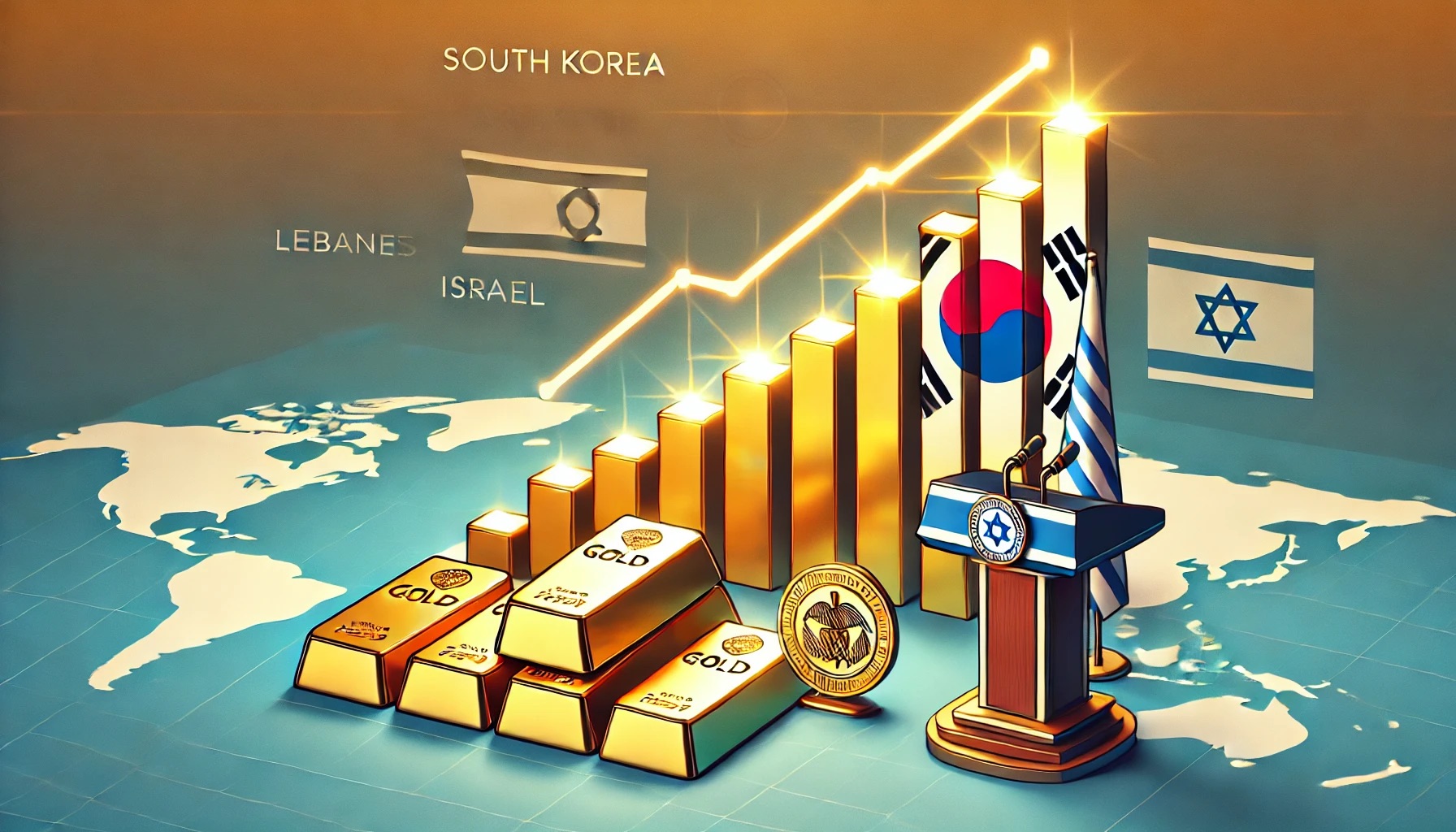
Gold prices climbed on Wednesday as South Korea’s martial law crisis and Israel-Lebanon tensions boosted safe-haven demand. Spot gold edged up 0.1% to $2,646.53 per ounce, with traders eyeing Federal Reserve Chair Jerome Powell’s upcoming address for clues on interest rates.
Gold Prices Edge Higher on South Korea’s Political Crisis
As a result of modest safe-haven demand prompted by political unrest in South Korea, gold prices increased slightly in Asian trade on Wednesday, Investing.com shares. However, traders remained on the sidelines as they anticipated additional signals regarding U.S. interest rates.
This week, the yellow metal got a little relief as haven demand was boosted by fears that the Israel-Hezbollah ceasefire might collapse. However, the dollar's ascent on concerns over the US economy's long-term rate outlook dampened gold's gains.
At 23:25 ET (04:25 GMT), spot gold was up 0.1% at $2,646.53 per ounce, while February gold futures were up 0.1% to $2,668.60 per ounce.
Martial Law Reversal Shakes Investor Confidence
President Yoon Suk-Yeol of South Korea proclaimed martial law on Tuesday, but he quickly reversed his decision in the face of strong public and parliamentary opposition.
In the midst of South Korea's greatest political crisis since the 1980s, the opposition party demanded Yoon's impeachment and the Parliament voted unanimously against martial law.
Investor confidence throughout Asia took a hit due to political unpredictability in South Korea, a nation widely seen as an economic lynchpin for East Asia. As a result, there was a surge in the demand for gold as a safer investment.
Israel-Lebanon Tensions Add to Haven Demand
As a result of Israel's threats to punish the Lebanese government for the break of its ceasefire with Hezbollah, several people felt pressured to purchase safe havens in Lebanon. In defiance of a ceasefire established by the United States, both Israel and the militant organization resumed attacks on each other last week.
Wednesday saw a general cooling of metal prices as investors awaited Federal Reserve Chair Jerome Powell's speech, which they expected would provide further clues about interest rates.
Powell’s Speech Looms Over Global Markets
Later in the day, Powell will deliver his speech, which comes only weeks before the Fed's last meeting of the year.
Despite December's 25 basis point rate decrease expectations, the long-term picture for rates has become more clouded due to Trump's inflationary plans and sticky inflation.
Because of this unpredictability, the dollar rose sharply, which put pressure on metal prices worldwide.
The price of silver and platinum, two other precious metals, did not change much on Wednesday. Market participants in industrial metals saw a 0.3% decline in copper futures on the London Metal Exchange to $9,096.0/ton and a 0.2% decline in February copper futures to $4.1895/lb.







