


 Fed Unveils Stablecoin Rules Under GENIUS Act
  South Korea, US Discuss Warship Building Cooperation
  Wall Street Falls as Treasury Yields Surge, Oil Rebounds on Iran Tensions
  US 10-Year Treasury Yield at 6% Emerges as New Market Risk Threshold
  US, China Extend Trade Truce to Jan. 10 Ahead of Trump-Xi Summit
  Japan Private-Sector Growth Slows as Domestic Demand Weakens
  Gold Drops Over 1% as Dollar, Treasury Yields Surge on Fed Rate Hike Bets
  Asian Stocks Fall as Bond Yields Surge Ahead of Trump-Xi Summit
  Trump, Xi Focus on Trade and AI at White House Summit
  Gold Prices Fall as Treasury Yields Rise on Fed Rate Hike Bets
  Fed Unveils Stablecoin Rules Under GENIUS Act
  Russian Envoy Dmitriev Heads to US for Ukraine Talks
  Mexico-US Trade Talks Delayed to October as Tariff Negotiations Continue
  Australia Unemployment Hits Five-Year High Despite Strong Jobs Growth
  European Stocks Slip as Iran Tensions Offset Strong Eurozone Data
  Soybean Futures Slip as Traders Await Trump-Xi Trade Signals


 Add as a preferred source on Google
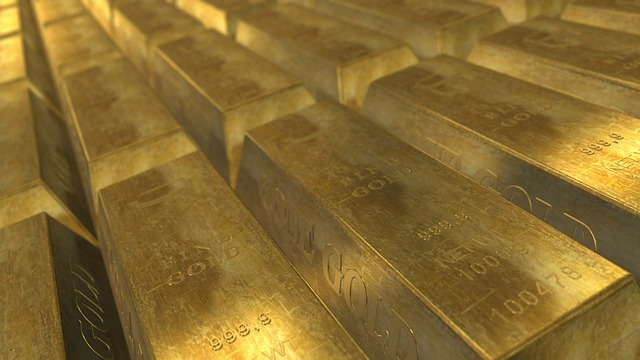
Gold prices fell sharply on Wednesday, declining more than 4% as investors reacted to a stronger U.S. dollar, heightened geopolitical tensions in the Middle East, and changing expectations for Federal Reserve interest rates. Spot gold dropped 4.4% to $4,071.40 per ounce, while gold futures slipped 4.5% to $4,095.00 per ounce.
Market sentiment was heavily influenced by escalating tensions between the United States and Iran. Hopes for a diplomatic resolution weakened after the U.S. military carried out what it described as “self-defense” strikes against Iran following the reported downing of an American helicopter near the Strait of Hormuz. Although Iran has denied involvement, President Donald Trump intensified pressure on Tehran, warning that the country would face severe consequences if it continued delaying a peace agreement.
Trump stated that Iran must accept a fully negotiated deal and reiterated that the United States would not allow Iran to develop nuclear weapons. His comments increased uncertainty across financial markets and contributed to volatility in precious metals and energy prices.
Meanwhile, oil prices continued to climb as disruptions around the Strait of Hormuz created concerns about global energy supplies. The resulting surge in oil prices has fueled inflation worries worldwide, adding another layer of complexity for investors.
The latest U.S. Consumer Price Index (CPI) report showed headline inflation rising 0.5% month-over-month and 4.2% year-over-year in May, matching market expectations. Core inflation, which excludes food and energy costs, increased by 0.2% monthly and 2.9% annually. While headline inflation reached its highest level since April 2023, much of the increase was driven by energy prices, which surged 23.5% compared to a year earlier. Gasoline prices jumped 40.5%, reflecting the impact of ongoing geopolitical tensions on energy markets.
Investors viewed the softer core inflation data as a positive sign, slightly reducing expectations for future Federal Reserve rate hikes. However, analysts caution that persistent energy-driven inflation could eventually force central banks to tighten monetary policy. Higher interest rates typically pressure non-yielding assets such as gold, making future Fed decisions a key factor for the precious metals market.
As geopolitical risks, inflation concerns, and monetary policy expectations continue to evolve, gold prices are likely to remain highly sensitive to global economic developments.







