


 Oil Prices Surge as U.S.-Iran Diplomacy Hopes Fade
  Gold Prices Rise as Oil Slump Eases Fed Rate Hike Fears
  US, China Extend Trade Truce to Jan. 10 Ahead of Trump-Xi Summit
  US Stock Futures Rise as Meta Muse Fuels AI Rally
  Oil Prices Rise as U.S.-Iran Talks Fuel Diplomacy Hopes
  RBA Says ASX Still Falls Short on Governance and Risk Controls
  Central Banks Could Buy 20,000 Tonnes of Gold: BofA
  Oil Prices Extend Losses as U.S.-Iran Talks Ease Supply Fears
  Bank of England Sees Surge in Higher-Risk Collateral
  FxWirePro: Daily Commodity Tracker - 21st March, 2022


 Add as a preferred source on Google
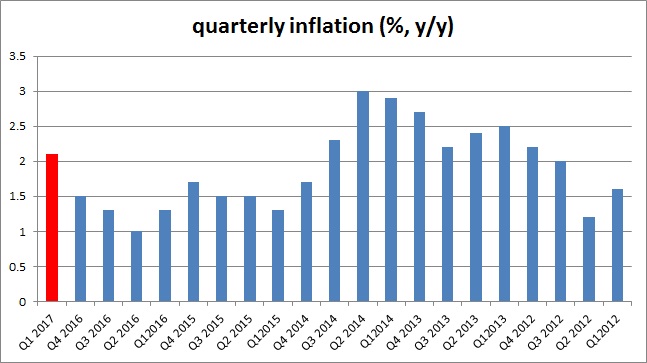
The Reserve Bank of Australia’s (RBA) monetary policy has a duty to maintain price stability, full employment, economic prosperity and the welfare of the Australian people and to achieve these targets RBA maintain an inflation target of 2-3 percent.
Data released earlier shows that for the first time since 2014, the inflation has reached the RBA’s target range. In the first quarter of 2017, CPI inflation in Australia increased by 2.1 percent from a year ago. Inflation grew by 0.5 percent on a quarterly basis. RBA’s own measure of trimmed mean CPI, which is more of core inflation, grew by 1.9 percent in the first quarter from a year ago. The increase in commodity prices through 2016 and in initial months of 2017 is a contributor to the increase.
However, we don’t expect the RBA to change its policy stance in the first half of the year. The recent slide in commodity prices has already pushed back rising inflation in other key economies like in Germany. Australia may suffer the same fate. In addition to that, the policymakers at the RBA would prefer for the inflation to settle in the middle of the range at least for two to three quarters before they start to change their current wait and watch policy. Currently, RBA is maintaining interest rates at 1.5 percent.
The Australian dollar is currently trading at 0.752, down -0.16 percent so far today.







