


 Ukrainian Drone Attacks Hit Russian Regions, Injuring at Least 12
  NATO Boosts Intelligence Sharing Amid Russia Hybrid Threats
  Xi Calls for Deeper U.S.-China AI Cooperation in Trump Talks
  Sudan Rejects US Legitimacy Remarks, Defends Sovereignty
  Judge Orders Trump to Restore White House Access for CNN, MS NOW and Politico
  Yemen Violence Displaces 130,000 as Civilian Toll Rises
  Pezeshkian Says US Must Choose When Iran War Ends
  Kremlin Says No Decision Yet on Putin-Trump December Summit
  Abbas Reaffirms November 28 Palestinian Elections
  North Korea Rejects Nuclear Test Warning, Calls Nuclear Status Irreversible
  What ‘Taiwan Independence’ Means as Xi Presses Trump on US Policy
  Taiwan Thanks US for Support Ahead of Trump-Xi Summit
  US Senate Rejects Iran War Powers Resolution in 50-49 Vote
  Ghana Says Western Support Growing for Slave Trade Reparations
  US Backs Musk in Fight Against EU’s €120 Million X Fine
  Trump, Xi Focus on Trade and AI at White House Summit
  Netanyahu Takes Aim at Mamdani as Israel Election Nears


 Add as a preferred source on Google
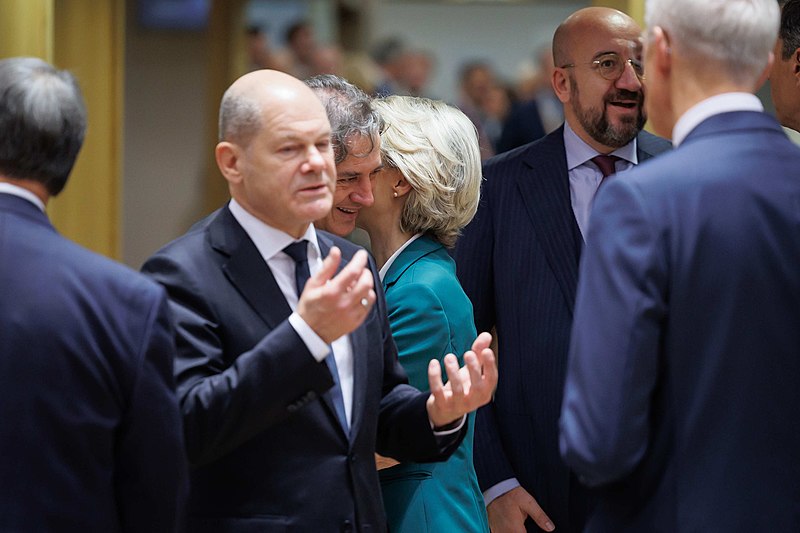
German Chancellor Olaf Scholz has warned the world against a new Cold War by dividing into blocs. Scholz also called on efforts to be made to forge new partnerships.
In an opinion piece for Foreign Affairs that was published Monday, Scholz stressed the importance of preventing another Cold War from happening by dividing the world into blocs. Scholz noted that while the West must stand for democratic values and protect open societies, “we must also avoid the temptation to once again divide the world into blocs.”
“This means making every effort to build new partnerships, pragmatically and without ideological blinders,” wrote Scholz.
Scholz cited China and Russia as two such countries that pose a threat to a multipolar world that would require stronger European and transatlantic unity to overcome. Scholz wrote that the transatlantic partnership remains important to confronting challenges posed by the threat of Russia’s assaults on the territories of allies, China’s shift toward isolation, and its approach toward Taiwan.
Scholz said that the challenges would need Europe and North America to forge new and stronger partnerships with countries all over the world.
“Germans are intent on becoming the guarantor of European security that our allies expect us to be, a bridge builder within the European Union and an advocate for multilateral solutions to global problems,” wrote Scholz.
Friday last week, a spokesperson for Scholz said that he welcomed the comments made by US President Joe Biden on modifying the Inflation Reduction Act, as the law raised concerns in Europe of potentially losing investment. The spokesperson added that a customs agreement for industry between the US and the European Union is better compared to a subsidy race.
Also on Friday, Scholz spoke with Russian leader Vladimir Putin, and the Kremlin said that Putin relayed to Scholz that the West’s and Germany’s line on Ukraine was “destructive” and that Berlin should rethink its approach.
The readout of the call between Scholz and Putin appeared to highlight the rift between Russia and the West over Ukraine. This is despite Moscow and Washington have said that they are open to talks in principle. Kyiv said that peace talks are only possible if Russia stops attacking Ukrainian territory and completely withdraws from Ukraine.







