


 Global Markets React to Strong U.S. Jobs Data and Rising Yields
  S&P 500 Relies on Tech for Growth in Q4 2024, Says Barclays
  Goldman Predicts 50% Odds of 10% U.S. Tariff on Copper by Q1 Close
  Indonesia Surprises Markets with Interest Rate Cut Amid Currency Pressure
  U.S. Stocks vs. Bonds: Are Diverging Valuations Signaling a Shift?
  Moody's Upgrades Argentina's Credit Rating Amid Economic Reforms
  China’s Growth Faces Structural Challenges Amid Doubts Over Data
  2025 Market Outlook: Key January Events to Watch
  Moldova Criticizes Russia Amid Transdniestria Energy Crisis
  UBS Projects Mixed Market Outlook for 2025 Amid Trump Policy Uncertainty
  U.S. Treasury Yields Expected to Decline Amid Cooling Economic Pressures
  UBS Predicts Potential Fed Rate Cut Amid Strong US Economic Data
  Gold Prices Fall Amid Rate Jitters; Copper Steady as China Stimulus Eyed
  Wall Street Analysts Weigh in on Latest NFP Data
  Trump’s "Shock and Awe" Agenda: Executive Orders from Day One
  Fed May Resume Rate Hikes: BofA Analysts Outline Key Scenarios
  Stock Futures Dip as Investors Await Key Payrolls Data


In recent months, JPY has been one of the outperformers. The JPY appreciation was considerable in the Q2, mainly due to deterioration in 5 risk sentiments as concerns for an escalation of trade wars between the US and China strengthened. USDJPY fell below 110-level on May 8thfor the first time since late March this year.
Given the JPY appreciation with unexpected deleveraging and some other developments discussed in the following, we are making modest -10 changes to our USDJPY forecast.
As mentioned above, there have been some developments for the past month. The most important event was that US-China relationship deteriorated with a possible raise of US tariffs on $200bn worth of imports from China to 25% from 10%, and this led to the deterioration in risk sentiments. This was a shock to the markets as shared consensus was that their talks were making progress and they were not too far from an agreement. As a result, JPY appreciated. The sudden change in the US attitude towards China and its stronger protectionist stance suggests risks with which the US might go hard on Japan in their trade talks. The looming risks are likely to weigh on USDJPY for the next coming months.
USDJPY OTC update and options strategy as follows:
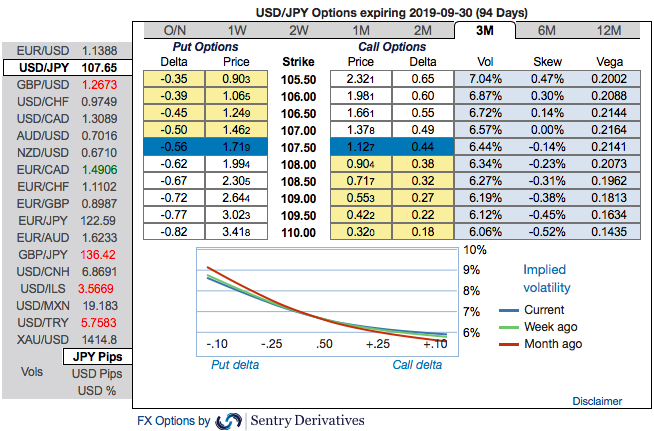
Please be noted that the positively skewed IVs of 3m tenors are signifying the hedging interests for the bearish risks. We see bids for OTM strikes up to 105.50 levels. This indicates hedgers’ interests in OTM put strikes, overall, put holders are on the upper hand.
While negative risk reversal numbers of USDJPY across all tenors are also substantiating downside risks amid any momentary upswings in the short-run.
OTC positions of noteworthy size in the forex options market can stimulate the underlying forex spot rate. The spot may trend around OTM put strikes as the holders of the options will aggressively hedge the underlying delta.
Hence, at spot reference of USDJPY: 107.650 levels, we advocate buying a 2M/2w 109.732/105.50 put spread ahead of Fed and BoJ monetary policies (vols 6.61 vs 6,89 choice), wherein short leg is likely to function if the underlying spot FX keeps spiking, we would like to maintain the ITM long leg with the diagonal tenors on hedging grounds. The lower/shrinking implied volatility is good for options writer and increasing realized volatility is good for the bearish trend. Hence, the above strategy seems to be the best suitable in prevailing volatile conditions. Courtesy: JMP, Sentry & Saxo
Currency Strength Index: FxWirePro's hourly JPY spot index is flashing at -52 levels (which is bearish), while hourly USD spot index was at -6 (neutral) while articulating at (10:44 GMT).
For more details on the index, please refer below weblink: http://www.fxwirepro.com/currencyindex







