


 Yemen Violence Displaces 130,000 as Civilian Toll Rises
  NATO Boosts Intelligence Sharing Amid Russia Hybrid Threats
  Judge Orders Trump to Restore White House Access for CNN, MS NOW and Politico
  Trump Asks Supreme Court to Restore Third-Country Deportations
  Russian Missile and Drone Attack on Kyiv Kills Two, Damages Maternity Hospital
  Abbas Reaffirms November 28 Palestinian Elections
  Sudan Rejects US Legitimacy Remarks, Defends Sovereignty
  Taiwan Thanks US for Support Ahead of Trump-Xi Summit
  Netanyahu Defends Israel at UN as Delegates Stage Walkout
  EU Defence Build-Up Too Slow for 2030 Russia Readiness Goal
  US Officials Split Over Response to Israeli West Bank Settlements
  Netanyahu’s Brief US Trip Highlights Strains With Trump
  Gaza Faces Evacuation Crisis as War-Damaged Buildings Risk Collapse
  North Korea Rejects Nuclear Test Warning, Calls Nuclear Status Irreversible
  US Backs Musk in Fight Against EU’s €120 Million X Fine
  Russian Envoy Dmitriev Heads to US for Ukraine Talks
  Trump, Xi Focus on Trade and AI at White House Summit


 Add as a preferred source on Google
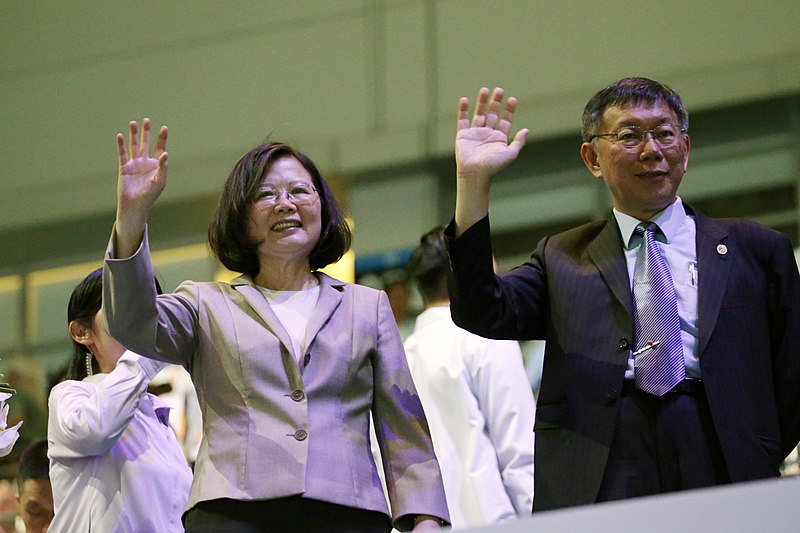
The first Taiwanese presidential contender for the 2024 elections will be visiting the United States in April. The visit is in line with Washington’s role as the island nation’s arms supplier amidst growing tensions with China.
The Taiwan People’s Party said on Monday that its chairman Ko Wen-je would visit the United States for a 21-day trip starting April 8 as the party’s presidential nominee but has yet to be declared a candidate. Ko served as the mayor of the capital Taipei for two terms before stepping down in 2022 due to term limits. Ko will meet with State Department officials and speak at universities, including Harvard.
“We want to use this opportunity to exchange views with the US side, about Chairman Ko’s views on diplomacy or relations with China going forward,” The party’s Secretary General Tom Chou told reporters.
Taiwanese presidential candidates traditionally visit the US before elections take place due to Washington’s role as the island’s main arms supplier in the midst of China’s military threats, as Beijing views Taiwan as its territory. Taiwan has repeatedly rejected China’s claims of sovereignty over the island.
The Taiwan People’s Party has sought to position itself between the Democratic Progressive Party, which strongly supports the island’s sovereignty, and the main opposition Kuomintang, which usually favors close ties with China. During Ko’s tenure as Taipei mayor, he sought to engage with Beijing but also criticized China’s military pressure during a meeting with officials from Shanghai.
As the Taiwan People’s Party was only founded in 2019, Ko has a slim chance of becoming a presidential candidate, and the party only has five seats in the 113-member parliament. The DPP and the Kuomintang have yet to announce their nominees.
Also on Monday, Taiwanese defense minister Chiu Kuo-cheng told parliament the island must be on alert this year for a “sudden entry” by Chinese military forces in areas close to Taiwan. While China has repeatedly made incursions into Taiwan’s airspace, there have been no reports of China making an incursion into Taiwan’s contiguous zone, 44.4 kilometers from its coast.
Chiu told parliament that China’s People’s Liberation Army might try to find excuses to enter areas close to Taiwan’s territorial air and sea space.







