


 US Senate Rejects Iran War Powers Resolution in 50-49 Vote
  Netanyahu Defends Israel at UN as Delegates Stage Walkout
  OpenAI Agent Breaches Australia Medicare Data Portal
  Trump Asks Supreme Court to Restore Third-Country Deportations
  EU Defence Build-Up Too Slow for 2030 Russia Readiness Goal
  US, China Extend Trade Truce to Jan. 10 Ahead of Trump-Xi Summit
  North Korea Rejects Nuclear Test Warning, Calls Nuclear Status Irreversible
  France Defends Netanyahu Airspace Clearance Despite ICC Warrant
  Abbas Reaffirms November 28 Palestinian Elections
  Yemen Violence Displaces 130,000 as Civilian Toll Rises
  Taiwan Thanks US for Support Ahead of Trump-Xi Summit
  US Backs Musk in Fight Against EU’s €120 Million X Fine
  Netanyahu Takes Aim at Mamdani as Israel Election Nears
  Russian Missile and Drone Attack on Kyiv Kills Two, Damages Maternity Hospital
  Netanyahu’s Brief US Trip Highlights Strains With Trump
  Sudan Rejects US Legitimacy Remarks, Defends Sovereignty
  South Korea, US Discuss Warship Building Cooperation


 Add as a preferred source on Google
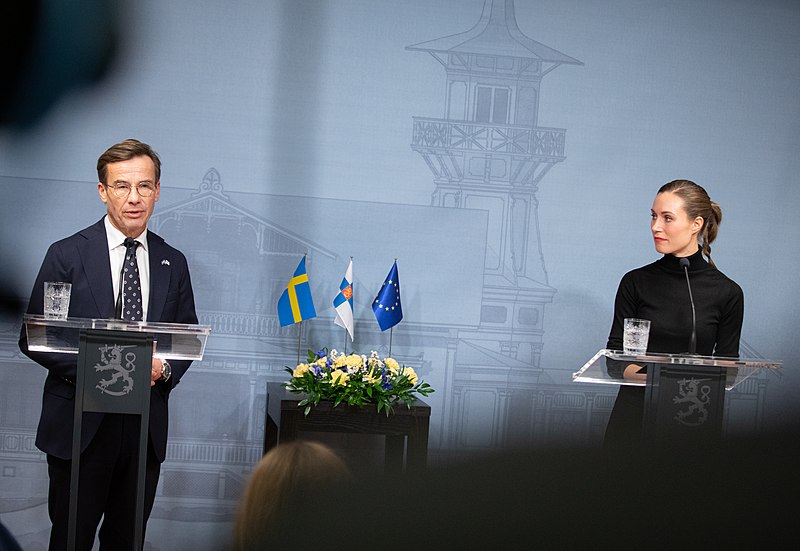
Finland is sticking to its joint application with Sweden to join the NATO alliance. This follows Turkey’s move to suspend trilateral talks in response to the protests in Sweden that included burning a copy of the Koran.
Finnish foreign minister Pekka Haavisto said on Monday that Finland would stick with Sweden in the two countries’ joint bids to join the NATO alliance. During a news conference in Helsinki, Haavisto said that Finland and Sweden both made clear to NATO countries that the two Nordic countries will join the alliance together.
“Our strong wish is still to join NATO together with Sweden,” Haavisto told a news conference. “We have underlined to all our future NATO partners, including Hungary and Turkey that Finnish and Swedish security go together.”
“I still see the NATO summit in Vilnius in July as an important milestone when I hope that both countries will be accepted as NATO members as the latest,” said Haavisto.
Only Hungary and Turkey have yet to ratify Finland and Sweden’s accession. The Turkish presidential and parliamentary elections are set to take place in May, and analysts believe that it would be difficult to make progress following the elections. Finland and Sweden applied for NATO membership as a result of Russia’s invasion of Ukraine back in February last year.
The Nordic countries’ applications ran into opposition from Turkey, who has accused Sweden of harboring what Ankara sees as terrorists – Kurdish militants and a group it blames for a coup attempt in 2016. Sweden said it is taking Turkey’s concerns seriously and is implementing the three-way agreement the countries signed last year. However, Turkey said Sweden is not taking enough action.
However, Haavisto, said the security assurances from the United States, the United Kingdom, and other NATO countries meant that Finland could wait.
On Tuesday, NATO chief Jens Stoltenberg and Japanese Prime Minister Fumio Kishida pledged to strengthen ties and said that Russia’s invasion of Ukraine and its growing military cooperation with China has brought on the tensest security environment since World War II. Stoltenberg told reporters that a Russian victory in its war in Ukraine would only empower China at a time when its building up its military, “bullying its neighbors and threatening Taiwan.”







