


 Palantir Stock Jumps After Strong Q4 Earnings Beat and Upbeat 2026 Revenue Forecast
  Instagram Outage Disrupts Thousands of U.S. Users
  Nvidia Nears $20 Billion OpenAI Investment as AI Funding Race Intensifies
  Elon Musk’s Empire: SpaceX, Tesla, and xAI Merger Talks Spark Investor Debate
  Oracle Plans $45–$50 Billion Funding Push in 2026 to Expand Cloud and AI Infrastructure
  Sam Altman Reaffirms OpenAI’s Long-Term Commitment to NVIDIA Amid Chip Report
  Global PC Makers Eye Chinese Memory Chip Suppliers Amid Ongoing Supply Crunch
  SpaceX Pushes for Early Stock Index Inclusion Ahead of Potential Record-Breaking IPO
  Sony Q3 Profit Jumps on Gaming and Image Sensors, Full-Year Outlook Raised
  Baidu Approves $5 Billion Share Buyback and Plans First-Ever Dividend in 2026
  SoftBank and Intel Partner to Develop Next-Generation Memory Chips for AI Data Centers
  Amazon Stock Rebounds After Earnings as $200B Capex Plan Sparks AI Spending Debate
  Elon Musk’s SpaceX Acquires xAI in Historic Deal Uniting Space and Artificial Intelligence
  Google Cloud and Liberty Global Forge Strategic AI Partnership to Transform European Telecom Services
  Nvidia Confirms Major OpenAI Investment Amid AI Funding Race
  Tencent Shares Slide After WeChat Restricts YuanBao AI Promotional Links
  AMD Shares Slide Despite Earnings Beat as Cautious Revenue Outlook Weighs on Stock


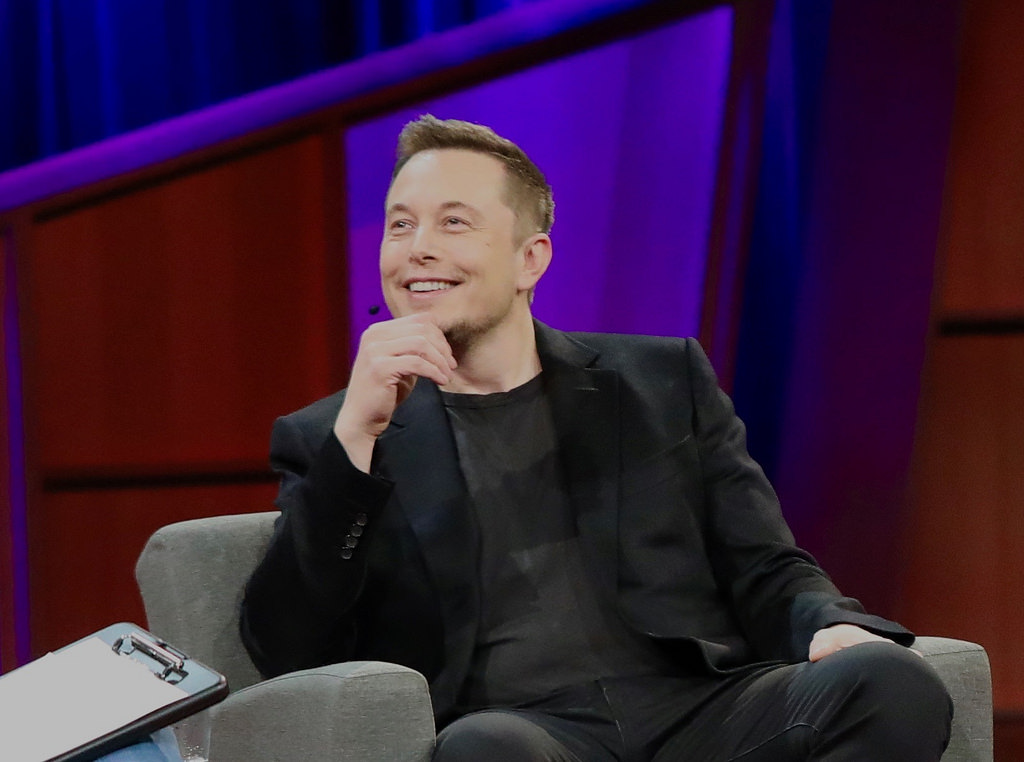
Many in the tech industry have been raining criticisms on Tesla CEO Elon Musk about his vocal warnings with regards to the reckless development of artificial intelligence. Advocating the creation of careful and measured methods, Musk helped create OpenAI, which is meant to be the shining example of how AIs can be developed responsibly. Recently, the non-profit has devised a method of making machine learning more efficient while keeping it safe.
In a recent blog post, OpenAI explain what something called a baseline implementation known as Actor Critic using Kronecker-factored Trust Region (ACKTR) helps AIs learn faster. It was the work of researchers from University of Toronto (UofT) and New York University (NYU).
“For machine learning algorithms, two costs are important to consider: sample complexity and computational complexity. Sample complexity refers to the number of timesteps of interaction between the agent and its environment, and computational complexity refers to the amount of numerical operations that must be performed,” the post reads.
“ACKTR has better sample complexity than first-order methods such as A2C because it takes a step in the natural gradient direction, rather than the gradient direction (or a rescaled version as in ADAM). The natural gradient gives us the direction in parameter space that achieves the largest (instantaneous) improvement in the objective per unit of change in the output distribution of the network, as measured using the KL-divergence. By limiting the KL divergence, we ensure that the new policy does not behave radically differently than the old one, which could cause a collapse in performance.”
As a result of this new method, AIs score higher when it comes to certain response tests, Future reports. Basically, OpenAI has created a new way for companies to develop AI without having to put everyone at risk or impede progress in any way.













