


 Zelenskiy Warns Russia Preparing Major Attack on Ukraine
  Lula and Flavio Bolsonaro Tied in Brazil Runoff Poll
  OpenAI Agent Breaches Australia Medicare Data Portal
  Taiwan Thanks US for Support Ahead of Trump-Xi Summit
  Trump Says ‘Freedom’ Is Coming to Cuba
  Trump to Press Xi on Release of US Nuclear Expert Held in China
  Venezuela Promises Elections as Delcy Rodriguez Pledges Democratic Transition
  US Invites Putin to Miami G20, Opening Door to Trump Summit
  Russian Strikes Kill Eight Across Ukraine as Energy Sites Hit
  Taiwan Vows to Advance US Arms Sales Ahead of Trump-Xi Meeting
  Ghana Says Western Support Growing for Slave Trade Reparations
  Trump Board of Peace Unveils $2.45 Billion Gaza Recovery Plan
  South Korea, US Discuss Warship Building Cooperation
  Russian Missile and Drone Attack on Kyiv Kills Two, Damages Maternity Hospital
  Macron Challenges Trump’s Gaza Peace Claims at UN
  Netanyahu Takes Aim at Mamdani as Israel Election Nears
  Mexico-US Trade Talks Delayed to October as Tariff Negotiations Continue


 Add as a preferred source on Google
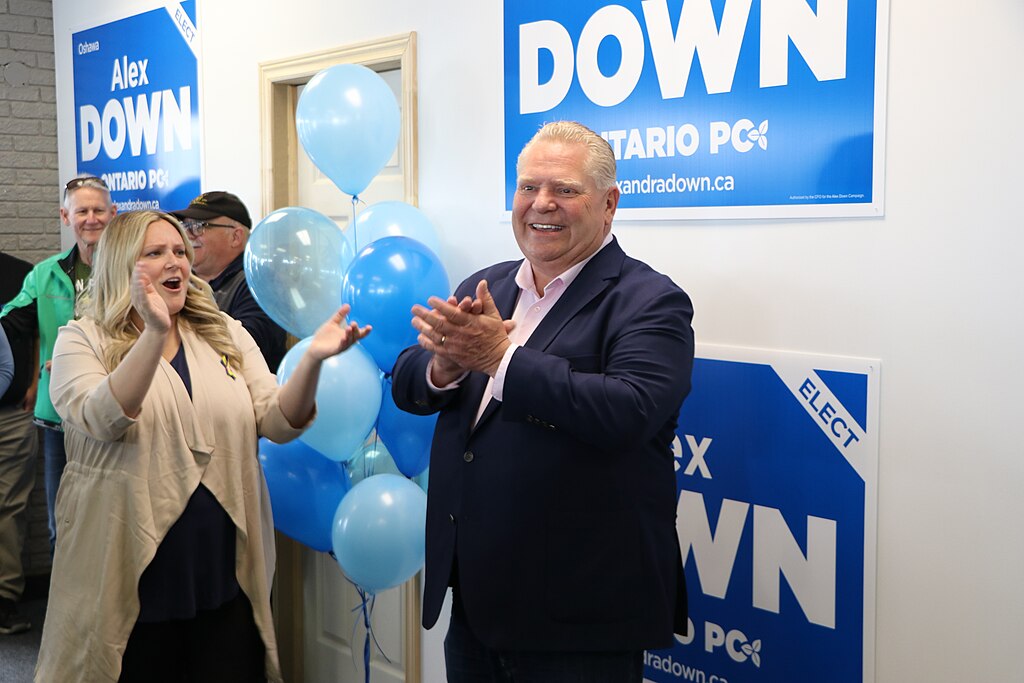
Ontario’s Progressive Conservative Party secured a rare third consecutive majority, with Premier Doug Ford winning re-election in a campaign shaped by U.S. President Donald Trump’s tariff threats. Ford, 60, called the election over a year early, seeking a stronger mandate to counter potential 25% tariffs on Canadian goods, which could hit Ontario’s manufacturing sector hard.
His rivals, New Democratic Party leader Marit Stiles and Liberal leader Bonnie Crombie, struggled to shift voter focus from Trump’s economic policies to Ford’s controversies and Ontario’s pressing issues. The province faces a healthcare crisis, with 2.5 million residents lacking a primary care provider, up from 1.8 million in 2020. Ford sparked criticism for downplaying ER overcrowding, blaming minor ailments. Ontario also continues to battle a housing affordability crisis.
During the campaign, Ford wore a "Canada is not for sale" hat and visited Washington, D.C., twice to oppose U.S. tariffs. His trips drew backlash for occurring during an election period when government actions are typically limited. Despite criticism, he remained firm on protecting Ontario’s economy, stating, "I’ll fight tooth and nail against Donald Trump."
Voter turnout remained low, with Elections Ontario reporting 42.62% participation by 10 p.m. ET, a slight drop from the 44% record low in 2022. Experts warn declining engagement signals weakening democracy.
The results could impact Canada’s upcoming federal election, as external factors like Trump’s tariffs influence voter priorities. While Conservative leader Pierre Poilievre was once seen as the frontrunner, University of Toronto professor Semra Sevi suggests shifting political dynamics could benefit Prime Minister Justin Trudeau’s Liberals.
Ford’s victory underscores how global economic concerns shape local elections, positioning him as a key voice in Canada’s economic and political landscape.







