


 Morgan Stanley Names Marks & Spencer Top European Retail Pick, Sees Strong Upside
  Apple Tests China's CXMT Memory Chips as DRAM Maker Gains Global Market Share
  OpenAI GPT-5.6 Set for Wider Release After U.S. Commerce Approval, Report Says
  Elon Musk Says Anthropic Leads AI Race as Claude Models Challenge OpenAI
  Netflix, Disney, YouTube Eye FIFA World Cup TV Rights in Multi-Billion Dollar Battle
  Zhipu AI Raises HK$31.37 Billion in Discounted Share Sale to Accelerate AI Growth
  Telenor to Buy Controlling Stake in Bahnhof in $630 Million Broadband Deal
  Goldman AM Sees Strong Buyout Opportunities in Japan, South Korea and Australia
  Wolfspeed Sues Navitas Over GaN and SiC Patent Infringement
  Apple Sues OpenAI, Former Employees Over Alleged Trade Secret Theft
  Chinese Chip Stocks Jump as Apple Reportedly Tests CXMT Memory Chips for China Devices
  Kitron Q2 Revenue Beats Estimates as Defense Demand Lifts Growth
  BHP Faces Port Hedland Strike Threat as Iron Ore Export Risks Grow
  SK Hynix Soars 13% in Nasdaq Debut After Record $26.5 Billion IPO
  SK Hynix’s $28 Billion U.S. Share Sale Draws Massive Demand Amid AI Chip Boom
  Levi Strauss Raises 2026 Outlook After Q2 Earnings Beat, Shares Drop Despite Strong Results
  Samsung Chairman Lee Jae-yong Expected to Meet Nvidia CEO Jensen Huang on AI and Chip Partnership


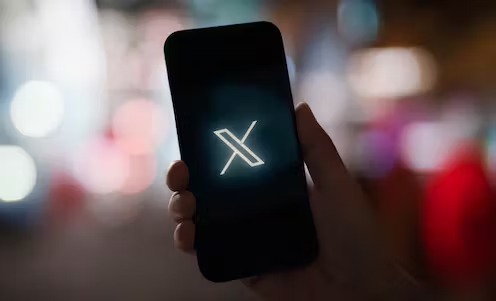

To non-moguls, Elon Musk’s (perhaps temporary) rebrand of Twitter to “X” may seem high risk, amateurish, or even capricious. But it is likely doing exactly what he intended: generating enormous global interest, pushing Twitter closer to his other X brands (SpaceX, Tesla Model X, xAI), and clearing the way for a profitable merging of technologies.
What happened to the blue bird?
Last weekend, Musk began the (reversible) changes by renaming the Twitter platform X on its website and replacing the iconic blue bird logo with a crowdsourced “interim” white “X” on a black background.
Later, Musk posted an image of the character projected on the firm’s San Francisco headquarters and tweeted (or is that “X’d”?) that x.com now redirects to twitter.com.
The X bears a strong resemblance to the Unicode character “mathematical double-struck capital X”, derived from the way bold characters are usually written on blackboards in maths lectures. The logo is still undergoing iterations, with a short-lived thickening of the lines going live on July 26, before Musk announced he didn’t like it and would revert.
Linda Yaccarino, Twitter’s CEO and potential scapegoat if the rebrand goes wrong, also confirmed the launch on Sunday, tweeting, “X is here! Let’s do this.”
Has a radical rebrand ever succeeded?
In 2021, Facebook rebranded its holding company to Meta. But it kept “Facebook”, gave us the metaverse, and didn’t deprive the world of a cute feathery icon and concept of “tweeting”.
Branding experts around the globe have been quick to condemn the Twitter shakeup as too sudden and destructive of brand capital. That’s perhaps because even slight name changes are known to be risky. Kentucky Fried Chicken officially rebranded to KFC. Pepsi was once Pepsi-Cola. These successful adjustments took time and careful management.
Dramatic renaming of a household name has basically never worked. And there’s no doubt a black “X” replacing “Twitter” is dramatic. It smashes the metaphor of birds updating one another in an idyllic blue-sky ecosystem. Sentimental fans holding out for a return to the good old days have now got the memo: Twitter isn’t for you.
But perhaps that’s the point. To me, X – a symbol that can be a cattle marker or an illiterate signature – seems like a probe to perturb and test the market.
Musk isn’t renaming fast food or soft drinks. Twitter is in the hyper-dynamic business of information. Musk is agile and well armed. So maybe new branding rules are being forged.
Musk’s progressive alienation of Twitter’s traditional users could be an attempt to refresh the platform’s demographic – to draw in those true to his other brands, while shaking off unprofitable sceptics. This would certainly fit with the push X gives towards Musk’s other X brands.
Most commentators have latched onto the idea the change is sudden, irreversible, and complete in one day. But Musk’s past business endeavours suggest he is a strategist. The change will take time to play out and can likely be revised, reversed and adjusted as feedback is generated.
Doesn’t someone else own the “X” trademark?
Trademarking of “X” is probably not pivotal to the Twitter rebrand. But achieving limited ownership of the letter is not as preposterous as it sounds.
Trademarks are granted or refused based on their ability to identify the source of the associated goods or services. This means X can function as a trademark if it clearly identifies Twitter in the minds of the public (provided another Twitter-like service doesn’t currently hold the trademark). Famous brands have advantages: Musk has already garnered enough media attention to ensure X is now a globally recognised term for his company.
Is X a generic term and thus not trademarkable? My own research argues trademarks used by tech firms involved in consumer search and decision making (like Twitter) are inherently generic. But under the 77-year-old Lanham Act that still governs trademarks in the United States, X would have to be a common generic name for all services like Twitter to be refused. It isn’t. It’s mostly just a generic term for the 24th letter of the alphabet.
Speculation about the legality of X as a trademark is one thing. My time writing about trademarks, has taught me the reality in courts and tribunals is another. Both Microsoft and Meta (and many others) have laid claims to X in the past for various goods and services.
Lawsuits over X may be filed, but final determinations could be years in the courts. And if things go badly, Musk has just shown his willingness to pivot.
What is Musk trying to achieve?
Tech commentators are intrigued by the idea the X rebrand is part of Musk’s plan to create a WeChat-style “everything app” that would converge messaging, search, online shopping and mobile payment. Twitter CEO, Yaccarino, has said as much.
I find that analysis too simplistic, especially given the ongoing focus on antitrust. Musk is arguably in a position to survey (and reshape) the landscape of not just “town square” discourse but space travel, artificial intelligence (AI), transportation and even politics. He operates on a scale incompatible with endgames. I sense the X rebrand is more about a direction of travel. Or even a sacrifice for a greater goal.
The X rebrand could relate to AI (Musk had a role in a data drought this year by restricting Twitter data access). Or it could be testing the waters for a different pivot later in the year. Or it could be an attempt to distract from some other move. There’s no way to know.
Even the phrase “time will tell” is no help. How can we know if an unknown plan succeeds or not? Does Musk care if Twitter disappears? Does he care if he is worth two hundred billion or three hundred billion?
Welcome to the inscrutable world of X.







