


 Burnham Eyes UK Leadership Role in AI Ahead of Trump Meeting
  FAA Allows Boeing to Sell 35 More 777F Freighters Beyond 2028
  Apple Pay Set for India Launch With Axis Bank
  US Federal Register Drops Alibaba Qwen AI Search Tool
  Nike Earnings at Risk as UBS Cuts Price Target to $42
  NASA, Boeing Discuss Expanding Starliner Missions
  China Vanke Shares Jump as Beijing Moves to Ease Debt Pressure
  CNN, MS NOW and Politico Sue Trump Over White House Media Ban
  AI is supercharging money scams – here’s what you can do to protect yourself
  SK Hynix, Intel Discuss U.S. Memory Chip Production Deal
  SoftBank Launches $11 Billion Bond Sale to Fund OpenAI Investment
  Guterres Urges Stronger Global AI Safeguards Ahead of UN Assembly
  Volkswagen Shares Slide After 2026 Profit Outlook Cut
  DOJ Will Investigate AI-Related Crimes, Attorney General Blanche Says
  SpaceX Nasdaq 100 Weight to More Than Double in Rebalance
  Who should own the knowledge that underpins AI technology?
  China Reviews Broadcom Switch Use in State Data Centres


 Add as a preferred source on Google
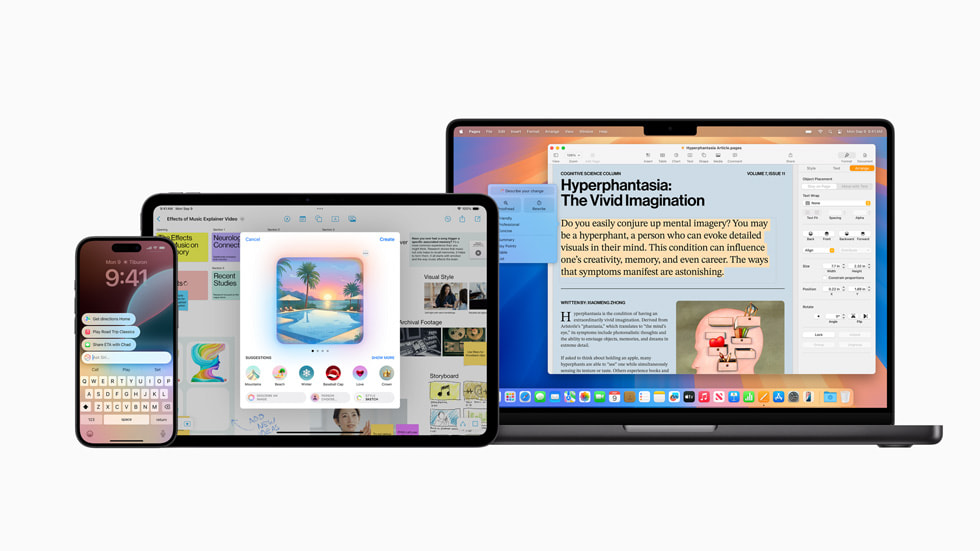
In a bold move to safeguard user data, Apple employs bare-bones servers without hard drives, forming a "hermetically sealed privacy bubble," according to Senior VP Craig Federighi. This approach leverages on-device intelligence to minimize external data interaction.
Federighi Discusses Apple’s Privacy Approach
Senior VP of software engineering at Apple, Craig Federighi, has stated that Apple's dedication to customer privacy is maintained through the usage of basic servers in Apple Intelligence products, including Private Cloud Compute.
According to WCCFTECH, the executive implied that this choice was made to avoid any interaction with user information by forming a "hermetically sealed privacy bubble" with the AI servers. This bubble would use the on-device intelligence from Apple and avoid any outside interference.
PCC Servers Boost Privacy by Limiting External Data
As a general rule, Apple's Apple Intelligence features do all processing locally on the device. However, if external processing is required, Apple's servers are contacted. If that fails as well, ChatGPT, with the user's consent, is consulted.
Federighi told Wired that, despite the powerful CPUs used, Apple chooses basic Private Cloud Compute (PCC) servers to increase privacy protection. Since Apple does not utilize hard disks or solid-state drives (SSDs), the company's PCC servers do not adhere to the conventional structure in which storage is a key component.
"PCC servers are as bare-bones as possible. For example, they don’t include 'persistent storage,' meaning that they don’t have a hard drive that can keep processed data long-term."
They take it a step further, according to Craig, by adding additional capabilities to the server to make sure no data remains after the reboot.
"They do incorporate Apple’s dedicated hardware encryption key manager known as the Secure Enclave, and randomize each file system’s encryption key at every boot up as well. This means that once a PCC server is rebooted, no data is retained and, as an additional precaution, the entire system volume is cryptographically unrecoverable. At that point, all the server can do is start fresh with a new encryption key."
Apple Tackles Data Vulnerability with Encryption
The lack of end-to-end encryption was the one area that was neglected and was a weakness for the organization. This left data vulnerable to hackers. As Apple has gradually shifted towards end-to-end encryption, this is also being addressed.
Apple is taking strong measures to guarantee that the system does not infringe on customers' privacy, and they want people to know about it. Even more impressive is their level of openness; anyone may verify it for himself.
"Apple is making every production PCC server build publicly available for inspection so people unaffiliated with Apple can verify that PCC is doing (and not doing) what the company claims, and that everything is implemented correctly."
Data security and system transparency are two of Apple's top priorities, and the company is working tirelessly to achieve both.







