


 Extreme heat, flooding, wildfires – Colorado’s formerly incarcerated people on the hazards they faced behind bars
  NASA's Artemis II Crew Arrives in Florida for Historic Moon Mission
  Rise of the Zombie Bugs takes readers on a jaw-dropping tour of the parasite world
  Trump Signs Executive Order to Boost AI Research in Childhood Cancer
  Blue Origin’s New Glenn Achieves Breakthrough Success With First NASA Mission
  Neuralink Plans High-Volume Brain Implant Production and Fully Automated Surgery by 2026
  Thousands of satellites are due to burn up in the atmosphere every year – damaging the ozone layer and changing the climate
  Trump and Merck KGaA Partner to Slash IVF Drug Costs and Expand Fertility Coverage
  Swimming in the sweet spot: how marine animals save energy on long journeys
  Blue Origin New Glenn Rocket Explodes During Launch Pad Test, Delaying Space Ambitions
  How America courted increasingly destructive wildfires − and what that means for protecting homes today
  Drug pollution in water is making salmon take more risks – new research
  An unexpected anomaly was found in the Pacific Ocean – and it could be a global time marker
  We combed through old botanical surveys to track how plants on Australia’s islands are changing


 Add as a preferred source on Google
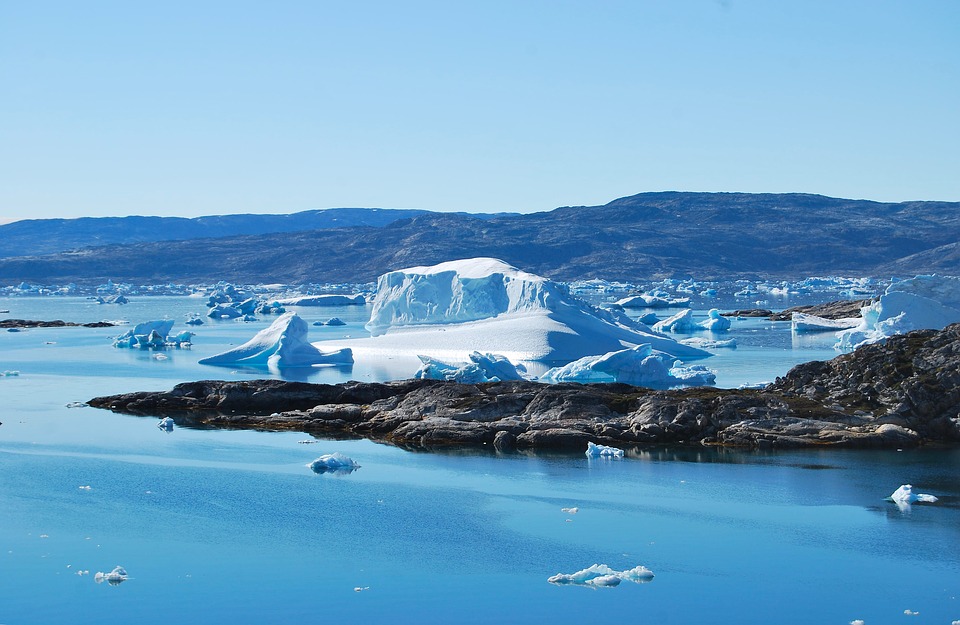
Although climate change is nothing new, it is becoming more and more of a problem today due to the effect it is having on our planet’s frozen regions. Now, a study discovered a very long subterranean river under Greenland’s ice sheet.
Scientists believe that a very long subterranean river may already be flowing under the ice sheet in Greenland. The body of water referred to as the “Dark River,” is believed to already stretch as far as 1,000 kilometers, likely starting from the heart of Greenland to Petermann Fjord. This is the latest indication of a body of water or a structure already existing under Greenland’s icy surface. There have already been glimpses of such structures by NASA’s satellites
“Along its length, the path of the valley progresses gradually down an ice surface slope, causing a lowering of ice overburden pressure that could enable water flow along its path,” wrote the researchers in their study. Should it be proven that water is indeed flowing, then this may not only mean that this could traverse the entire length of the subglacial valley as well as suggesting that there is no part of the ice sheet that could become a physical barrier to the water.
This would also suggest that there would be more water flow to the fjord with a level valley base at 1,640 feet below sea level compared to 320 feet below sea level. The findings, for now, are hypothetical, and the researchers expect that future surveys of Greenland and its ice sheet may shed more light and perhaps confirm their computer modeling.
Aside from Greenland, Antarctica is also on the immediate receiving end of climate change. Atmospheric rivers or rivers made up of warm, packed, air, may have been the cause of holes in the Antarctic. These kinds of rivers can see up to 15 times the amount of water that is suspended in the atmosphere in the form of vapor. This air vapor also happens to be warmer than the ice in the frozen continent and thus, should it meet the ice, it would form holes.
One such example was the Weddell Polynya that was discovered in 1973 but eventually closed up and disappeared into the ice. It opened up again by 2017.







