


 Burkina Faso and Mali’s fabulous flora: new plant life record released
  FDA Pilot Program Eases Rules for Nicotine Pouch Makers
  Blue Origin’s New Glenn Achieves Breakthrough Success With First NASA Mission
  Fungi are among the planet’s most important organisms — yet they continue to be overlooked in conservation strategies
  NASA Artemis II: First Crewed Moon Mission Since Apollo Takes Four Astronauts on 10-Day Lunar Journey
  Swimming in the sweet spot: how marine animals save energy on long journeys
  Trump Administration to Launch Autism Initiatives Targeting Acetaminophen Use and New Treatment Options
  Fertile land for growing vegetables is at risk — but a scientific discovery could turn the tide
  Tabletop particle accelerator could transform medicine and materials science
  Parasites are ecological dark matter – and they need protecting
  Jared Isaacman Confirmed as NASA Administrator, Becomes 15th Leader of U.S. Space Agency
  The UK is surprisingly short of water – but more reservoirs aren’t the answer
  Drug pollution in water is making salmon take more risks – new research


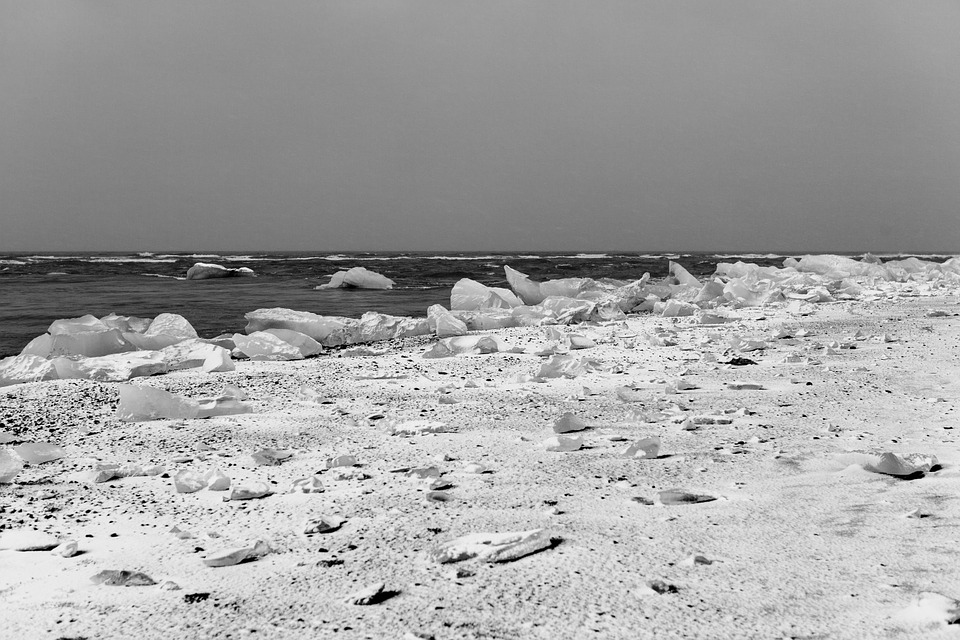
As the world battles with the pandemic that is COVID-19, there is also the existing problem of climate change, as temperatures are rising and causing the frozen polar regions to start melting at a shocking pace. The situation looks even grimmer as NASA satellite images reveal that two polar ice caps have completely melted in a span of three years.
Express reports that the ice caps that melted were the St. Patrick Bay ice caps in the Hazen Plateau, in the northeastern Ellesmere Island in Nunavut, Canada. Scientists previously already predicted back in 2017 that the ice caps would melt unless something could be done to fight climate change. However, it appears that not much has been done, based on the recent satellite images taken by NASA’s Advanced Spaceborne Thermal Mission and Reflection Radiometer.
On a global scale, sea levels have been rising as high as eight millimeters a year because of climate change that results in melting ice in the polar regions. Between 1993 and 2014 alone, sea levels were already up by 2.3 inches, which may not seem like a lot, but it still stands to have dangerous consequences in the future. Should nothing be done, then coastal cities such as New York could potentially be submerged by the end of the century.
Other climate models have revealed that a rise in sea levels of over two meters could result in the submerging of large parts of Great Britain’s coastline - Hull, Peterborough, Portsmouth, as well as parts of East London and the Thames Estuary, would be at risk.
Another effect of climate change is that animals who are native to frozen or polar regions, such as polar bears, would soon find themselves losing their natural habitats and thus would be at risk of becoming extinct. As the temperatures rise, certain wildlife such as seals, who are prey to polar bears, would be able to swim much faster, meaning these polar bears would die of starvation.
According to a study made by Polar Bears International, where they analyzed 13 subpopulations of these polar bears, 12 of these subpopulations were revealed to be declining in numbers due to the gradual loss of their habitat.







